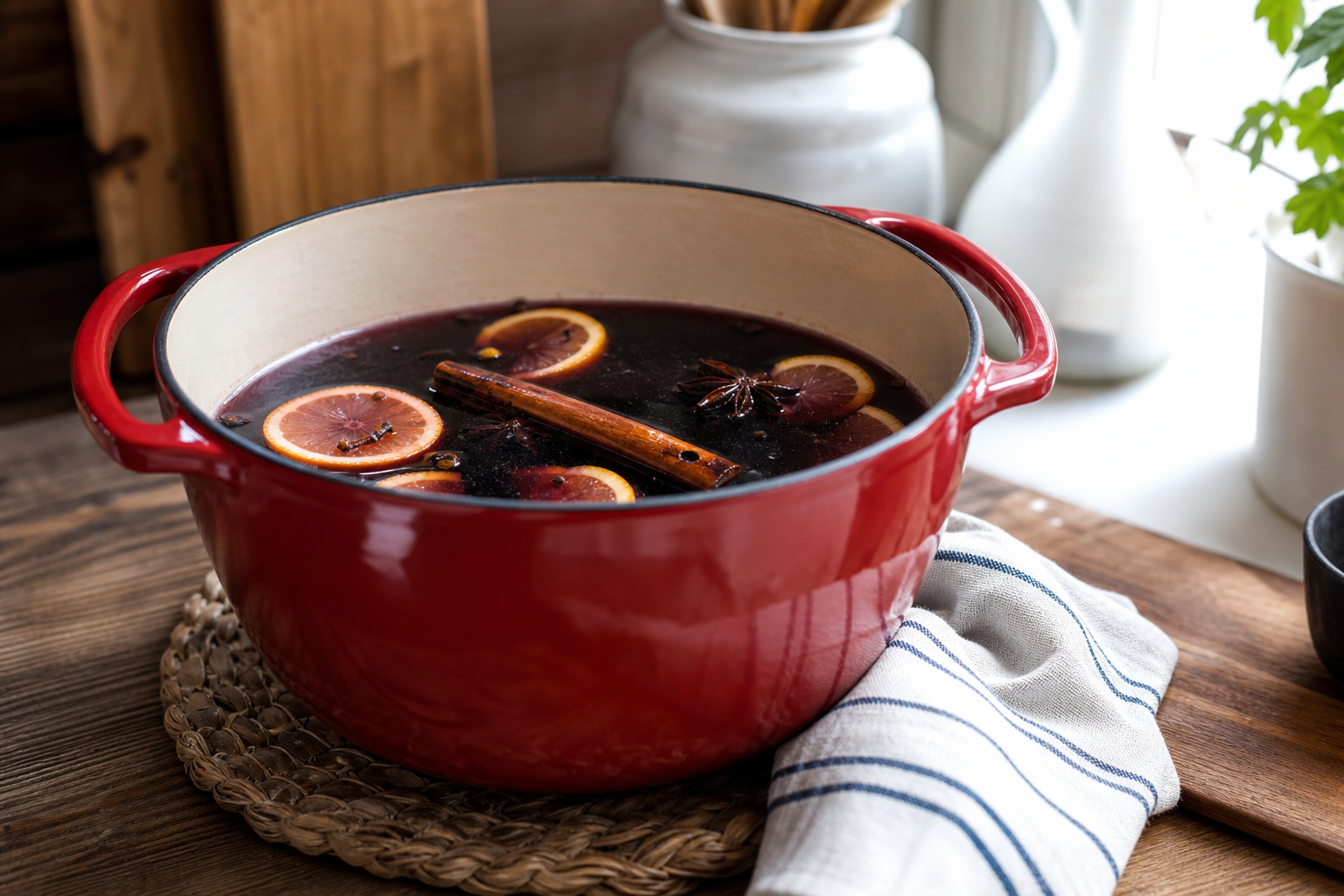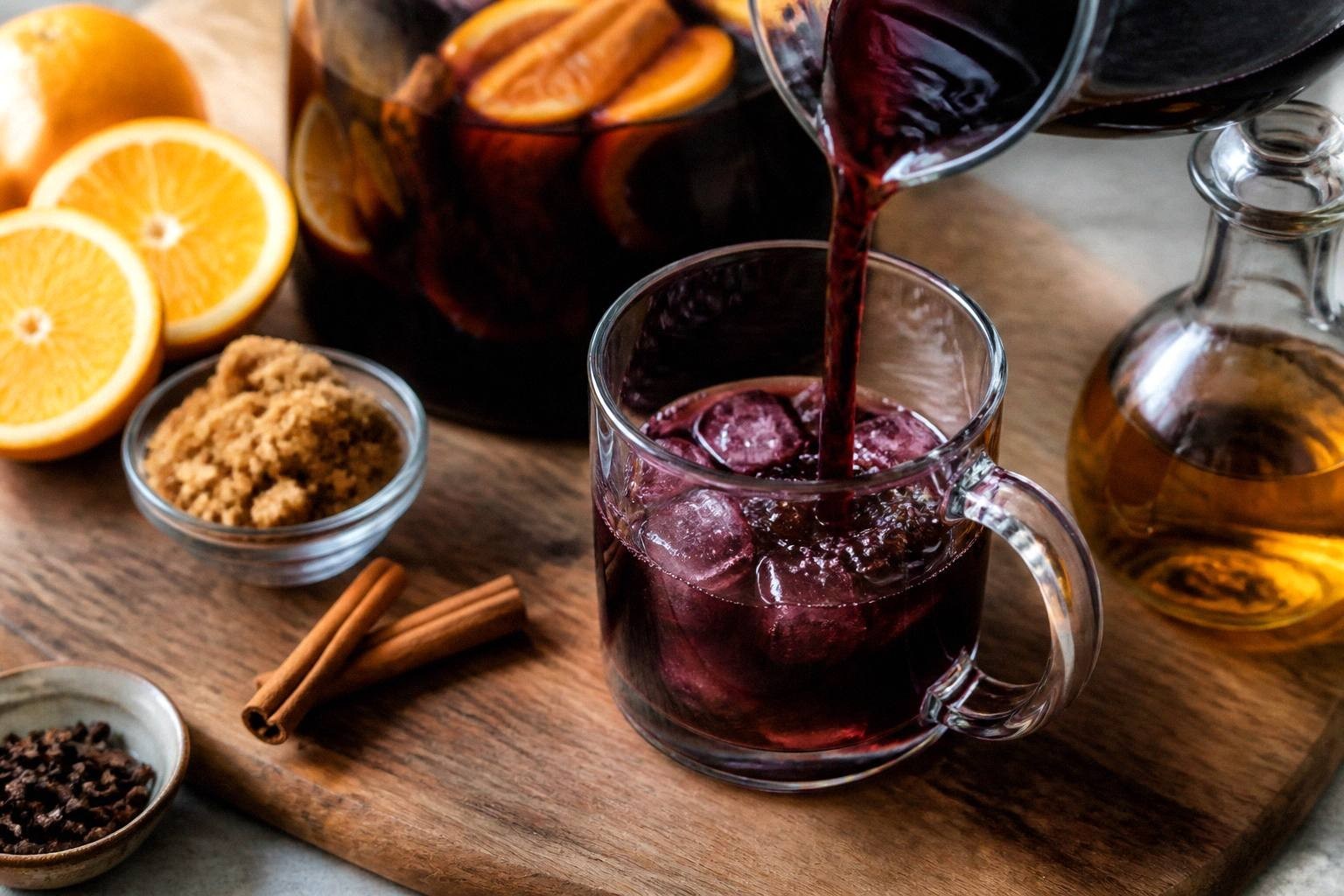
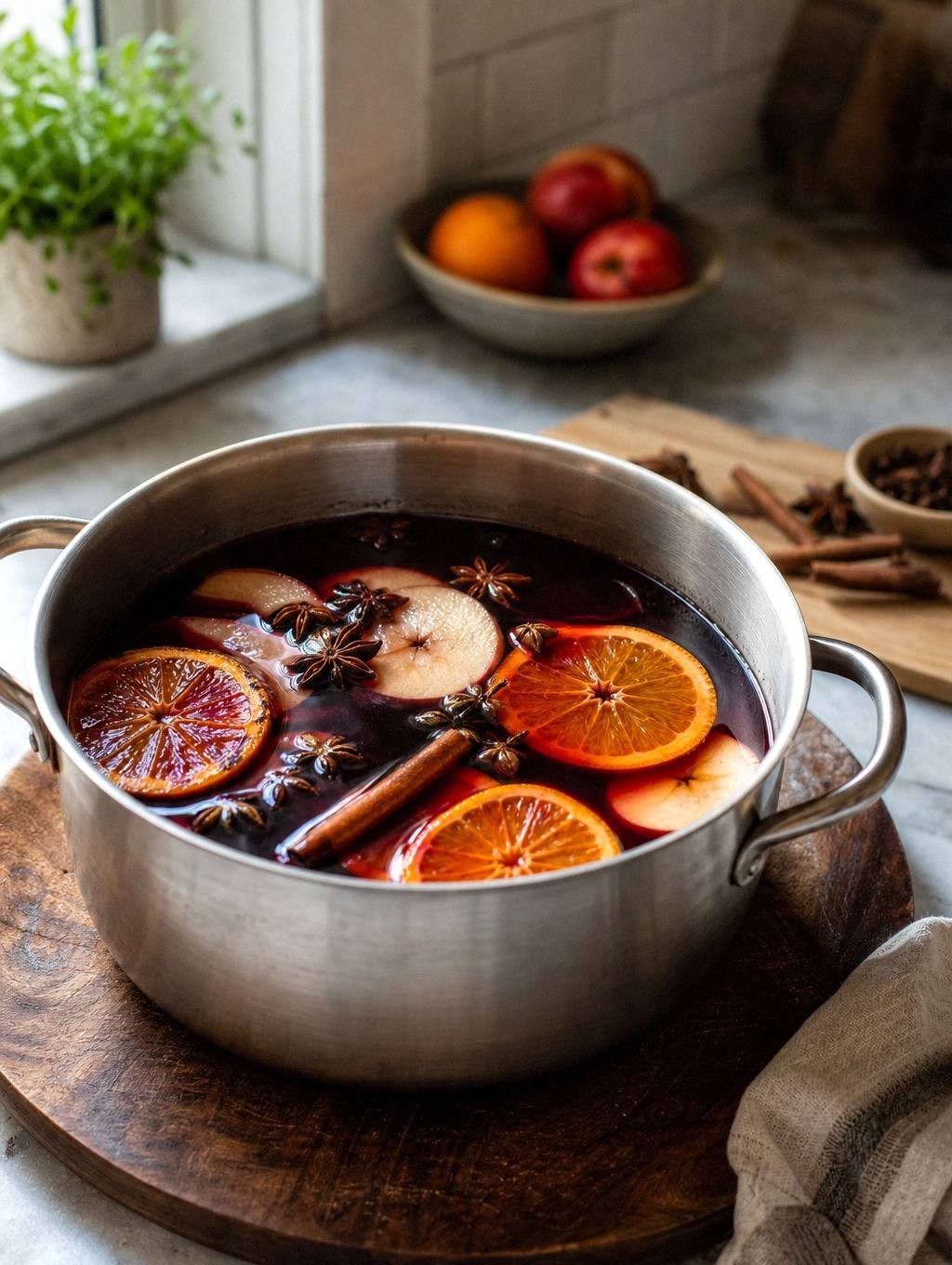
Non alcoholic mulled wine delivers the same warm spice and citrus comfort as the traditional version, without the alcohol. It’s built on fruit juice instead of wine, simmered with cinnamon, cloves, star anise, and orange until the kitchen smells like a winter market. The result is a drink that works for everyone at the table, from kids to designated drivers, and it tastes like the season itself.
Why Juice-Based Mulled Wine Works
Traditional mulled wine relies on red wine’s tannins and acidity to balance the sweetness of added sugar and fruit. When you remove the alcohol, you need a different foundation that can carry the same spice load without tasting like hot juice.
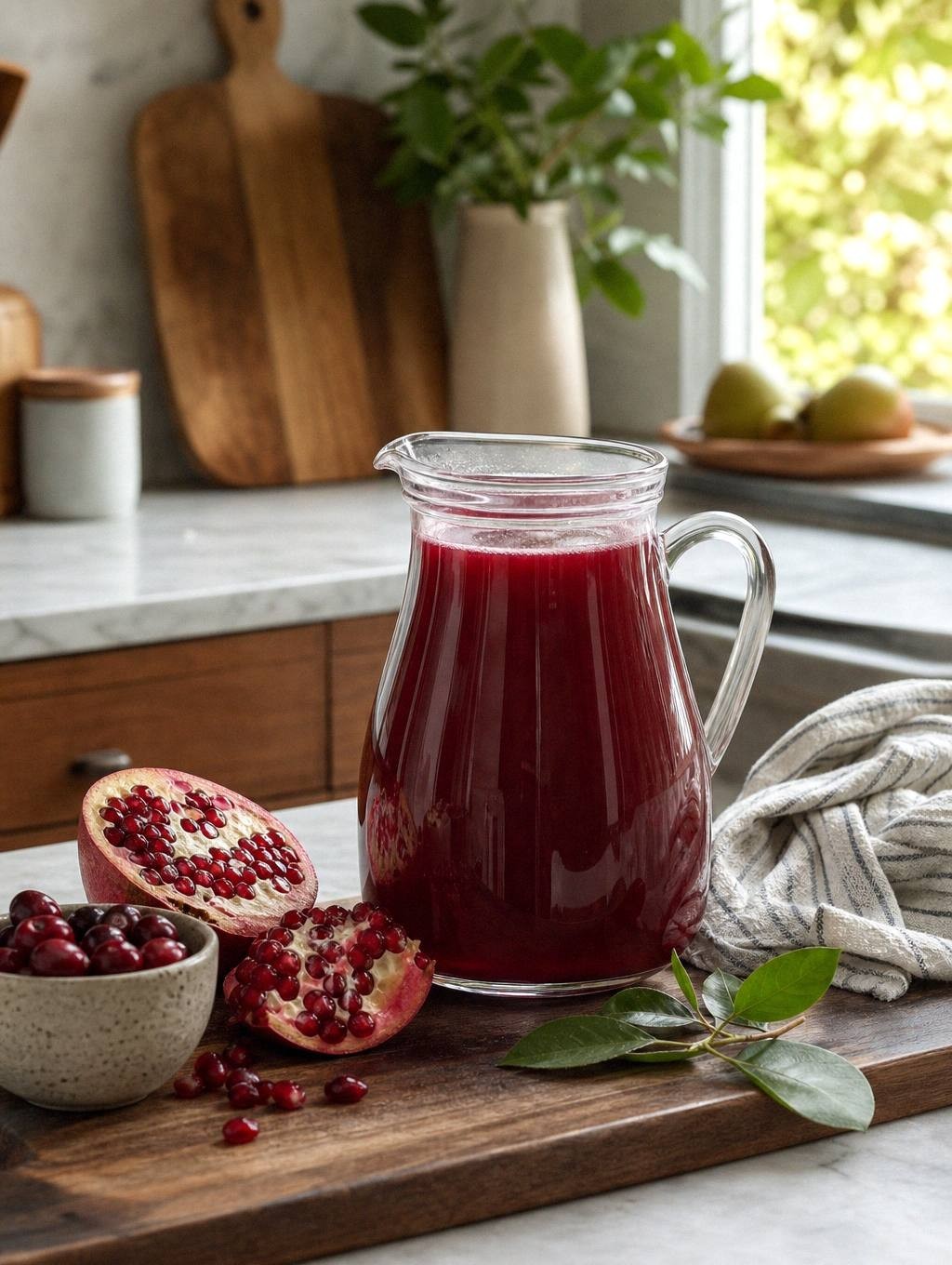
Pomegranate and cranberry juice provide the tartness and depth that mimic wine’s structure. Pomegranate brings a slightly astringent, earthy note, while cranberry adds brightness and a touch of bitterness. Together, they create a base that can stand up to cinnamon, cloves, and star anise without collapsing into one-note sweetness.
Orange juice or apple juice rounds out the blend with natural sugar and aroma. Orange contributes citrus oils that bloom when heated, and apple adds body without overwhelming the spice. The ratio matters: too much apple or orange and the drink tastes like mulled cider, too much cranberry and it turns medicinal.
The key to success is maintaining a balance between tart and sweet elements while allowing the spices to infuse slowly. This creates layers of flavor that develop over time, much like wine-based versions. The absence of alcohol means the fruit flavors come through more clearly, which can be an advantage when you want a drink that tastes distinctly of pomegranate and cranberry rather than masked by wine’s complexity.
What to Buy for the Base
You have three paths for the liquid foundation, and each one changes the final flavor and cost.
| Base Option | Flavor Profile | Cost | Best For |
|---|---|---|---|
| Pomegranate and cranberry juice blend | Tart, deep, wine-like with berry notes | Moderate | Closest to traditional mulled wine; works for adults and kids |
| Non-alcoholic red wine | Tannic, dry, authentic wine character | High | Guests who want the real thing without alcohol |
| Apple juice with cranberry | Sweeter, rounder, less acidic | Low | Family gatherings where kids are the main audience |
Non-alcoholic wine brands vary wildly in quality. Look for dealcoholized wine rather than grape juice labeled as wine; the former retains some tannin and complexity. It costs three times what juice does, but if you’re serving wine drinkers who miss the real thing, it’s worth it.
When shopping for juice, check the label for added sugar. Many cranberry juice blends contain high amounts of sweetener that will throw off the balance. Pure cranberry juice is extremely tart, so a blend is fine, but aim for versions with minimal added sugar. Pomegranate juice should be 100 percent juice with no fillers or concentrates that dilute the flavor.
Spices That Matter and Ones That Don’t
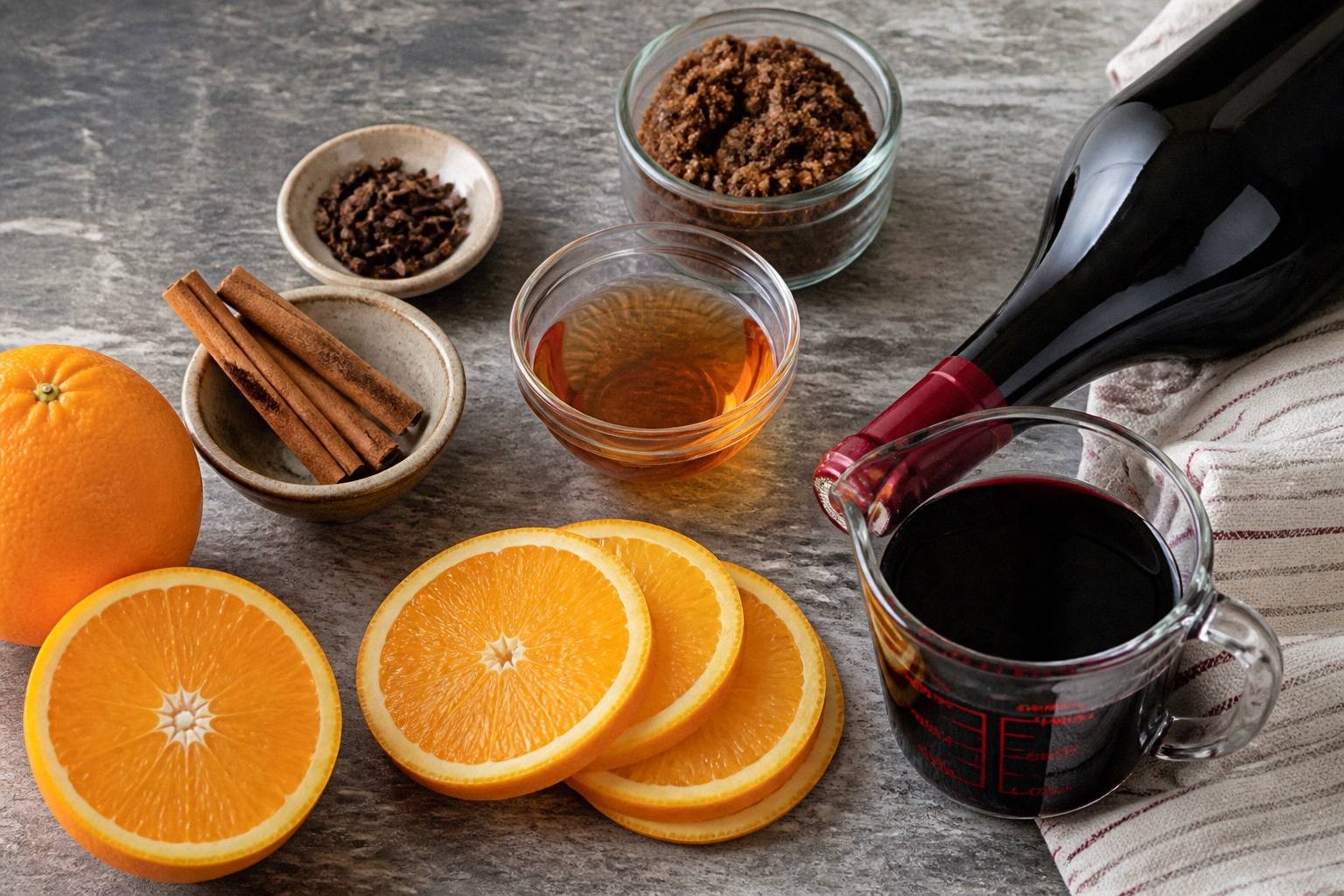
Cinnamon sticks, whole cloves, and star anise are the core. Cinnamon provides warmth without sweetness, cloves add a sharp, almost numbing spice, and star anise brings licorice and depth. Use whole spices, not ground; ground spices cloud the liquid and turn gritty after simmering.
Cardamom, ginger , and black peppercorns are optional but useful. Cardamom adds a floral, eucalyptus note that lifts the heavier spices. Fresh ginger juice or sliced ginger root contributes heat and brightness. Black peppercorns introduce a subtle bite that keeps the drink from tasting flat.
Avoid pre-mixed mulling spice sachets unless you know exactly what’s in them. Many contain ground spices, added sugar, or filler ingredients that muddy the flavor. Buying whole spices separately costs less and gives you control over the intensity.
The quality of your spices matters more than you might expect. Whole spices lose potency over time, so if your cinnamon sticks or star anise have been sitting in the cupboard for years, they won’t deliver much flavor. Fresh spices release more aromatic oils and create a more fragrant drink. Store whole spices in airtight containers away from light and heat to preserve their strength.
Ingredients
- 1 cup pomegranate juice
- 1 cup red grape juice
- 1 ½ cups cranberry juice
- 2 tsp pomegranate molasses
- 2 clementines (an orange, tangerine)
- 1 long cinnamon stick
- 3 star anise
- 6 cloves
- ⅛ tsp nutmeg (freshly grated)
- 1.5 tsp ginger juice (3 inch chunk grated finely and pressed firmly)
Instructions
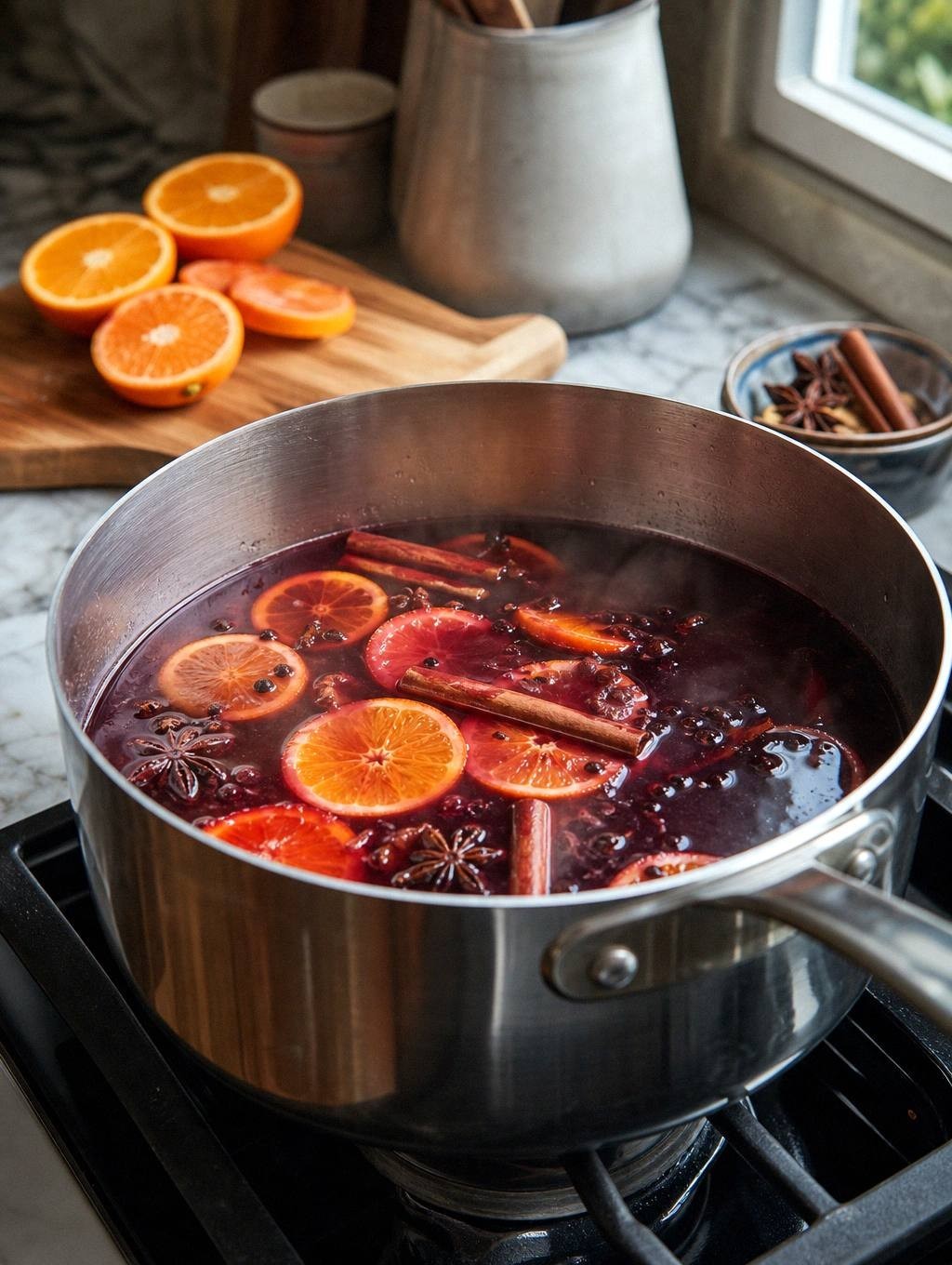
- Pour all the juices except the ginger juice into a medium saucepan, then add the pomegranate molasses, sliced clementines and whole spices. Set it over medium heat and bring it to a simmer. Turn the heat down to low and let it steep for 20 minutes.
- Just before serving, add the freshly squeezed ginger juice and stir to combine.
Common Problems and How to Fix Them
- Too sweet: Add a squeeze of fresh lemon juice or a splash more cranberry juice to restore tartness.
- Bitter or overly spiced: You simmered it too long or used too many cloves. Dilute with more orange juice and simmer for just 5 minutes next time.
- Tastes like hot juice: The spices didn’t steep long enough, or you used ground instead of whole. Simmer for the full 15 minutes and use whole spices.
- Cloudy or gritty: Ground spices or boiling caused this. Strain through a fine-mesh sieve and keep the heat low next time.
- No aroma: The liquid boiled and the volatile oils evaporated. Keep it at a bare simmer, with small bubbles breaking the surface but no rolling boil.
Make-Ahead and Batch Scaling
You can make this up to three days ahead. Simmer the juice and spices as directed, let it cool completely, then refrigerate in a sealed container with the whole spices still in it. The flavor deepens as it sits. Reheat gently on the stove before serving, and add the ginger juice fresh each time.
For a crowd, double or triple the recipe and use a large stockpot. The spice-to-liquid ratio stays the same, but add five extra minutes to the steeping time for larger batches. A slow cooker works too: combine everything except the ginger juice, set it on low for 1 1/2 hours, then stir in the ginger just before serving.
Freeze leftovers in a container with an inch of headspace. The juice expands as it freezes, and without that room the container will crack. Thaw overnight in the fridge and reheat on the stove.
When reheating, resist the urge to crank up the heat. Low and slow preserves the aromatic compounds that make the drink smell and taste like winter. If you’re serving from a slow cooker at a party, keep it on the warm setting rather than low to prevent the spices from becoming bitter with extended heat exposure.
Frequently Asked Questions
Can I use non-alcoholic wine instead of juice?
Yes. Replace the cranberry and pomegranate juice with 2 1/2 cups of dealcoholized red wine. Keep the orange juice and spices the same. The result tastes closer to traditional mulled wine, with more tannin and less fruit-forward sweetness.
How do I keep it from boiling?
Watch for small bubbles that barely break the surface. If the liquid starts to roll or steam heavily, reduce the heat immediately. Boiling drives off the aromatic oils from the spices and citrus, leaving the drink flat.
Can kids drink this?
Yes. There’s no alcohol, and the spices are the same ones used in chai and holiday baking. If you’re serving very young children, you can reduce the cloves to three or four for a milder flavor.
What if I don’t have pomegranate molasses?
Leave it out or substitute a teaspoon of honey . Pomegranate molasses adds a concentrated tartness and slight sweetness, but the drink works without it.
How long does it last in the fridge?
Three to four days in a sealed container. The flavor stays strong, but the citrus can start to taste bitter after that. Reheat only what you’ll drink, not the whole batch.
Can I make this with tea instead of juice?
Yes. Brew 3 cups of strong black tea, chai, or rooibos, then add 1 cup of cranberry or pomegranate juice and the spices. Simmer for 10 minutes. The tea base is less sweet and has a drier finish.
Serving Suggestions and Garnishes
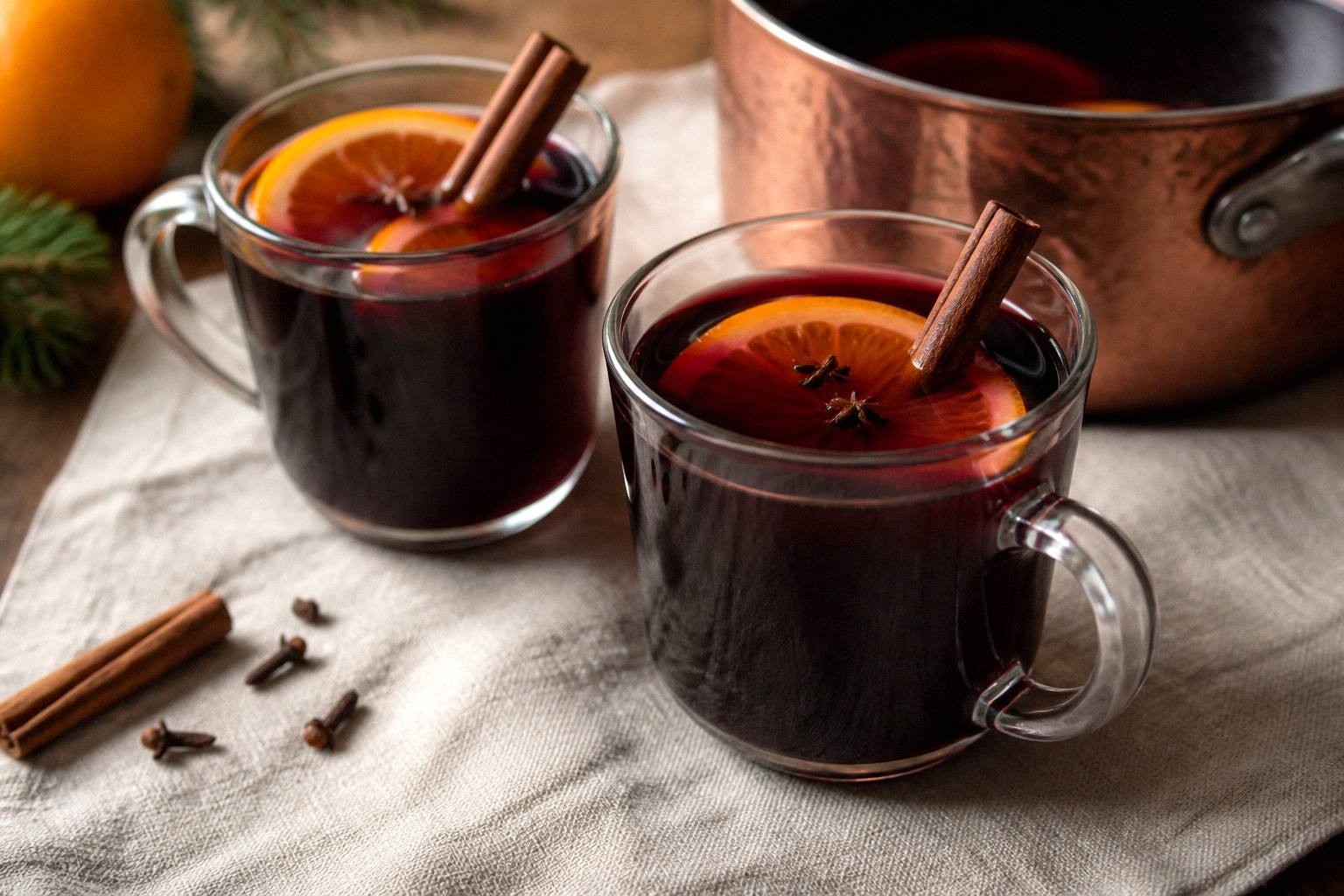
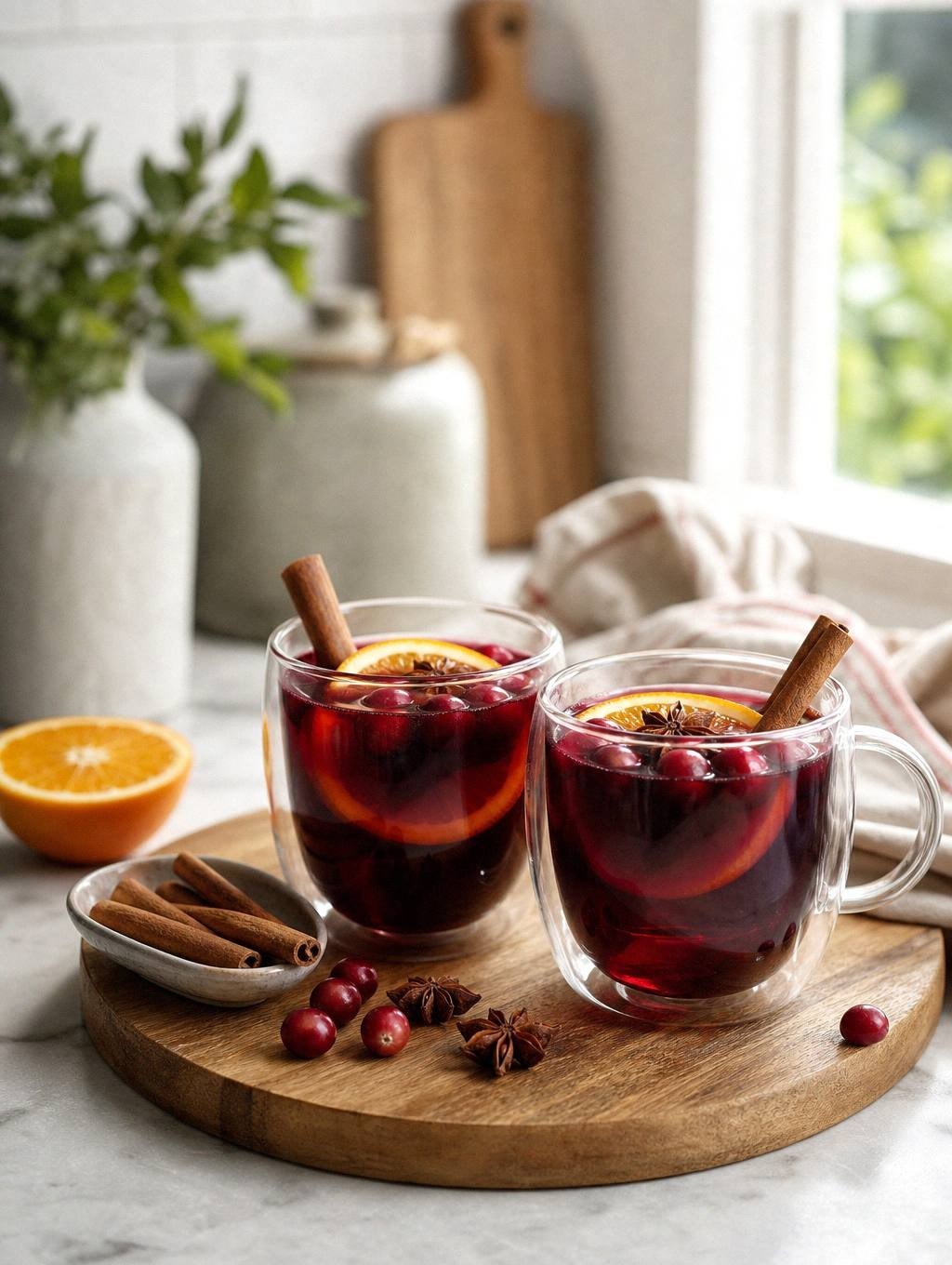
Serve the mulled wine in heat-safe glasses or mugs to show off the deep red color. A cinnamon stick in each glass works as both garnish and stirrer. Orange slices, fresh cranberries, or a star anise floating on top add visual appeal without changing the flavor.
For a festive presentation, rim the glasses with sugar before pouring. Run an orange wedge around the rim, then dip it in coarse sugar mixed with a pinch of cinnamon. The sugar adds a sweet crunch that contrasts with the spiced liquid.
Pair this drink with holiday cookies, gingerbread, or anything with warm spices that echo the flavors in the glass. It also works alongside cheese plates, especially aged cheddar or gouda, where the tartness of the cranberry cuts through rich, creamy cheese.
Related Guides
If you are also making the alcoholic version for the rest of the table, the full method is in the mulled wine recipe for Christmas . Three of the guides in that cluster apply to this juice-based pot just as much as the wine one:
- How long does mulled wine last for holding it warm and storing the leftovers.
- Can you reheat mulled wine for stovetop reheating and slow cooker holding.
- Can you make mulled wine ahead of time for a host timeline when you are running two pots.
Conclusion
Non alcoholic mulled wine works because the right juice blend mimics wine’s tartness and body, and whole spices steeped low and slow release their oils without bitterness. It’s a drink that tastes like effort and smells like the season, and it doesn’t need alcohol to do either. Make it once and you’ll have it on hand every winter.