
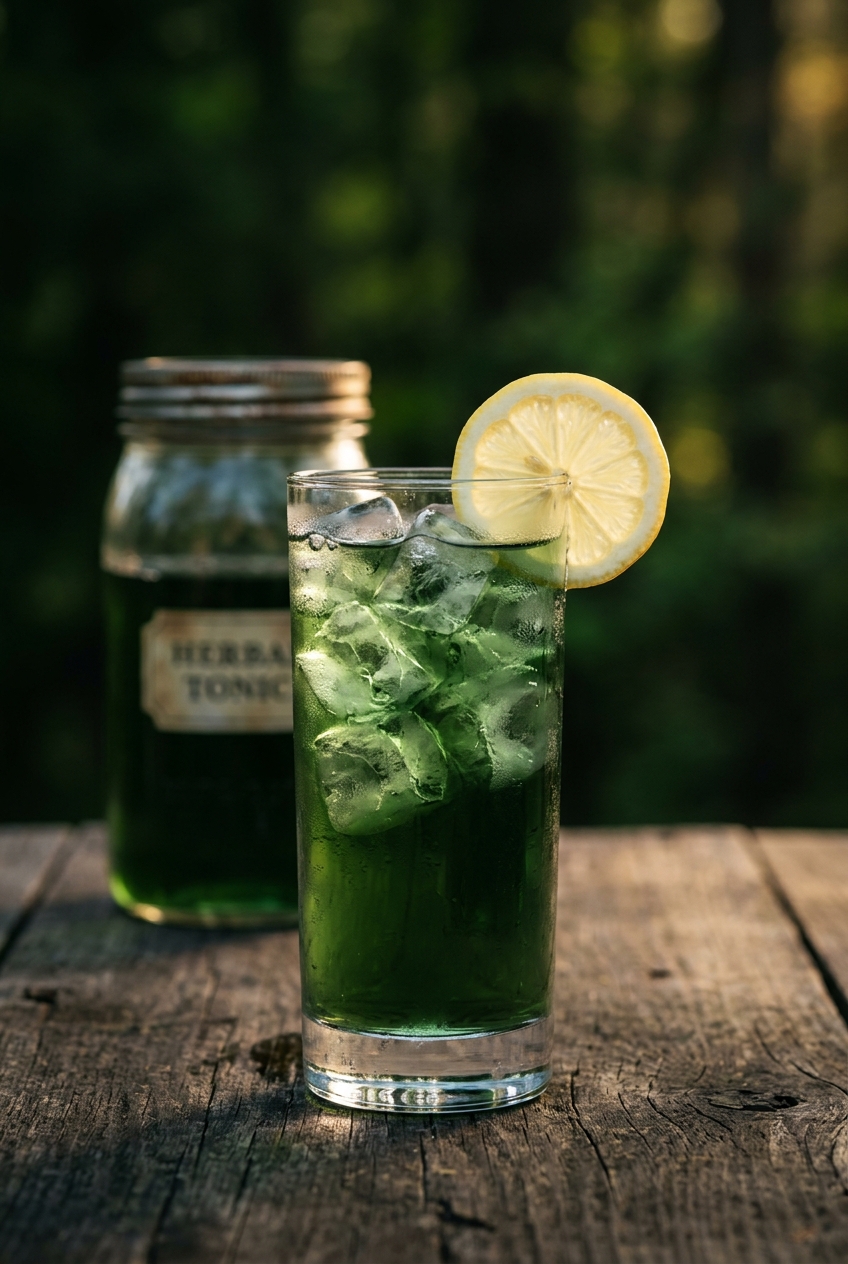
Cold-steeped nettle, oatstraw, and red clover infusion for mineral-rich spring energy. Get the recipe for this nourishing herbal tonic.
Why You Will Love This
This is not tea. It is a cold-steeped mineral infusion that pulls calcium, magnesium, iron, and B vitamins from herbs in concentrations you cannot get from a 5-minute steep. The liquid turns deep green-gold, tastes grassy and faintly sweet, and leaves you feeling structurally replenished. Spring is the season to drink this daily.
The Story Behind It
Western herbalists have long used nutritive infusions as foundational nourishment, especially during seasonal transitions. The cold-infusion method, steeping herbs for 4-8 hours instead of minutes, breaks down plant cell walls to release minerals that hot water cannot access. Nettle alone contains 500-1,000 mg of calcium per cup of finished infusion, compared to 300 mg in a glass of milk. I started making these in March years ago when I realized my body craved mineral density after winter, not just caffeine.
What You Will Need
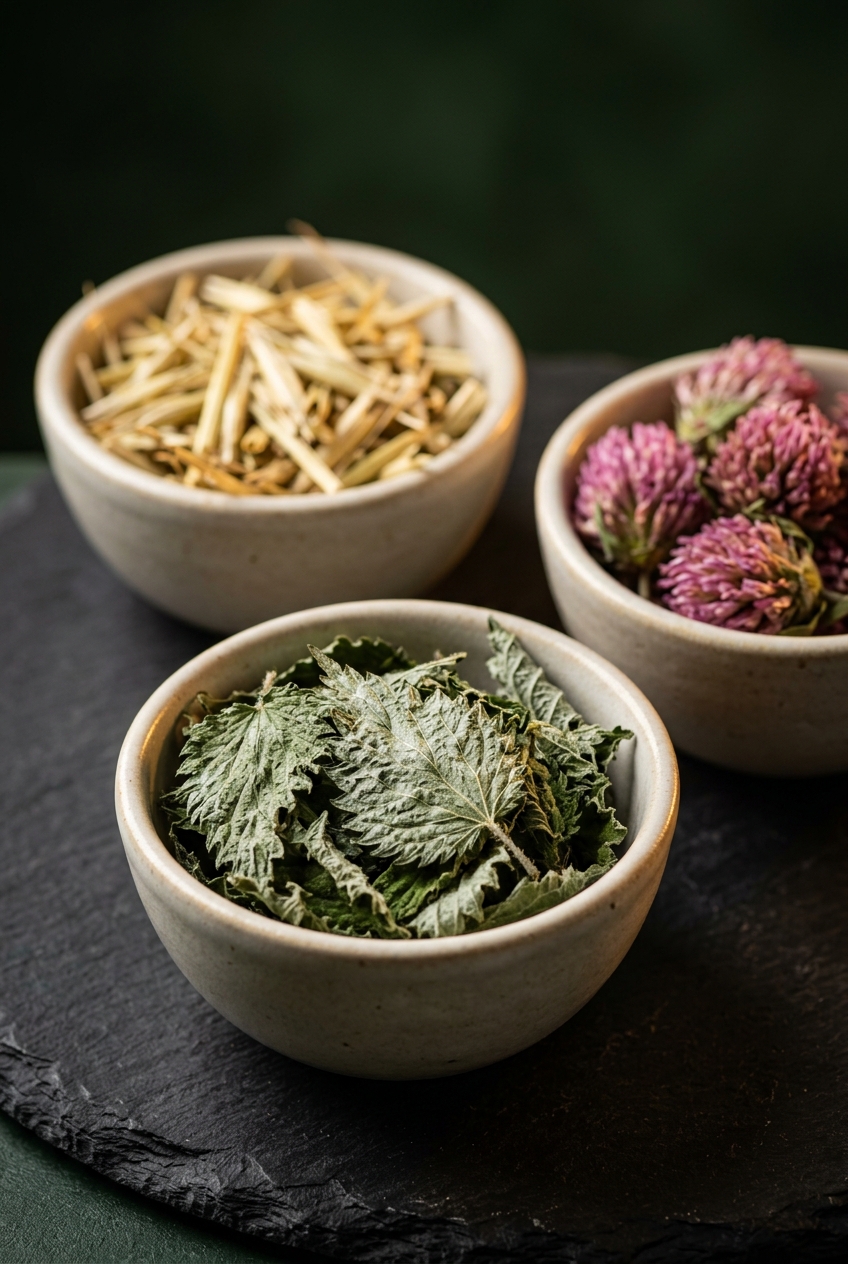
- 1 cup dried nettle leaf
- 1/2 cup dried oatstraw
- 1/4 cup dried red clover blossoms
- 1 quart filtered water, room temperature
- Fresh lemon slices (optional, for serving)
- Ice cubes
The herb-to-water ratio here is roughly 1.75 cups of dried herbs per quart, which is 3-4 times higher than standard tea. This density is what makes nutritive infusions work.
How to Make It
- Combine dried nettle leaf, oatstraw, and red clover blossoms in a clean quart jar.
- Pour room-temperature filtered water over the herbs until the jar is full, leaving 1 inch of headspace.
- Stir gently to ensure all herbs are submerged. Cap the jar loosely.
- Let steep at room temperature for 4 hours minimum, or up to 8 hours for maximum mineral extraction.
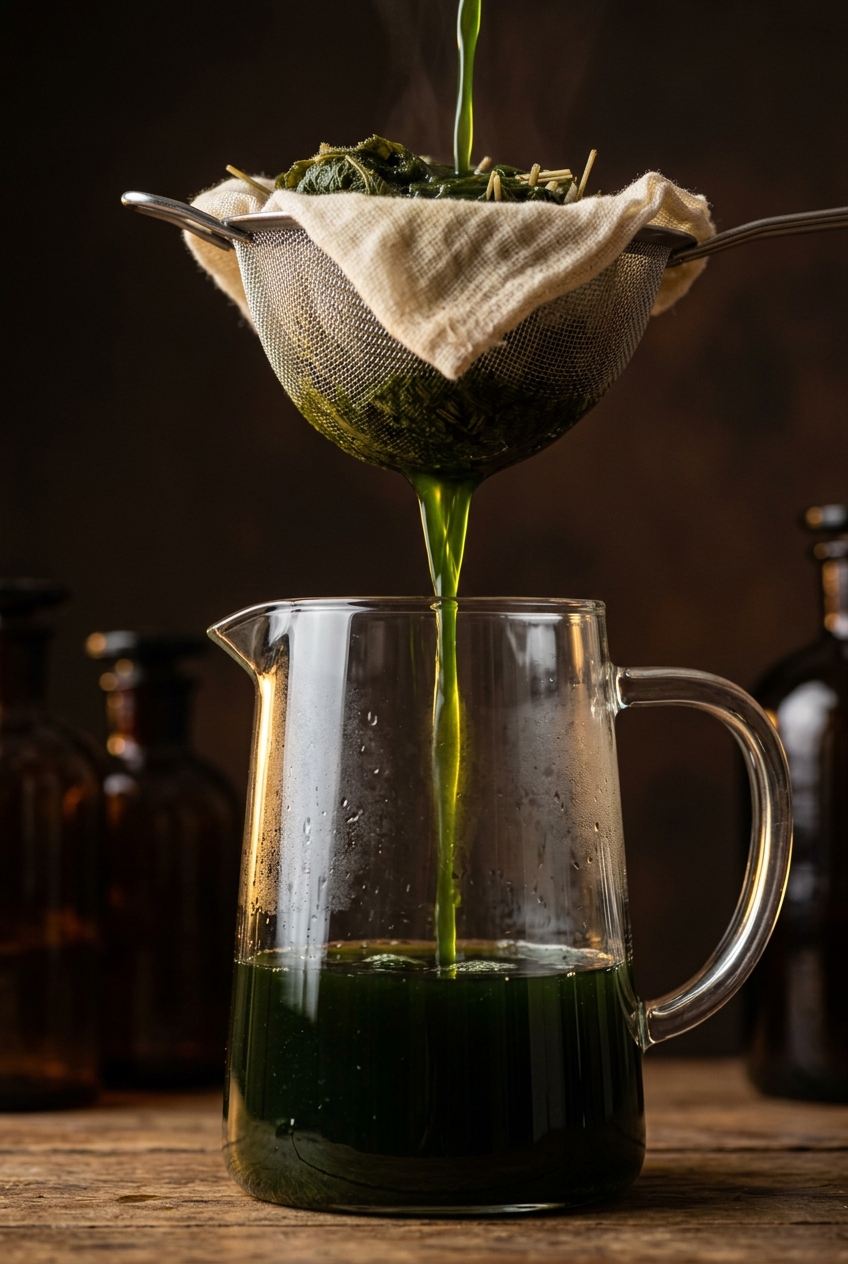
- Strain through a fine-mesh sieve or cheesecloth into a clean pitcher, pressing herbs gently to extract all liquid.
- Refrigerate the strained infusion. Serve chilled over ice with fresh lemon slices if desired.
Herbalist Notes
Nettle leaf is the cornerstone of nutritive infusions. Studies show it contains 1.5-3% minerals by dry weight, including calcium, magnesium, iron, potassium, and silica. The long steep extracts these minerals as well as chlorophyll and vitamin K.
Oatstraw, harvested from milky oat tops, contains B vitamins, calcium, and magnesium in forms that support the nervous system. Western herbalists use it for stress resilience and bone health. The silica content also strengthens hair and nails.
Red clover adds phytoestrogens (isoflavones) and trace minerals. In Western herbalism, it is considered a blood purifier and lymphatic tonic, particularly useful in spring cleansing protocols.
Make It Your Own
If you cannot source red clover, substitute with alfalfa leaf or raspberry leaf, both of which are mineral-dense. For a slightly sweeter infusion, add 2 tablespoons of dried peppermint or lemon balm during the steep. Some herbalists add a tablespoon of dried horsetail for extra silica, though this makes the flavor more astringent. Drink this cold or at room temperature. Heating it above 120°F destroys some of the enzyme activity and vitamin content.
Common Questions
What is a nutritive herbal infusion?
A nutritive infusion is a long-steeped herbal preparation using a high ratio of dried herbs to water, typically 1-2 cups of herbs per quart, steeped for 4-8 hours. Unlike regular herbal tea, which steeps for 5-15 minutes, this method extracts significantly higher concentrations of minerals, vitamins, and phytonutrients. Western herbalists use nutritive infusions as daily tonics for building foundational health rather than treating acute symptoms.
How long should you steep a nutritive infusion?
Steep for a minimum of 4 hours at room temperature, though 8 hours yields maximum mineral extraction. Nettle infusions steeped for 8 hours contain approximately 500-1,000 mg of calcium per cup, compared to 200-300 mg in a 10-minute steep. You can steep overnight (up to 12 hours) without bitterness, but strain by morning to prevent fermentation. Do not steep longer than 24 hours at room temperature.
What herbs are best for nutritive infusions?
The top five nutritive herbs are nettle leaf (highest mineral content), oatstraw (nervous system support), red clover (lymphatic and hormonal), alfalfa (protein and chlorophyll), and raspberry leaf (uterine tonic and minerals). Comfrey leaf was traditionally used but is now avoided due to pyrrolizidine alkaloids. Always use the leaf or aerial parts of these plants, not roots, and source from organic suppliers to avoid pesticide residues.
How do you make a nutritive infusion?
Place 1-2 cups of dried nutritive herbs in a quart jar. Fill with room-temperature or cool filtered water. Stir to submerge all herbs, cap loosely, and let steep at room temperature for 4-8 hours. Strain through cheesecloth or a fine-mesh sieve, pressing gently to extract all liquid. Refrigerate the strained infusion and drink within 48 hours. The cold-infusion method preserves heat-sensitive vitamins and enzymes while maximizing mineral extraction through prolonged contact time.
Can I drink nutritive infusions every day?
Yes. Herbalists recommend 1-4 cups daily as a foundational practice, especially during times of increased mineral demand such as pregnancy, lactation, menopause, or recovery from illness. Nettle infusions provide approximately 2,000-4,000 mg of calcium per quart, meeting or exceeding daily recommended intake. Drink consistently for at least 6-8 weeks to notice changes in energy, hair and nail strength, and bone density markers. Some people notice effects within 2-3 days.