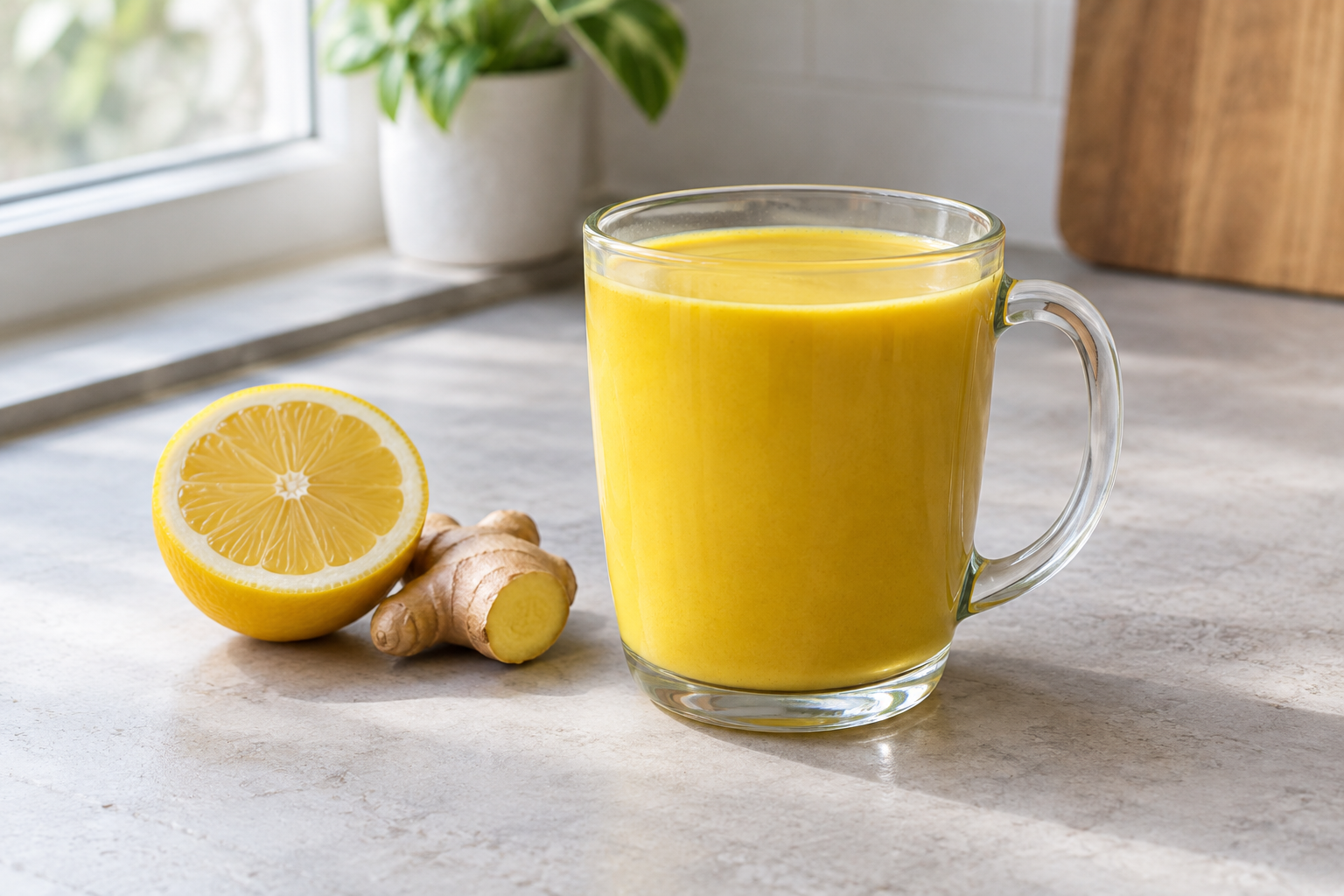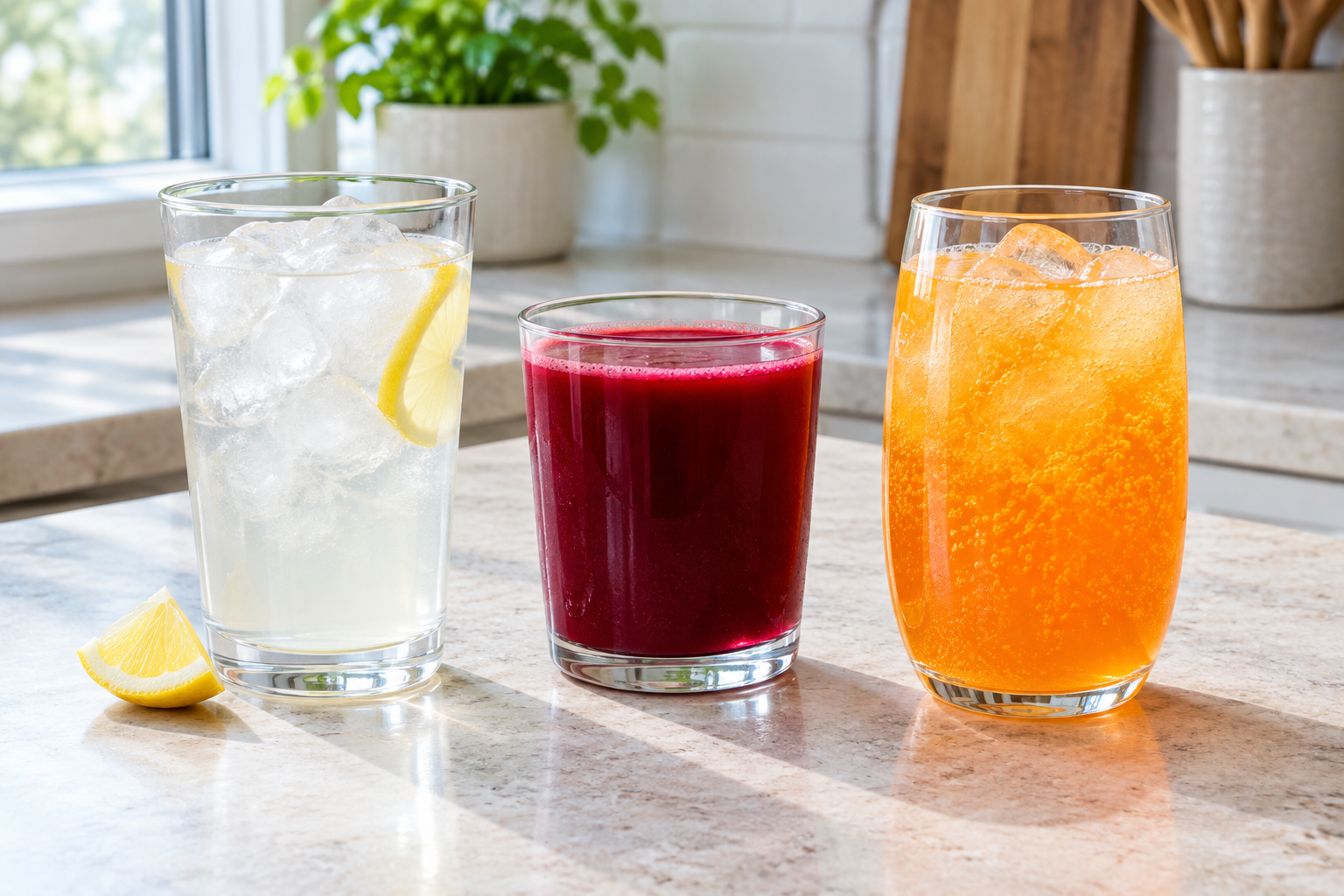
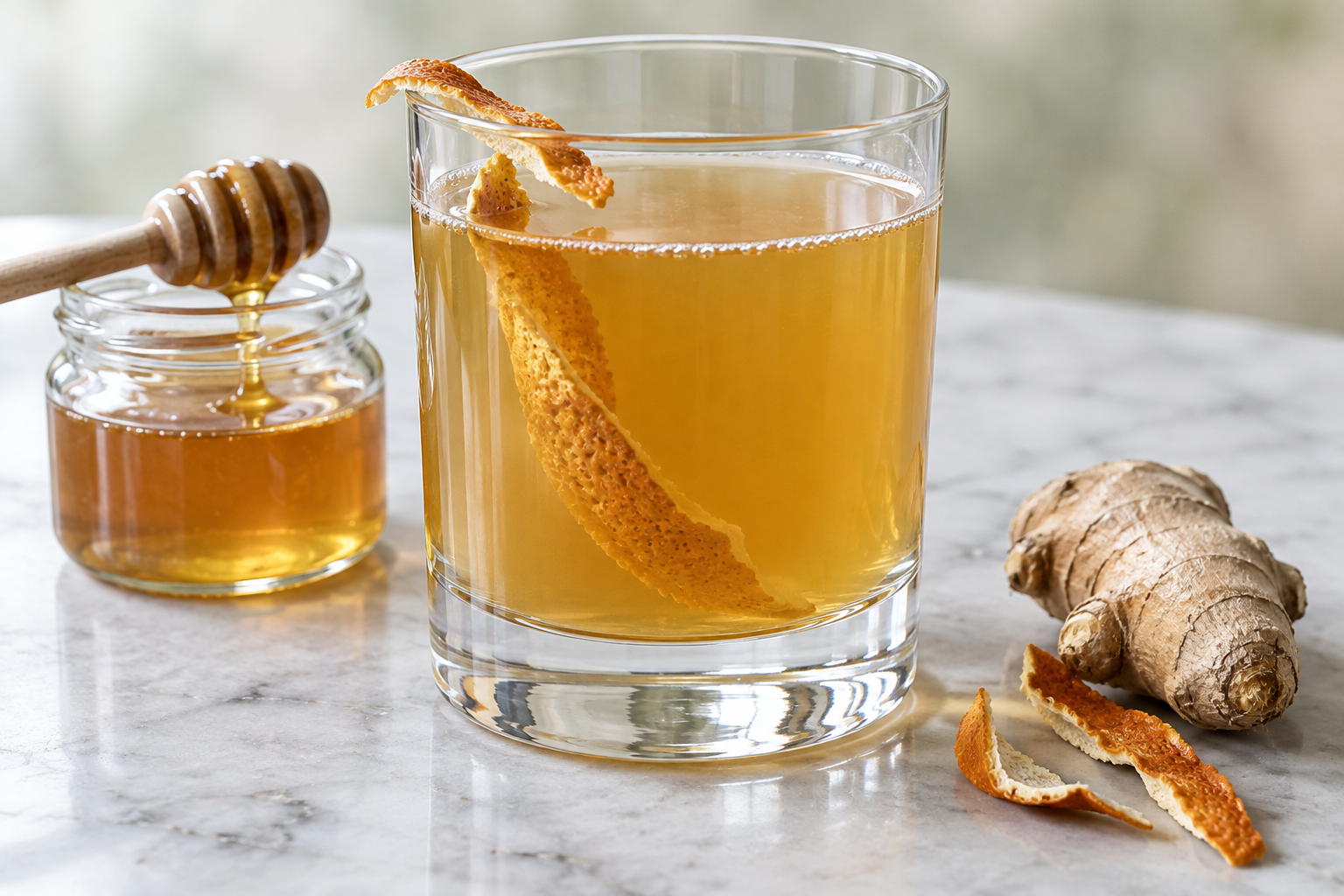
An oxymel is a honey-vinegar tonic that herbalists have used for centuries to support immune health, soothe sore throats, and ease digestion. The name comes from the Greek words for “acid” and “honey,” and the combination works because vinegar extracts plant compounds while honey preserves them and makes the tonic pleasant to take. This recipe gives you a citrus-ginger version that’s ready to use in two to four weeks.
What an Oxymel Is and Why It Works

An oxymel combines equal parts honey and vinegar with herbs, creating a shelf-stable extract that’s easier to take than straight tinctures. The vinegar pulls water-soluble and some fat-soluble compounds from the plant material, while the honey adds antimicrobial properties and balances the acidity. Together, they create a sweet-and-sour base that preserves the herbs and delivers them in a form you can take by the spoonful or mix into warm water.
Hippocrates prescribed honey and vinegar mixtures for respiratory complaints, and herbalists still reach for oxymels when someone needs immune support or throat relief during cold season. The method works because both honey and vinegar have antimicrobial activity on their own, and the combination appears to enhance that effect. Raw honey contains enzymes and compounds that inhibit bacterial growth, and apple cider vinegar’s acetic acid creates an environment where many microorganisms struggle to survive.
The herbs you choose determine what the oxymel does. Warming herbs like ginger and orange peel support circulation and digestion, making them good choices for a winter tonic. Thyme and oregano bring antimicrobial compounds that target respiratory infections. Elder flowers and mint soothe inflamed tissues in the throat and upper respiratory tract. You can tailor the recipe to what you need by swapping the herbs while keeping the honey-vinegar base the same.
Ingredients
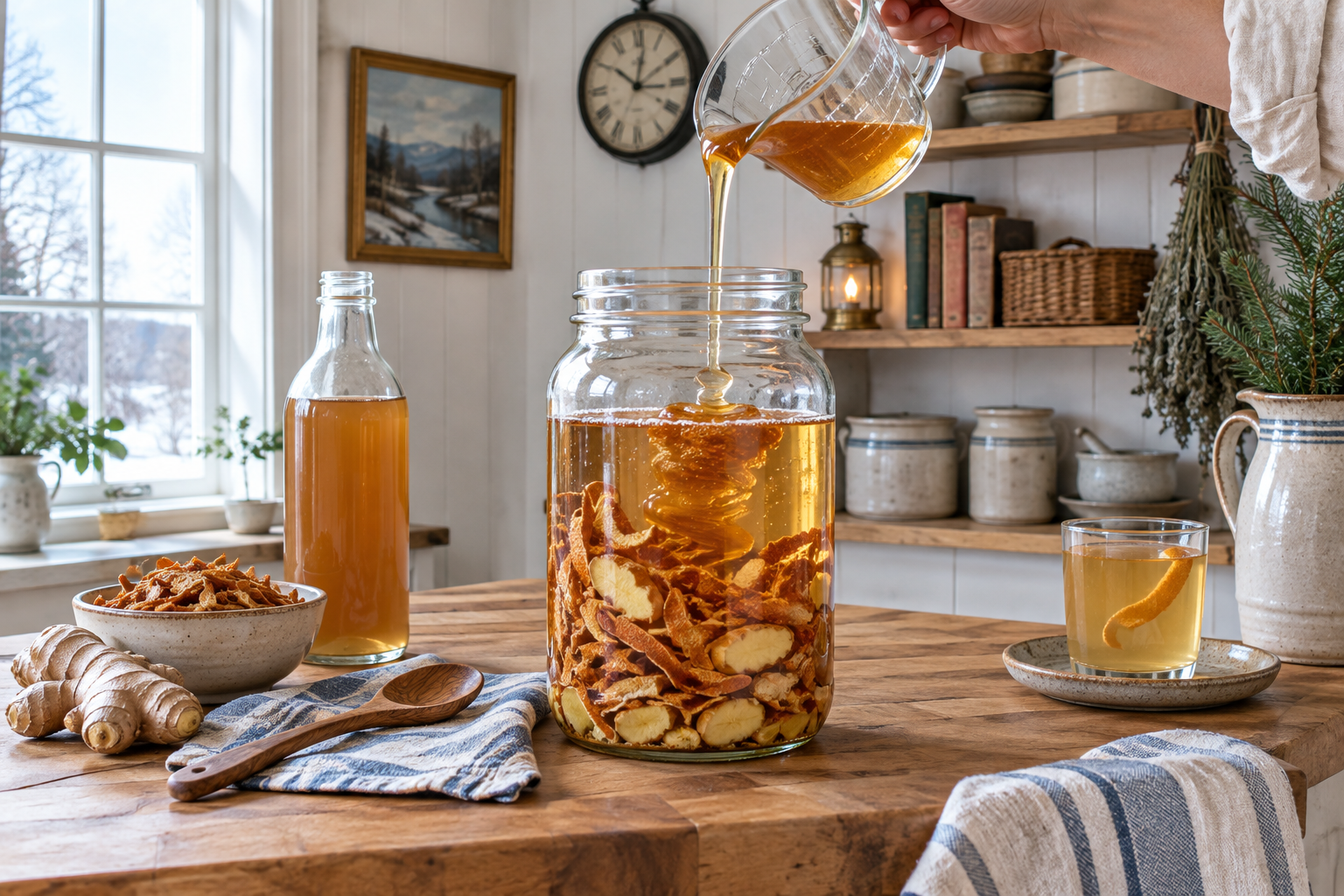
- 1 cup dried organic orange peel
- 1/2 cup fresh ginger, sliced
- 1 cup raw apple cider vinegar
- ½ cup raw honey
Instructions

- Drop the dried orange peel and fresh ginger into a clean glass jar.
- Pour the raw apple cider vinegar over everything until it’s all covered.
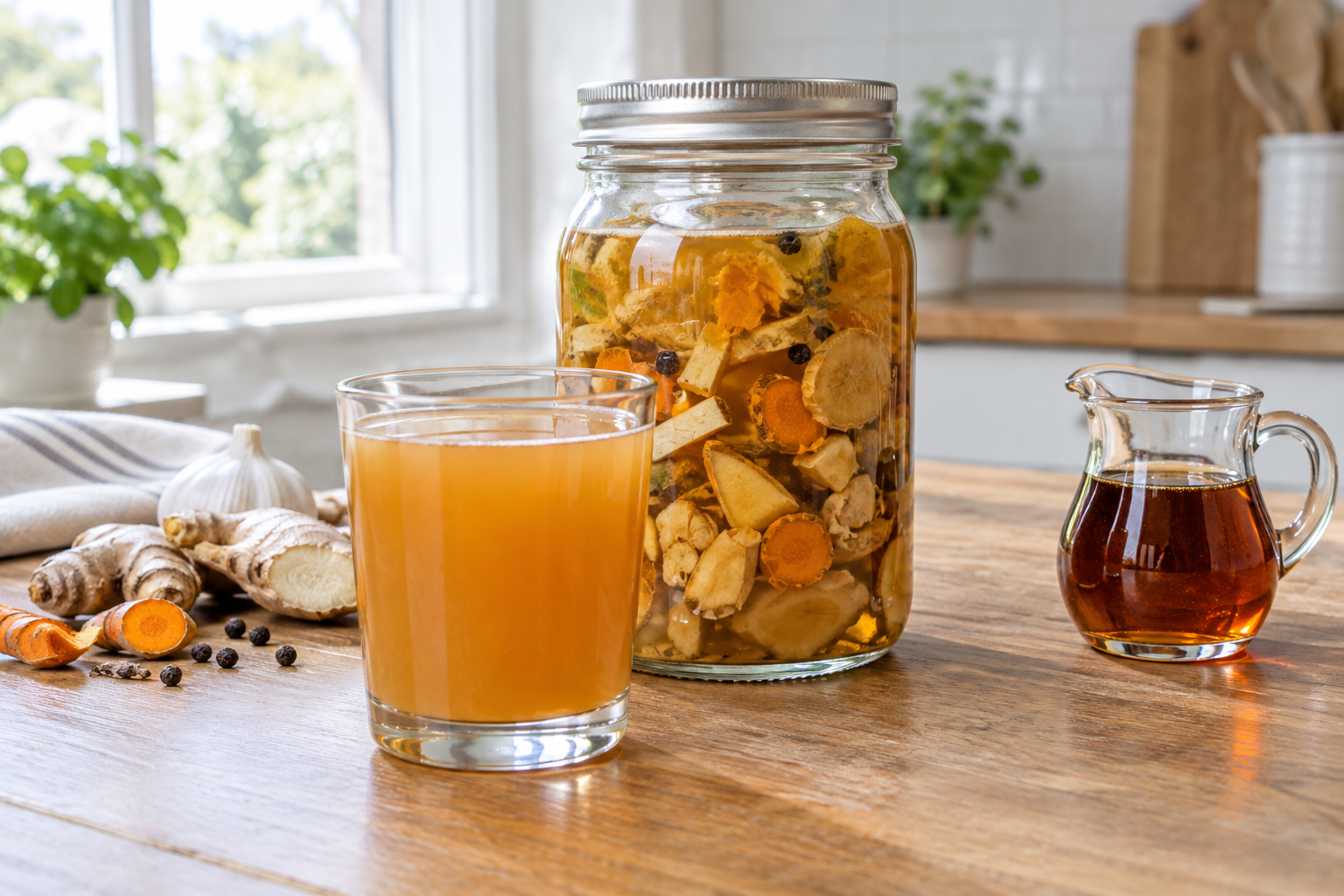
- Seal the jar tight, give it a good shake, and tuck it away somewhere cool and dark, shaking it now and then for 2-4 weeks.
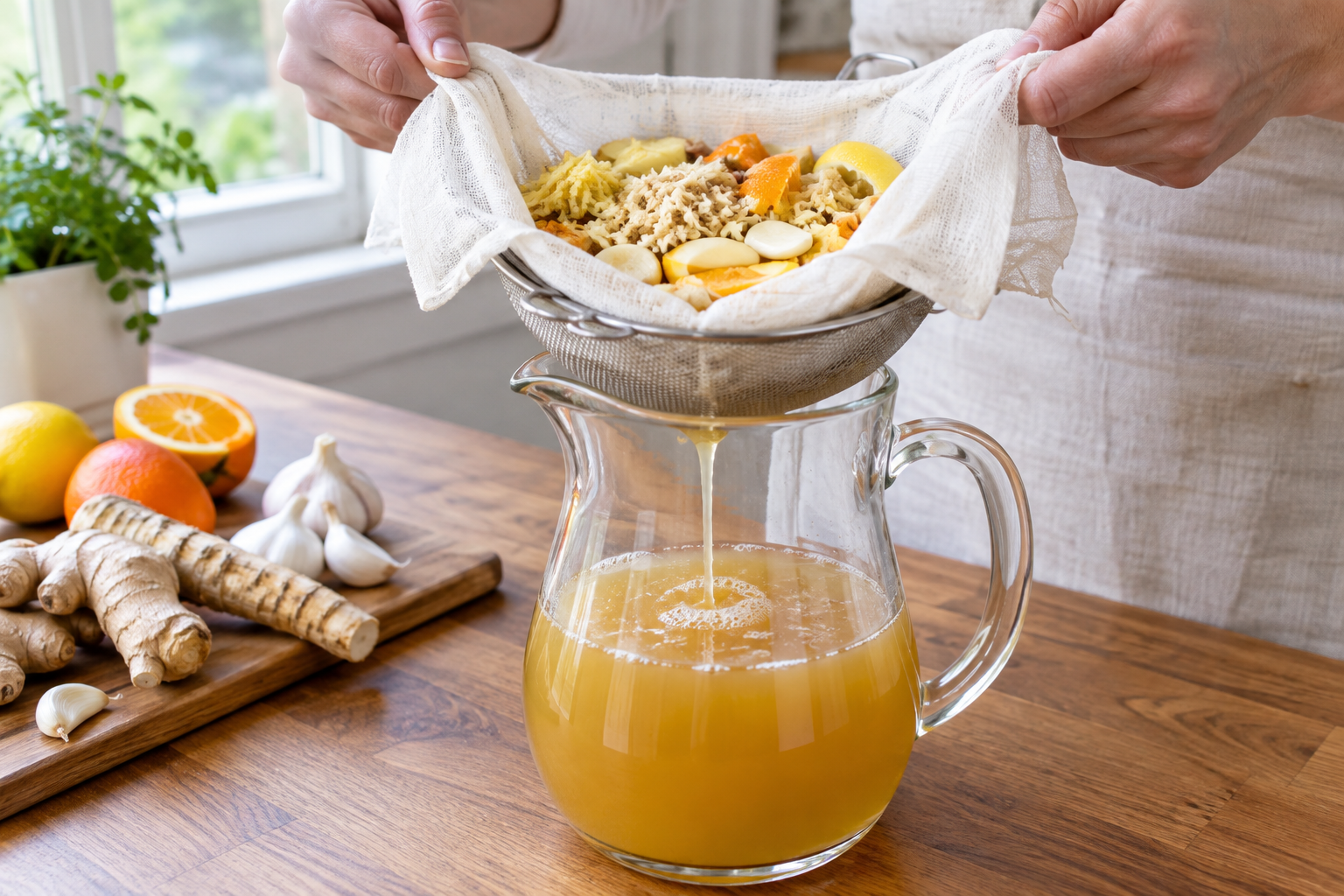
- Strain out the solids and stir in raw honey to your liking until it’s all mixed in.
- Take 1 teaspoon daily for immune support, or stir it into warm water for a soothing, citrus-infused wellness tonic.
- For an extra kick, drop in a pepper, a dash of cayenne pepper, or a cinnamon stick while it’s infusing.
Choosing Your Ingredients
Raw honey is the best choice because it retains enzymes and antimicrobial compounds that are destroyed by heat processing. Any raw honey works, but darker varieties like buckwheat or wildflower bring more antioxidants and a stronger flavor. If you can only find pasteurized honey, it will still preserve the oxymel and add sweetness, but you’ll lose some of the antimicrobial benefit.
Apple cider vinegar with the mother is the standard base for oxymels. The mother is the cloudy sediment of beneficial bacteria and enzymes that forms during fermentation, and it adds probiotic value to the finished tonic. White vinegar or wine vinegar will extract the herbs, but they lack the additional compounds that make apple cider vinegar useful for digestion and blood sugar regulation.
Fresh ginger has more volatile oils than dried, so it gives the oxymel a sharper, more aromatic kick. Dried ginger works if that’s what you have, but use half the amount because drying concentrates the flavor. Orange peel should be organic because conventional citrus is heavily sprayed, and the peel concentrates pesticide residues. If you’re using fresh peel, let it dry for a day or two before adding it to the jar so it doesn’t introduce excess moisture.
Best Herbs for Oxymel
The herbs you choose should match what you’re trying to support. Here are the ones herbalists reach for most often, with what each one does and how it tastes.
| Herb | What It Does | Flavor |
|---|---|---|
| Thyme | Antimicrobial, supports respiratory health, loosens mucus | Warm, slightly bitter, herbal |
| Oregano | Strong antimicrobial, supports immune response | Pungent, slightly bitter, savory |
| Elder flowers | Soothes upper respiratory inflammation, promotes sweating | Floral, slightly sweet, delicate |
| Mint | Cools inflamed tissues, eases digestion, opens airways | Cool, refreshing, sweet |
| Ginger | Warms circulation, eases nausea, supports digestion | Spicy, warming, slightly sweet |
| Orange peel | Supports digestion, adds vitamin C, lifts mood | Bright, citrus, slightly bitter |
You can use a single herb or combine two or three that work toward the same goal. A respiratory blend might include thyme, elder flowers, and mint. A digestive blend could combine ginger, orange peel, and a small amount of fennel seed. Start with the recipe as written to learn how the process works, then experiment with other herbs once you know what to expect.
How to Use Your Oxymel
Take 1 teaspoon straight from the spoon for immune support during cold season, or when you feel a sore throat starting. The honey coats your throat while the vinegar and herbs go to work on inflammation and bacteria. You can take it up to three times a day when you’re actively fighting something off, or once daily as a preventive measure.
Mix 1 tablespoon into a mug of warm water for a soothing drink that’s easier to sip than taking it straight. The heat releases the aromatic compounds and makes the oxymel feel more like tea. Add a squeeze of lemon if you want more citrus, or a pinch of cayenne if you want extra warmth.
Use it as a salad dressing base by whisking 2 tablespoons of oxymel with 6 tablespoons of olive oil and a pinch of salt. The sweet-and-sour balance works especially well on bitter greens, roasted vegetables, or grain salads. You can also drizzle it over roasted carrots or winter squash as a finishing glaze.
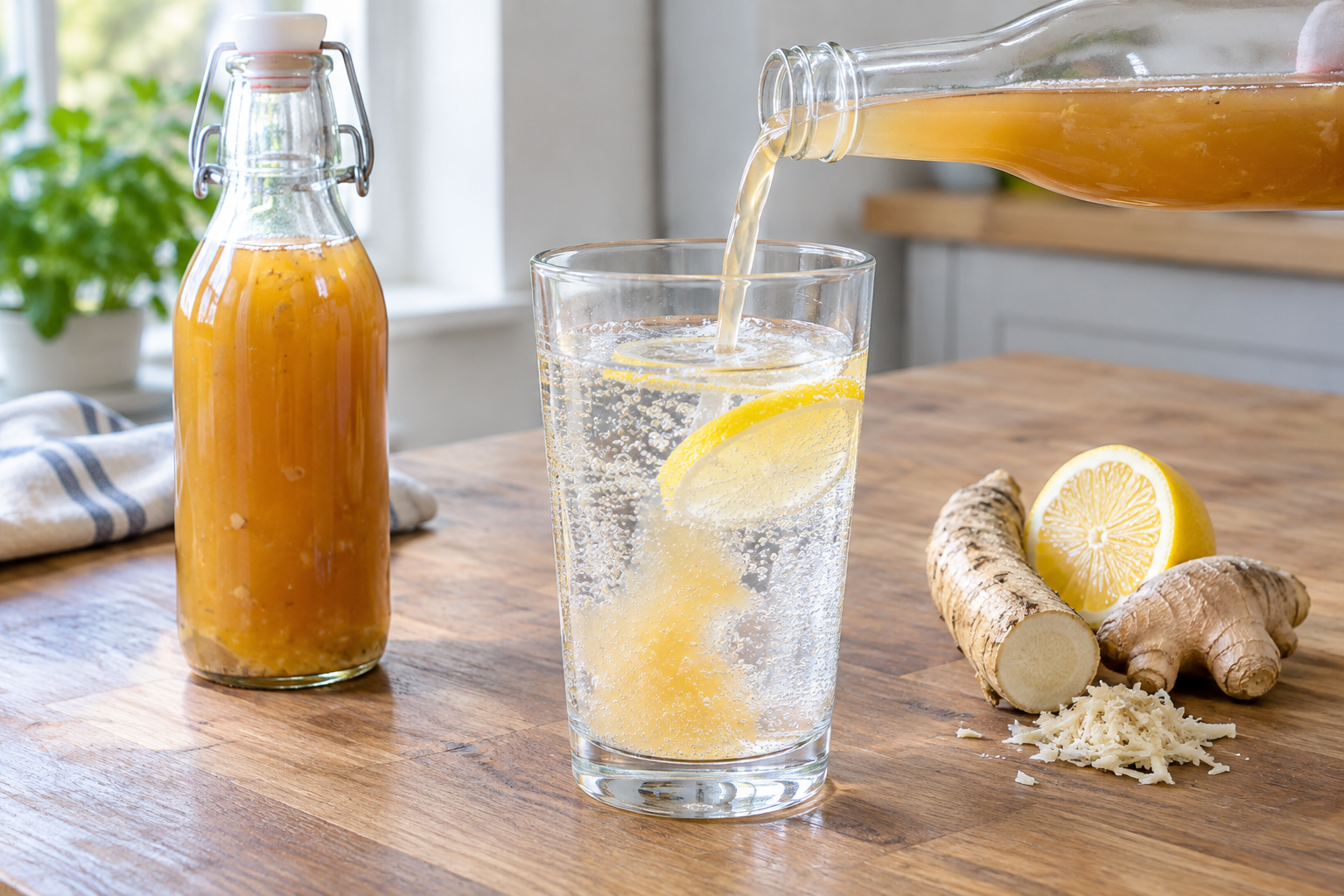
Stir a teaspoon into sparkling water with ice for a quick shrub-style drink. The carbonation lifts the aromatics and makes the oxymel refreshing instead of medicinal. This works best with citrus or mint-based oxymels that have a brighter flavor profile.
Storage and Shelf Life
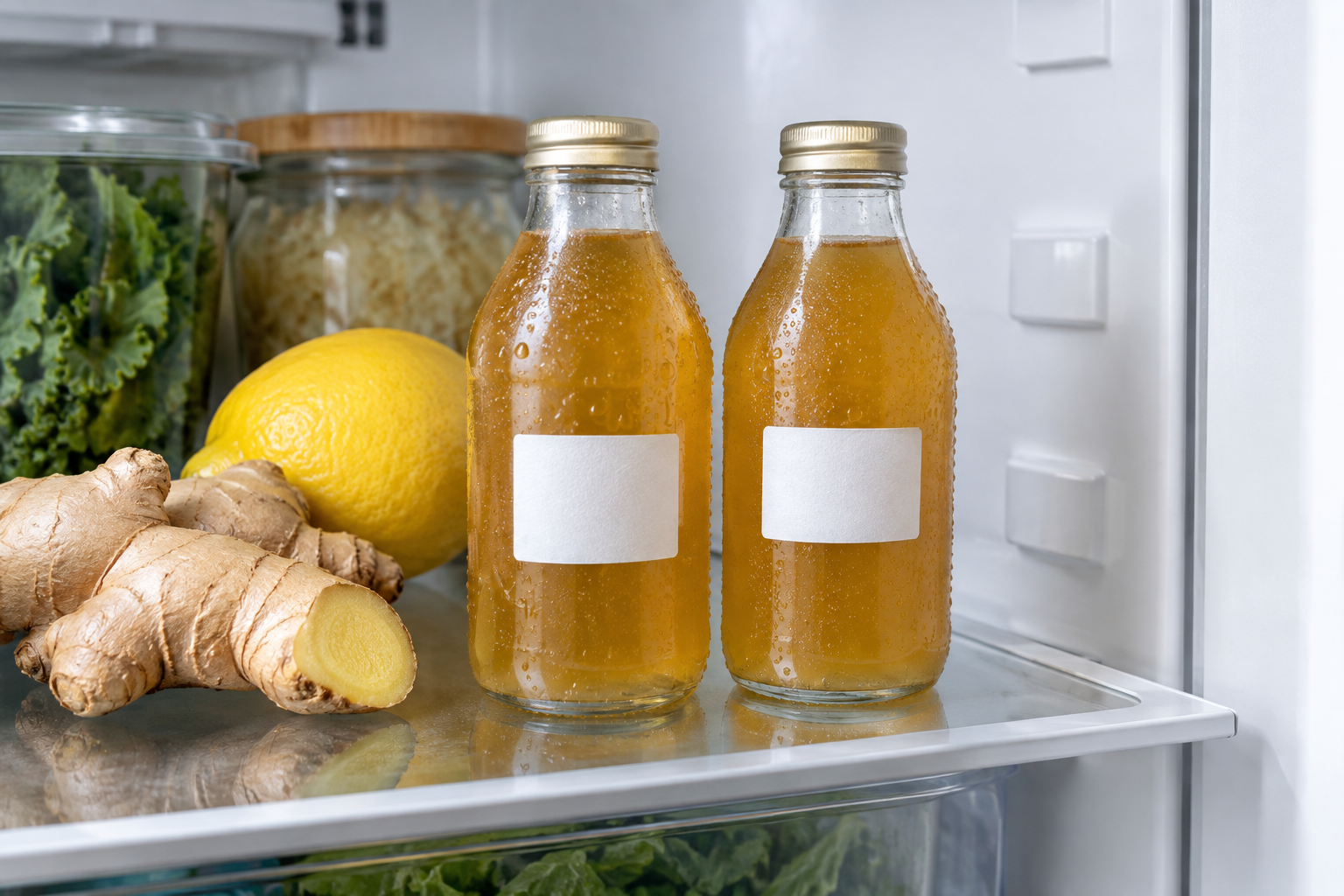
Store your finished oxymel in a glass bottle with a plastic lid or a metal lid lined with wax paper. Vinegar corrodes bare metal over time, so direct contact will rust the lid and contaminate your tonic. Keep the bottle in a cool, dark place like a cupboard or pantry, away from heat and direct sunlight.
A properly made oxymel lasts up to six months at room temperature because both honey and vinegar are natural preservatives. The high sugar content and low pH create an environment where most bacteria and mold cannot grow. If you see any mold, cloudiness that wasn’t there before, or an off smell, discard the batch and make a fresh one.
The flavor will mellow and deepen over the first month after you strain it, as the honey and vinegar fully integrate. Some herbalists prefer to let oxymels age for an extra two weeks after straining before they start using them, but it’s safe to use immediately.
Troubleshooting Common Issues
- The oxymel is too thick to pour. You used too much honey relative to vinegar, or the honey crystallized. Warm the bottle gently in a bowl of hot water until it loosens, then stir in a tablespoon of vinegar to thin it.
- The oxymel separated into layers. Honey and vinegar naturally separate if they sit undisturbed. Shake the bottle before each use to recombine them.
- The herbs floated above the vinegar during infusion. They weren’t fully submerged, which can lead to mold. Press them down with a clean spoon each time you shake the jar, or add more vinegar to cover them completely.
- The oxymel tastes too sharp or acidic. You didn’t add enough honey after straining. Stir in another tablespoon or two until the balance tastes right to you.
- Mold grew on the surface during infusion. The herbs weren’t submerged, or moisture got into the jar. Discard the batch, sterilize the jar, and start over, making sure everything stays below the liquid line.
Variations for Different Health Goals
For a respiratory-focused oxymel, replace the orange peel and ginger with 1 cup of dried thyme and ½ cup of dried elder flowers. This combination targets coughs, congestion, and sore throats. Take it by the spoonful or mix it into warm water when you’re fighting a cold.
For a digestive oxymel, use 1 cup of fresh ginger and ½ cup of fennel seeds. This blend eases nausea, bloating, and sluggish digestion. Take a teaspoon before meals to stimulate digestive enzymes, or after meals if you feel uncomfortably full.
For a general immune-support oxymel, combine ½ cup of dried oregano, ½ cup of dried thyme, and ¼ cup of dried rosemary . This is a strong antimicrobial blend that works well during flu season. The flavor is savory and intense, so it’s best mixed into warm water rather than taken straight.
To make a quick-infusion oxymel when you need it faster, gently warm the vinegar to about 100°F before pouring it over the herbs. This speeds up extraction, and you can strain it after one week instead of waiting two to four. The flavor won’t be as deep, but it will still be effective.
Frequently Asked Questions
Can children take oxymel?
Children over one year old can take oxymel in smaller doses. Give a quarter teaspoon for toddlers and a half teaspoon for older children, mixed into water or juice. Never give honey to infants under one year because of the risk of botulism.
Do I need to refrigerate oxymel?
No. The honey and vinegar preserve it at room temperature for up to six months. Refrigeration won’t hurt it, but it’s not necessary and will make the honey thicker and harder to pour.
Can I use dried ginger instead of fresh?
Yes, but use half the amount because dried ginger is more concentrated. A quarter cup of dried ginger will give you the same strength as a half cup of fresh sliced ginger.
Why does the recipe call for a plastic lid?
Vinegar corrodes metal lids over time, which can rust the lid and contaminate your oxymel. A plastic lid avoids this problem. If you only have metal lids, line them with a piece of wax paper or parchment to create a barrier.
Can I scale this recipe up for a bigger batch?
Yes. Keep the ratio of herbs to vinegar the same, and add honey to taste after straining. A quart jar holds about four times this recipe, so you’d use 4 cups of dried orange peel, 2 cups of fresh ginger, 4 cups of vinegar, and 2 cups of honey.
What if I don’t have apple cider vinegar?
White wine vinegar or red wine vinegar will extract the herbs, but you’ll lose the digestive and probiotic benefits that apple cider vinegar brings. Stick with apple cider vinegar if you can find it.
Conclusion
An oxymel is one of the simplest herbal preparations you can make, and it keeps for months without refrigeration. The honey-vinegar base extracts and preserves the herbs while making them easy to take, whether you need immune support, respiratory relief, or digestive help. Start with this citrus-ginger version to learn the method, then swap in the herbs that match what you need.