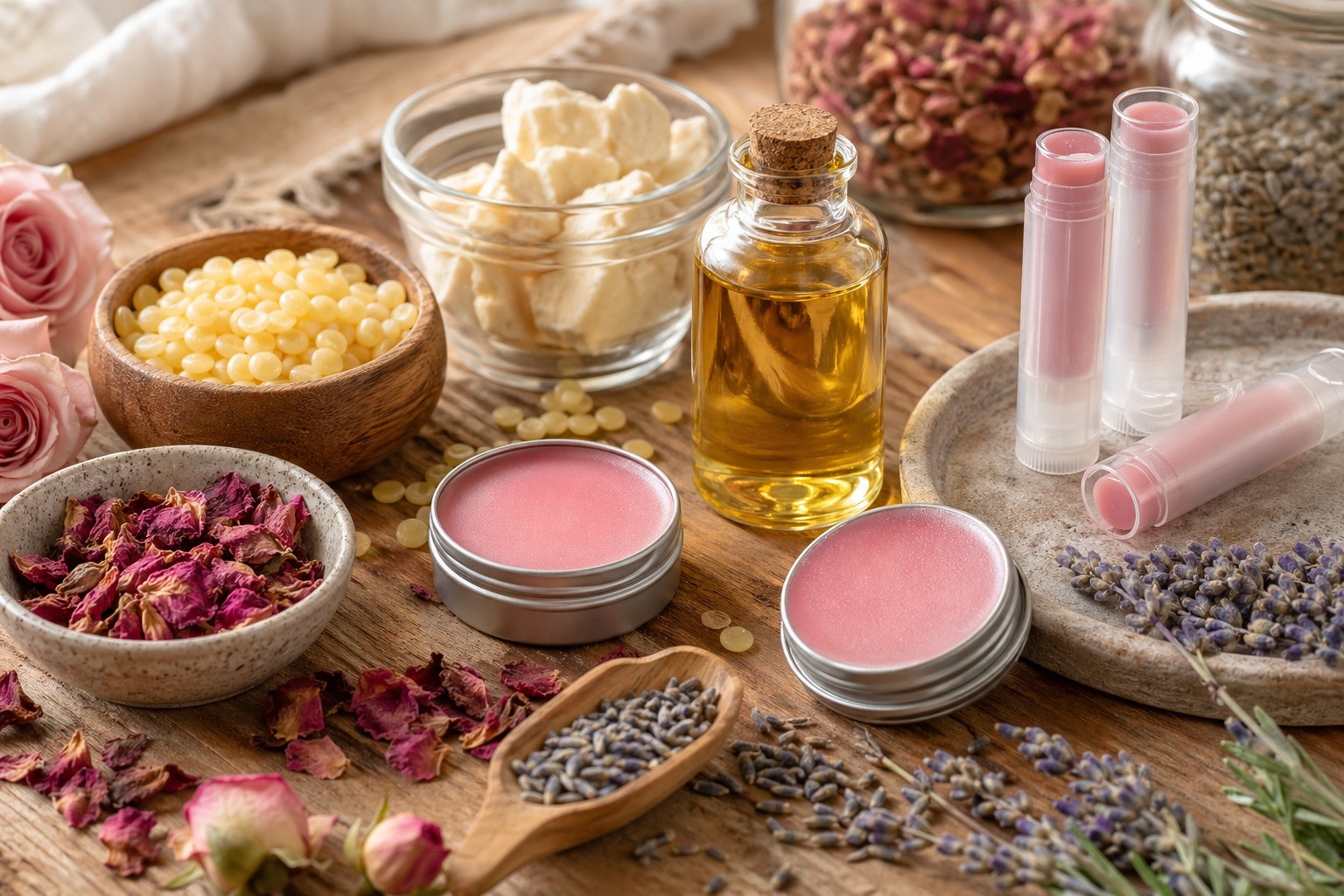
Lip balm is the gateway project. It is small, cheap, hard to ruin, and very satisfying to line up in little tubes when you are finished.
This one uses rose and lavender as an oil infusion instead of a heavy dose of fragrance. The result is soft and floral without tasting like perfume. That matters. A lip balm sits right under your nose.
At a Glance
| Detail | Info |
|---|---|
| Prep time | 20 minutes |
| Infusion time | 1 to 2 hours |
| Yield | 10 tubes or five small tins |
| Difficulty | Beginner |
| Texture | Firm, smooth, pocket-stable |
| Flavor | Light floral from the infused oil |
| Water-free | Yes |
| Preservative needed | No, if kept dry |
Why Rose and Lavender Work Here
Rose petals bring a soft, green-floral scent to oil. Lavender adds a cleaner herbal note so the balm does not smell flat or overly sweet. Neither needs to shout.
This recipe uses dried herbs because lip balm should stay water-free. Water-based products are where home beauty DIY gets tricky. The FDA notes that moisture and contaminated containers can help bacteria and fungi grow in cosmetics. A balm made from oil, butter, and wax is much easier to make safely at home.
Essential oils are optional, and honestly, I would skip them for the first batch. Tisserand Institute warns against undiluted essential oils on skin and explains that higher concentrations raise the chance of irritation. Lips are not the place to get aggressive with scent.
Ingredients
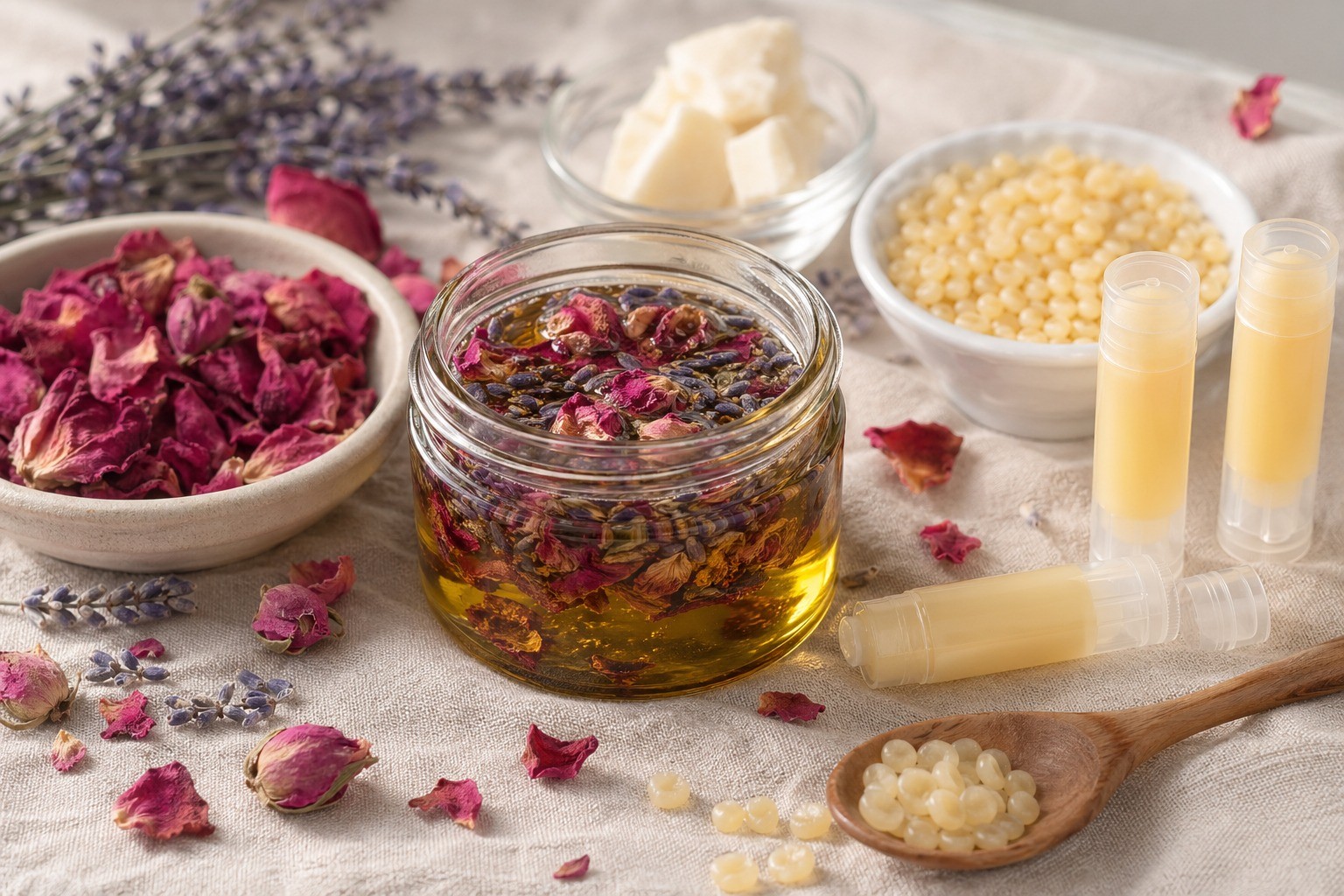
- 2 tablespoons dried rose petals
- 1 tablespoon dried lavender buds
- 1/2 cup jojoba oil or sweet almond oil
- 1 tablespoon cocoa butter
- 1 tablespoon beeswax pastilles
- 1/2 teaspoon honey powder, optional for tins only
- 10 lip balm tubes or five 0.5-ounce tins
Jojoba oil gives the balm a lighter feel and a longer shelf life.
Sweet almond oil is softer and less expensive, but it can go rancid faster.
Cocoa butter adds firmness and a faint chocolate note. If you do not want that scent, use refined cocoa butter or mango butter.
Beeswax makes the balm hold its shape. For a vegan version, you can test candelilla wax, but use less. It is harder than beeswax.
Infuse the Oil
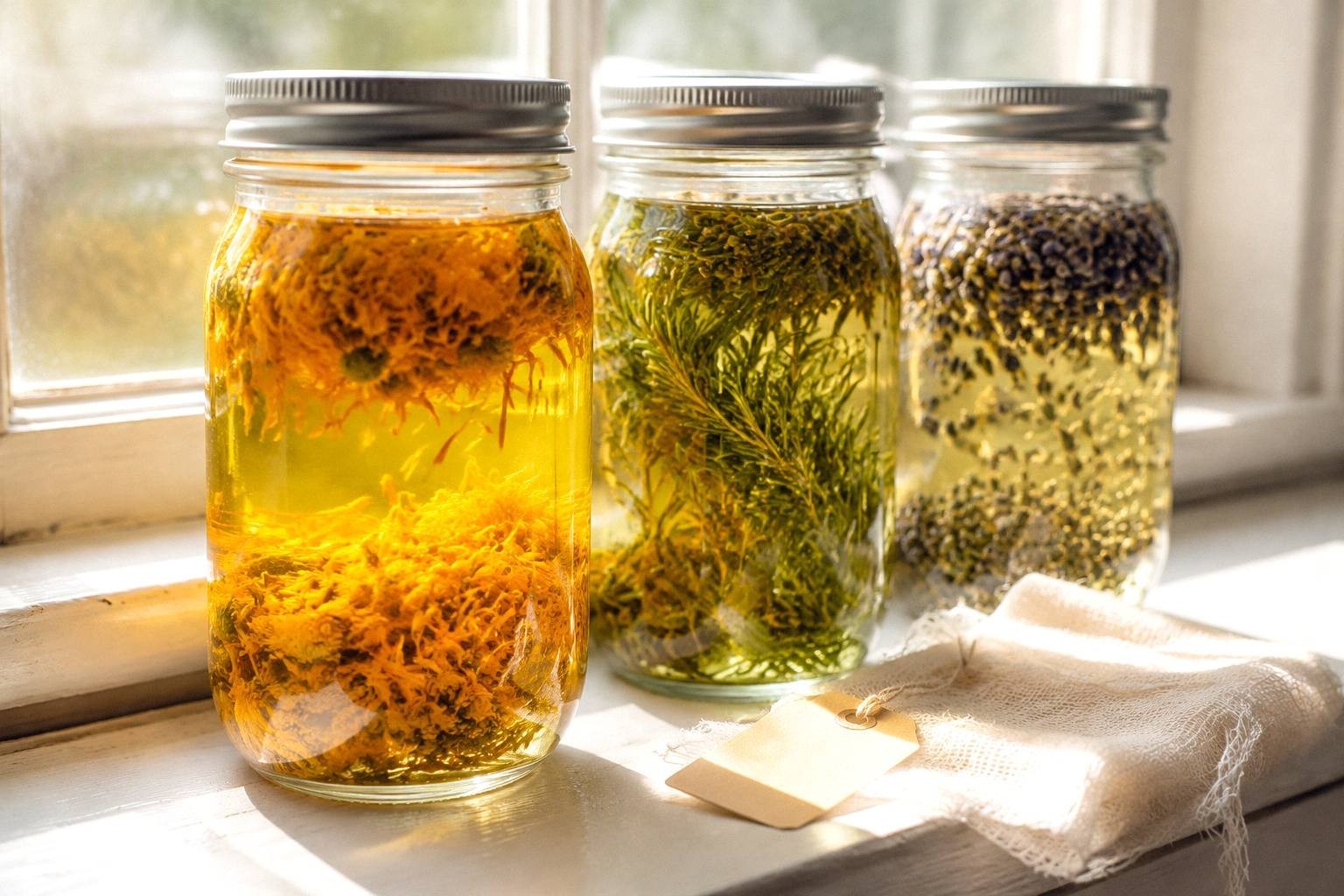
Add rose petals, lavender , and oil to a heat-safe jar or double boiler insert. Warm gently over barely simmering water for 1 to 2 hours. Keep the heat low. You are coaxing scent into the oil, not frying flowers.
Strain through cheesecloth or a fine mesh strainer. Press lightly, then discard the herbs.
You will have more infused oil than the balm needs. Save the extra for cuticle oil, body oil, or another balm batch.
Make the Lip Balm
- Measure 3 tablespoons of infused oil into a clean double boiler.
- Add 1 tablespoon cocoa butter and 1 tablespoon beeswax.
- Warm until melted.
- Remove from heat.
- If you are using tins, stir in honey powder. Skip it for tubes because it can settle at the bottom.
- Pour into tubes or tins right away.
- Let cool until fully firm before capping.
Tube Ratio vs Tin Ratio
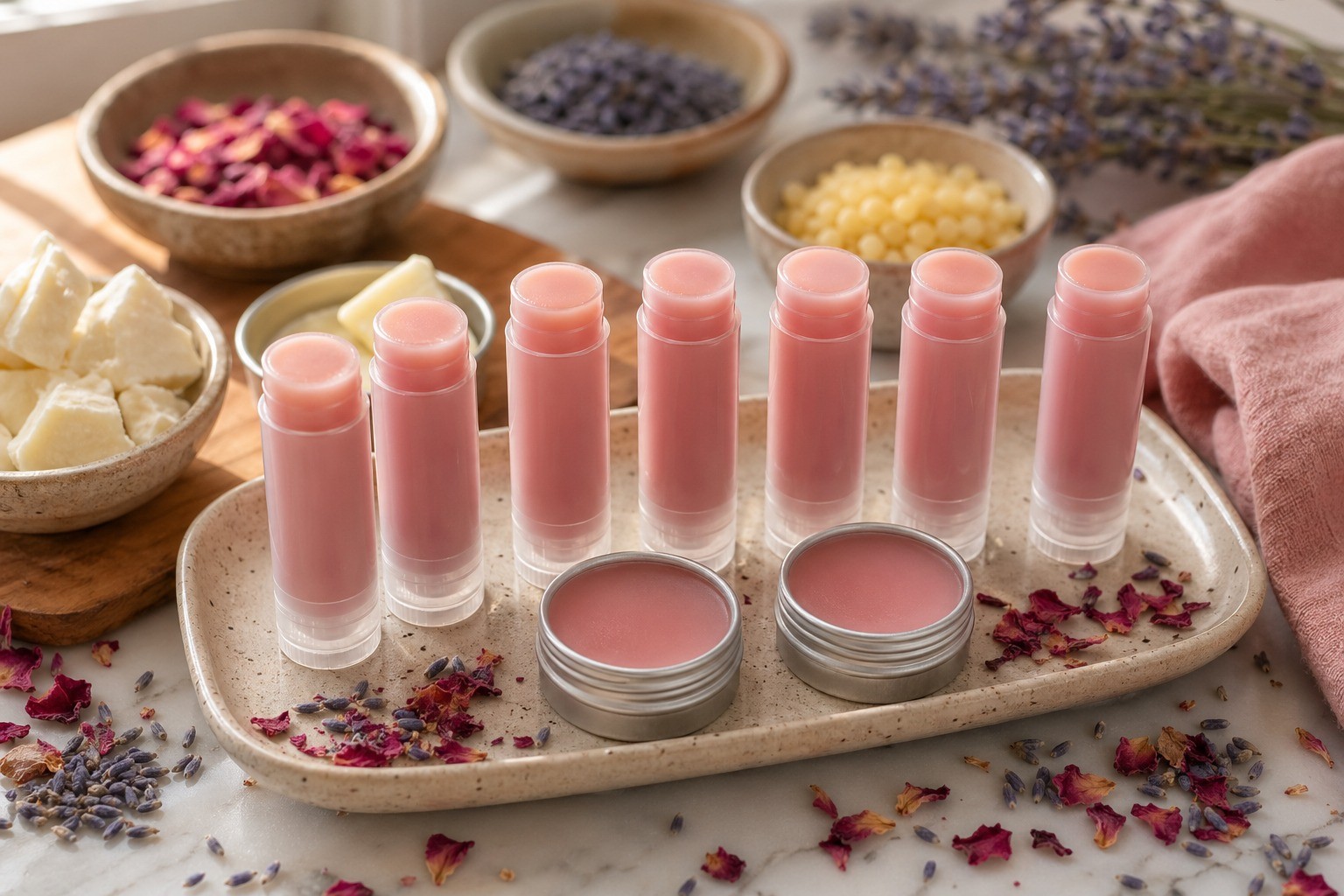
For tubes, keep the recipe firm:
- 3 tablespoons infused oil
- 1 tablespoon cocoa butter
- 1 tablespoon beeswax
For tins, you can make it softer:
- 3 tablespoons infused oil
- 1 tablespoon cocoa butter
- 2 teaspoons beeswax
If you live somewhere hot, use the firmer tube ratio even for tins. A soft lip balm in a summer purse is a mess.
Scent Notes
The scent from infused herbs is subtle. That is a feature, not a failure. A balm can smell beautiful without tasting like essential oil.
If you want a stronger scent, add only 1 or 2 drops of lavender essential oil to the full batch after removing it from heat. Do not use citrus essential oils in lip balm unless you know the phototoxicity rules for that oil. Many citrus oils are not worth the hassle here.
Storage and Shelf Life
Store lip balm away from heat. It should keep 6 to 12 months if your containers were clean and the balm stays dry.
Throw it out if it smells stale, changes texture, or gets gritty in a way it did not have at the start. Natural oils do not last forever.
Easy Variations
Plain rose balm: Use 3 tablespoons dried rose and skip lavender.
Lavender mint balm: Use lavender-infused oil and add 1 tiny drop peppermint essential oil to the full batch. More than that can feel harsh on lips.
Vanilla rose balm: Add a small piece of vanilla bean to the oil while it infuses, then strain it out with the flowers.
Gift tin version: Pour into small metal tins and add a handwritten label. This is one of the easiest herbal gifts to make in multiples.
Why This Belongs on the Apothecary Shelf
Lip balm is not complicated, and it should not pretend to be. But it teaches good habits: dry herbs, clean containers, low heat, measured wax, labels, and restraint with essential oils.
That is the whole lane for herbal beauty DIY . Simple things you can make at home, with plants at the center.