
Rosemary is far more than a culinary herb. Explore its medicinal history, proven benefits for memory and circulation, and how to use it in drinks.
Crush a fresh sprig of rosemary between your fingers. That sharp, resinous hit (part pine, part camphor, part something almost medicinal) is exactly the point. The plant is announcing itself. Ancient Greek students braided rosemary into their hair before exams. Medieval apothecaries stocked it year-round. The smell you’re noticing right now is the same smell that made healers reach for it for two thousand years.
Most people know rosemary from their spice rack. What fewer know is that the kitchen was always a secondary posting. This plant spent most of its history in the pharmacy.
What Rosemary Actually Is
Rosemary’s scientific name recently changed. You’ll see it listed as both Rosmarinus officinalis and Salvia rosmarinus. Botanists reclassified it into the sage genus in 2017 based on genetic analysis, though most herbalists still use the old name. Either way, it’s the same plant: a woody perennial shrub native to the Mediterranean coastline, growing in dry, rocky soil with full sun and salt air.
The name comes from the Latin ros maris, “dew of the sea.” It grows wild on cliffs above the water across Spain, Greece, and southern France. The leaves are needle-like, waxy, and built to conserve moisture. The plant rarely needs babying. It handles drought, resists pests, and lives for decades with minimal attention.
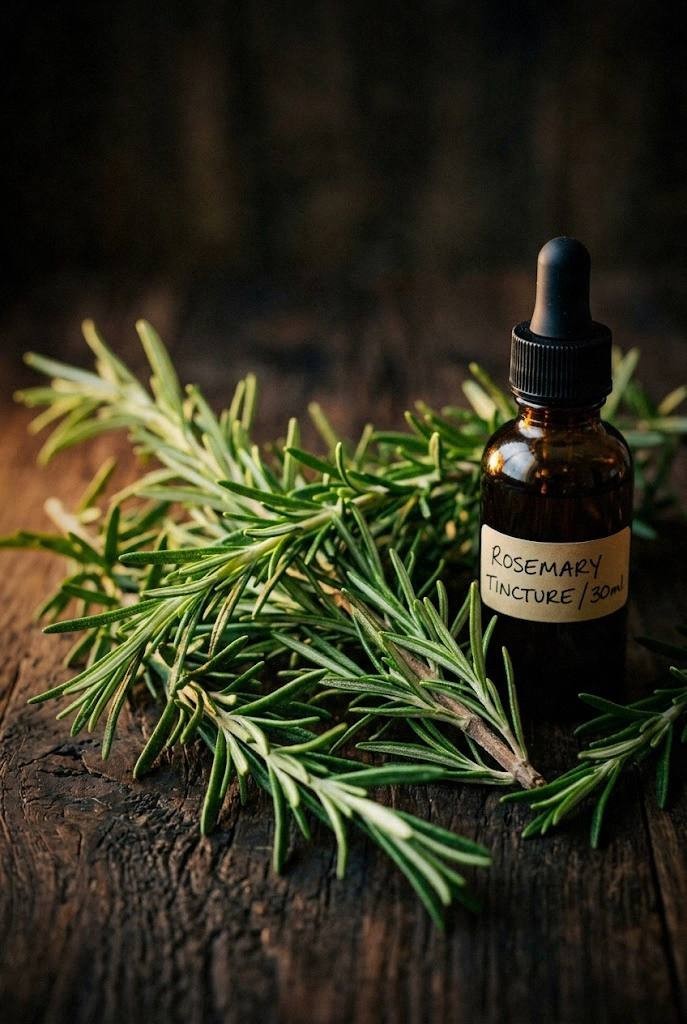
That toughness shows up in its chemistry. Rosemary produces an unusually dense concentration of aromatic compounds: rosmarinic acid, carnosic acid, camphor, 1,8-cineole. These function as the plant’s own defense system against heat, UV radiation, and insects. Those same compounds are what give rosemary its medicinal properties.
A Long History in the Pharmacy
Greek and Roman physicians prescribed rosemary regularly. Dioscorides, whose herbal text De Materia Medica was the standard medical reference for fifteen centuries, documented its use for warming the body and supporting digestion. Greek scholars wore rosemary garlands while studying, not as decoration but because they believed it sharpened the mind. The connection between rosemary and memory is ancient enough that it became a cultural reflex. Shakespeare put it in Ophelia’s mouth: “There’s rosemary, that’s for remembrance.”
Medieval European herbalists relied on rosemary for an enormous range of complaints. It appeared in remedies for headaches, joint pain, sluggish digestion, grief, and what they called “cold and moist conditions of the brain.” Hildegard of Bingen, the 12th-century abbess and physician, wrote about it extensively. It was planted outside monastery apothecary gardens as a matter of course.
The most famous rosemary preparation from this era is the Queen of Hungary Water, dating to at least the 14th century. The legend holds that a 72-year-old queen suffering from gout and joint disease was given a preparation of rosemary flowers in alcohol and recovered so completely she received a marriage proposal from the King of Poland. The formula circulated across Europe for hundreds of years and was among the first commercially produced perfumes: a blend of rosemary, lavender, mint, and thyme in a wine or spirit base used both internally and as a skin tonic.
Ayurvedic medicine also uses rosemary, though it was a later addition to that tradition, introduced via trade routes rather than native to the subcontinent. It appears in preparations for circulation, mental clarity, and as a warming herb for conditions associated with excess cold or dampness.
What the Research Actually Shows
Modern studies have started catching up to what traditional herbalists described. The evidence is clearest in a few areas.
Memory and cognition. This is rosemary’s best-documented benefit. A 2012 study from Northumbria University found that people in rooms diffused with rosemary essential oil performed measurably better on prospective memory tasks (remembering to do things at the right time) compared to those in lavender-scented or unscented rooms. A 2016 follow-up showed similar effects in schoolchildren, with rosemary aroma linked to improved speed and accuracy on mental arithmetic tests. The compound most likely responsible is 1,8-cineole, which has been shown to inhibit the breakdown of acetylcholine, the neurotransmitter central to memory formation.
Circulation. Rosemary is a circulatory stimulant. It increases peripheral blood flow, which is why it historically appeared in treatments for cold extremities, low blood pressure, and fatigue. Rosmarinic acid has demonstrated vasodilatory effects in laboratory research.
Anti-inflammatory and antioxidant activity. Carnosic acid and carnosol, the diterpene compounds that give rosemary its distinctive bitterness, are among the most potent natural antioxidants identified. They scavenge free radicals and suppress the production of inflammatory cytokines. This is relevant to the traditional use of rosemary for joint pain and conditions with an inflammatory component.
Digestion. Rosemary has carminative and antispasmodic properties: it relaxes smooth muscle in the digestive tract and helps move gas. German Commission E, which evaluates herbal medicines, has approved rosemary for indigestion. The bitters in rosemary also stimulate bile production, which supports fat digestion.
Mood and nervous system. Several studies have found that rosemary aromatherapy reduces cortisol levels and lowers state anxiety scores. The effects are real but modest. This is not a replacement for treatment of clinical anxiety, but it does explain the traditional use of rosemary for grief, low mood, and mental exhaustion.
Iced Rosemary Lemon Tonic
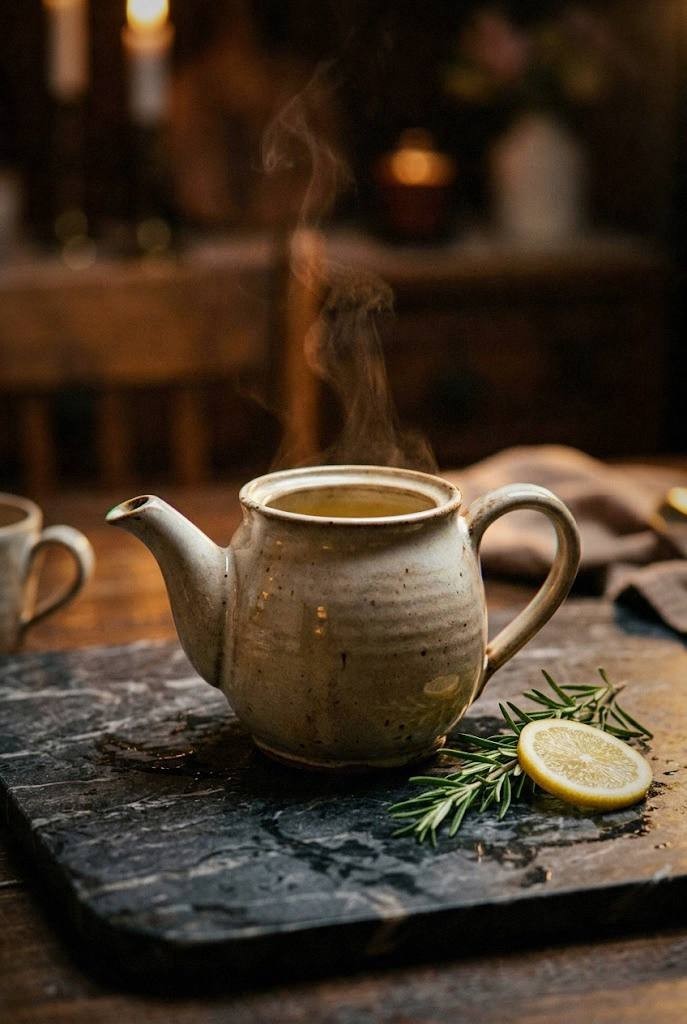
This is a cold-brew style tonic built for spring and summer. The honey softens the resin, the lemon brightens the whole thing, and the result is cooling and clarifying in a way that tastes intentional rather than medicinal.
Makes: 1 serving Prep time: 5 minutes Total time: 15 minutes (plus optional cooling time)
Ingredients
- 1 sprig fresh rosemary, about 4 inches long
- 8 ounces filtered water
- 1 teaspoon raw honey
- 1/2 lemon, juiced
- Ice cubes
Instructions
- Bring water to just below boiling, around 200°F / 93°C. Avoid a full rolling boil, which can drive off the aromatic volatile oils.
- Lightly bruise the rosemary sprig by pressing it between your palms or tapping it with a wooden spoon. You want to crack the surface without shredding it.
- Place rosemary in a mug or heat-safe glass and pour the hot water over it. Cover and steep for 5 to 10 minutes. A longer steep gives a more resinous, intense flavor.
- Strain out the rosemary. Stir in honey while the tea is still warm so it dissolves fully.
- Add the lemon juice, stir, and pour over a glass of ice.
Notes: Fresh rosemary makes a noticeably better drink than dried. If you want more intensity, steep a second sprig. For a sparkling version, let the tea cool completely and top with plain sparkling water instead of serving straight.
Other Ways to Use Rosemary as an Herb
Rosemary-infused honey. Pack a jar with fresh rosemary sprigs and cover with raw honey. Seal and leave at room temperature for two weeks, turning the jar daily. The honey pulls the aromatic oils from the plant and becomes something entirely different: good in tea, on cheese, or stirred into cocktails. It keeps for months.
Rosemary oxymel. An oxymel is a traditional preparation of herbs in honey and apple cider vinegar, designed to preserve medicinal compounds while making them more palatable and shelf-stable. For rosemary oxymel, combine one part honey, one part raw apple cider vinegar, and a generous handful of fresh rosemary in a jar. Steep for three to four weeks, shaking daily. Strain and take by the teaspoon or stir into sparkling water. This preparation emphasizes the digestive and circulatory properties.
Rosemary in cocktails and mocktails. The same qualities that make rosemary interesting medicinally make it excellent in drinks. It works particularly well with gin (which already carries conifer and herb notes), grapefruit, cucumber, and anything with acid. A rosemary simple syrup (equal parts sugar and water, simmered with two sprigs and cooled) gives you a flexible cocktail ingredient. Rosemary also pairs well with elderflower, which softens its resinous edge.
Rosemary hair rinse. This is technically not a drink, but it belongs here because it uses the same strong infusion. Rosemary has a well-documented history of use for scalp circulation and hair growth. One 2015 study compared rosemary oil directly to minoxidil (Rogaine) in men with androgenetic alopecia and found comparable results at six months. A strong rosemary tea used as a final rinse after washing is a low-effort version of this application.
Growing and Harvesting
Rosemary wants full sun, excellent drainage, and to mostly be left alone. It does poorly in consistently wet soil and struggles in pots without drainage holes. In USDA zones 7 and above it’s a perennial that can grow into a substantial shrub. In colder zones, grow it in a container and bring it in before hard frost.
For the freshest, most aromatic harvest, cut sprigs in the morning before the heat of the day drives off volatile oils. Harvest from the tips of actively growing branches rather than old woody stems. The plant flushes new growth in spring and again in early fall, and both are good times for a more substantial harvest. Dried rosemary retains reasonable potency for six to twelve months in an airtight container away from light and heat.

Cautions Worth Knowing
Rosemary is safe as a food and in normal tea quantities for most adults. A few situations call for more care.
Pregnancy. Culinary amounts are fine. Therapeutic doses (strong infusions taken regularly, essential oil used internally) are not recommended during pregnancy. Rosemary has historically been used to stimulate menstruation, which indicates uterine-stimulating activity at higher doses.
Seizure disorders. Camphor, which is present in rosemary, can lower seizure threshold at high doses. People with epilepsy or seizure disorders should check with their physician before using rosemary therapeutically.
Blood pressure medications. Because rosemary affects circulation, there’s potential for interaction with antihypertensive medications. If you’re on blood pressure drugs, discuss herbal use with your prescriber before adding regular therapeutic-dose rosemary to your routine.
Essential oil vs. tea. There’s a meaningful difference between drinking a cup of rosemary tea and using the concentrated essential oil internally. The tea is mild and generally well-tolerated. The essential oil is a concentrated extract and should not be consumed without specific guidance. What’s true for one is not automatically true for the other.
Rosemary is one of the most studied and historically documented medicinal herbs in the Western tradition. It’s also the plant you probably already have on your windowsill. That gap between what people know about it and what it actually does is exactly worth closing. Start with the tonic. Notice what happens to your focus an hour later. The Greek students were onto something.

Camille writes about botanical drinks, herbal cocktails, and the old plant wisdom that makes them work. Most days you'll find her in the garden or the kitchen, turning herbs into something worth sipping.