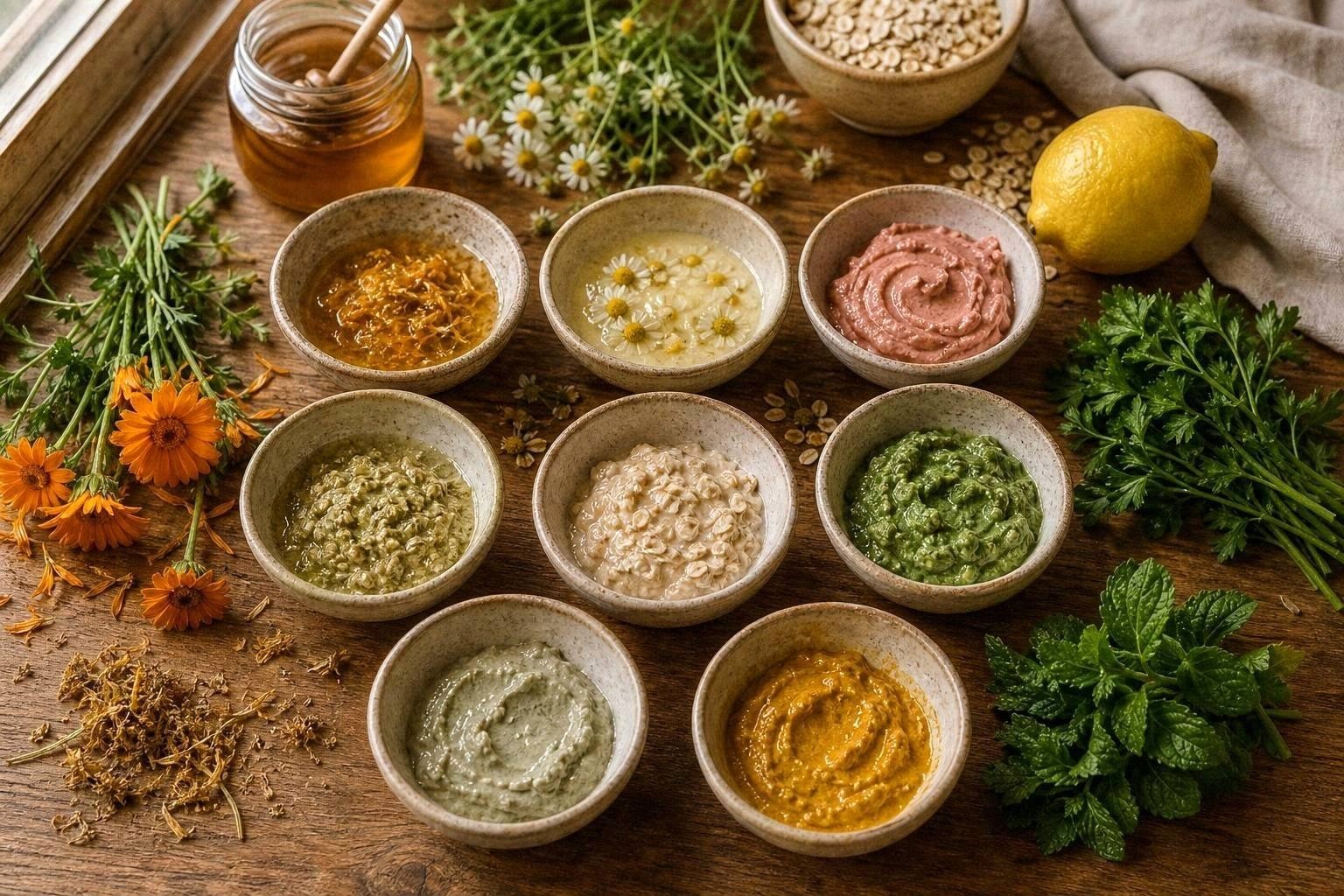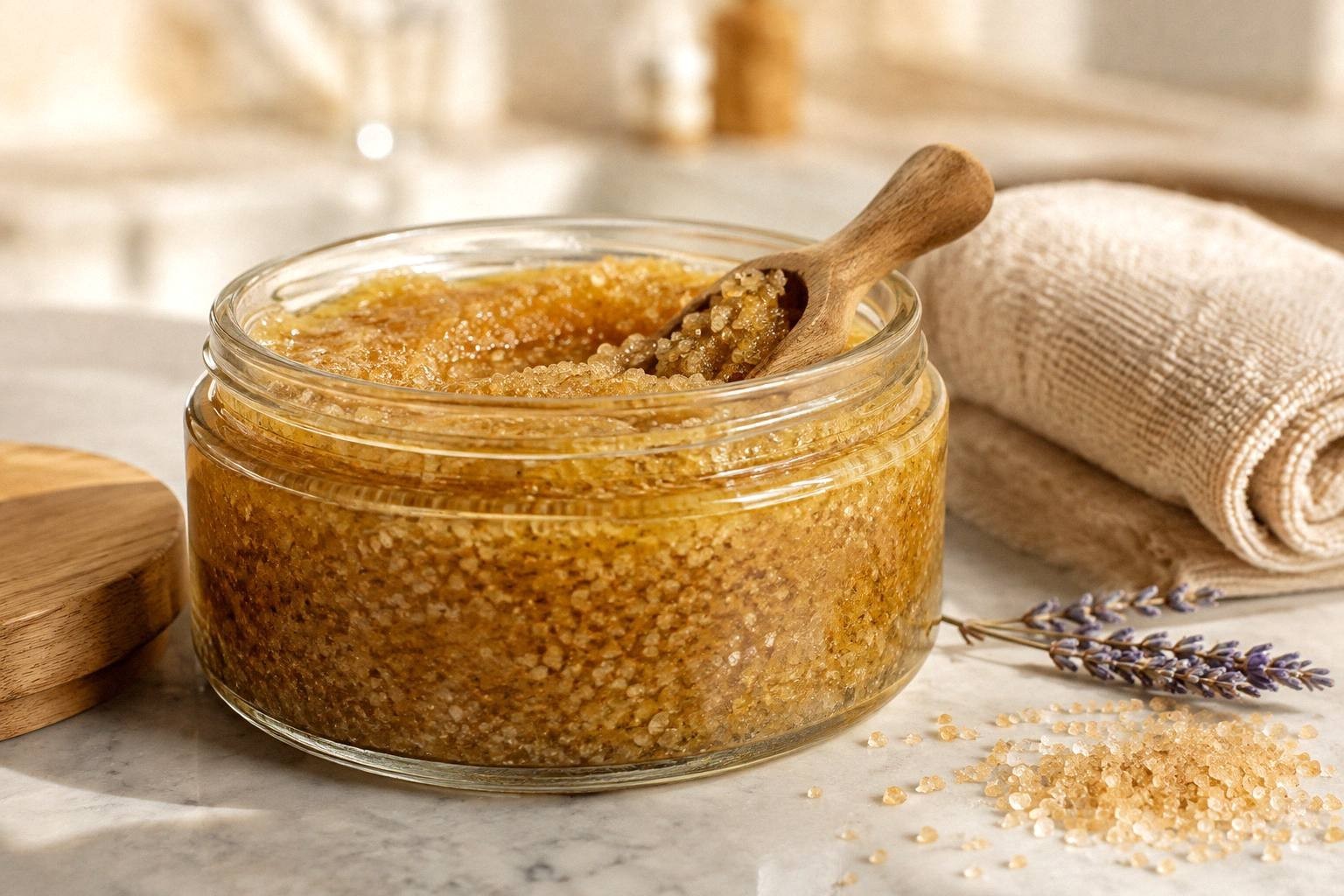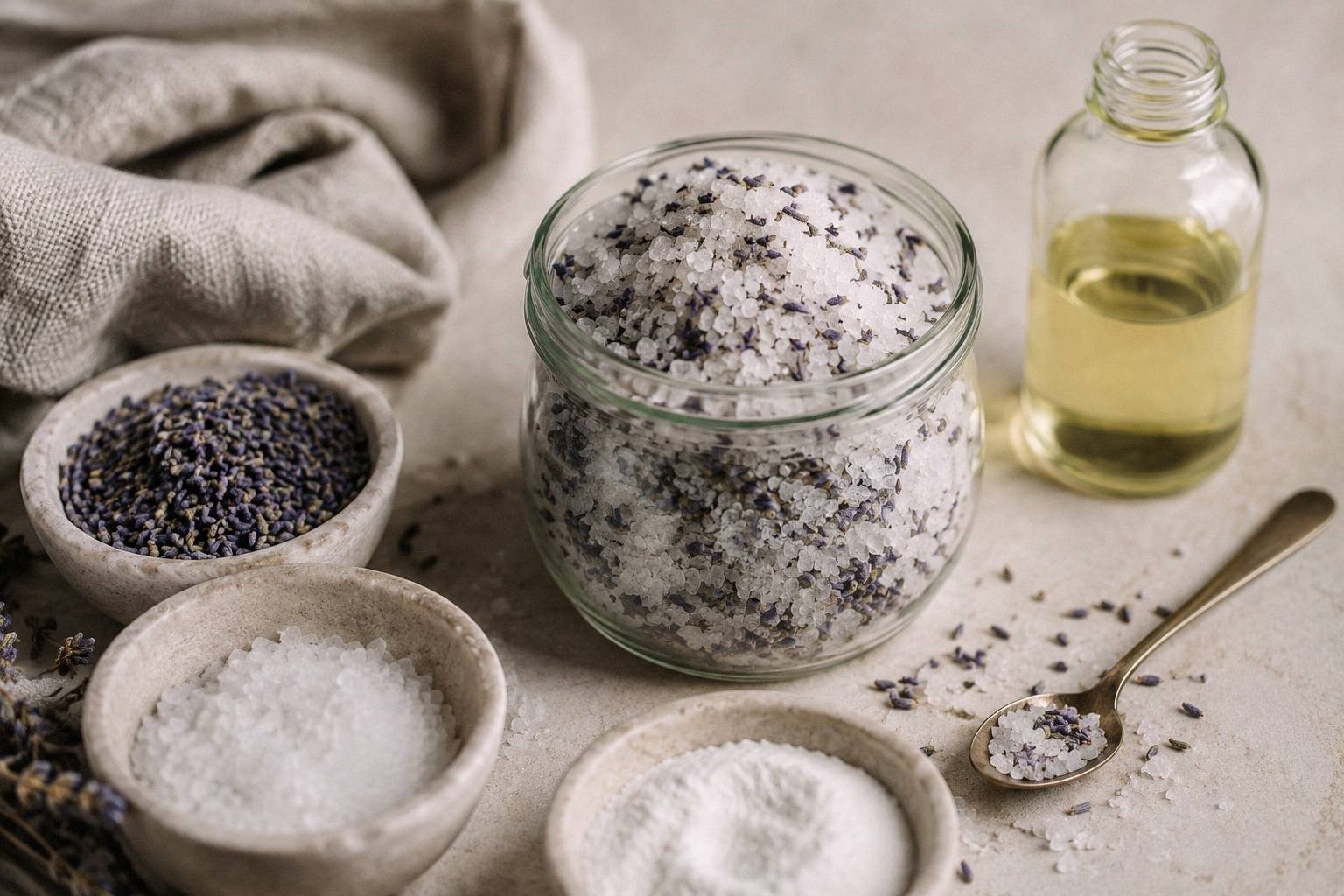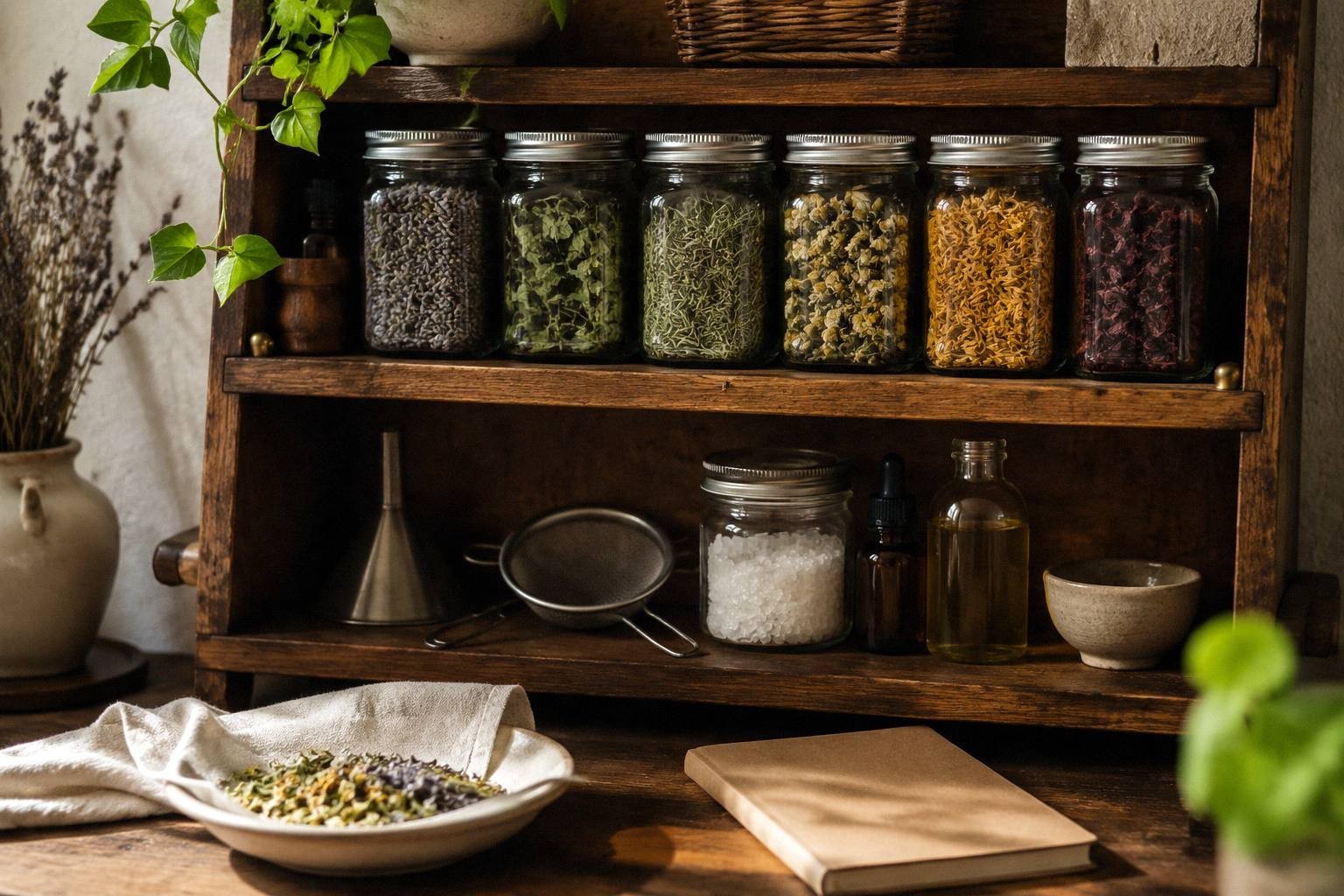
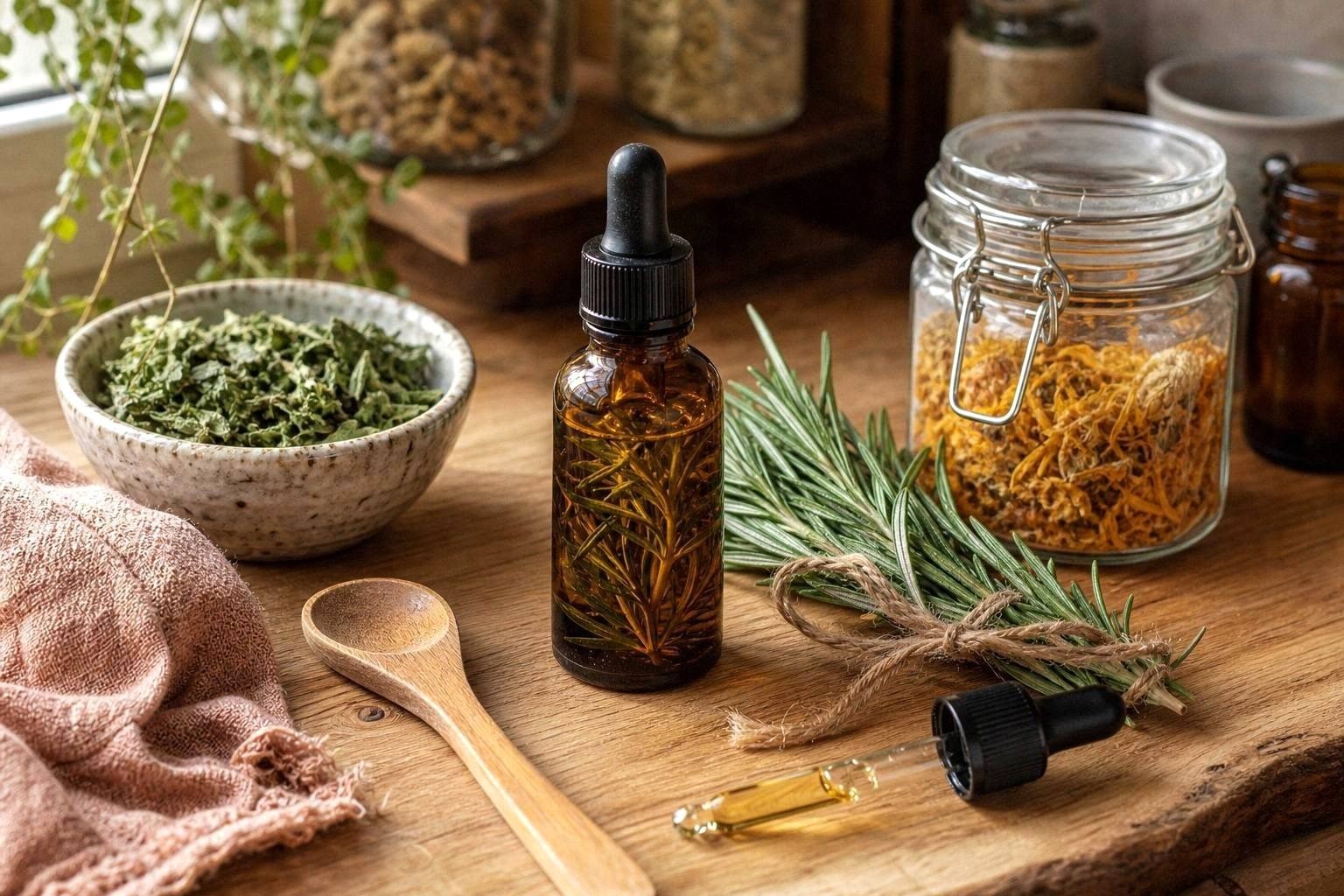
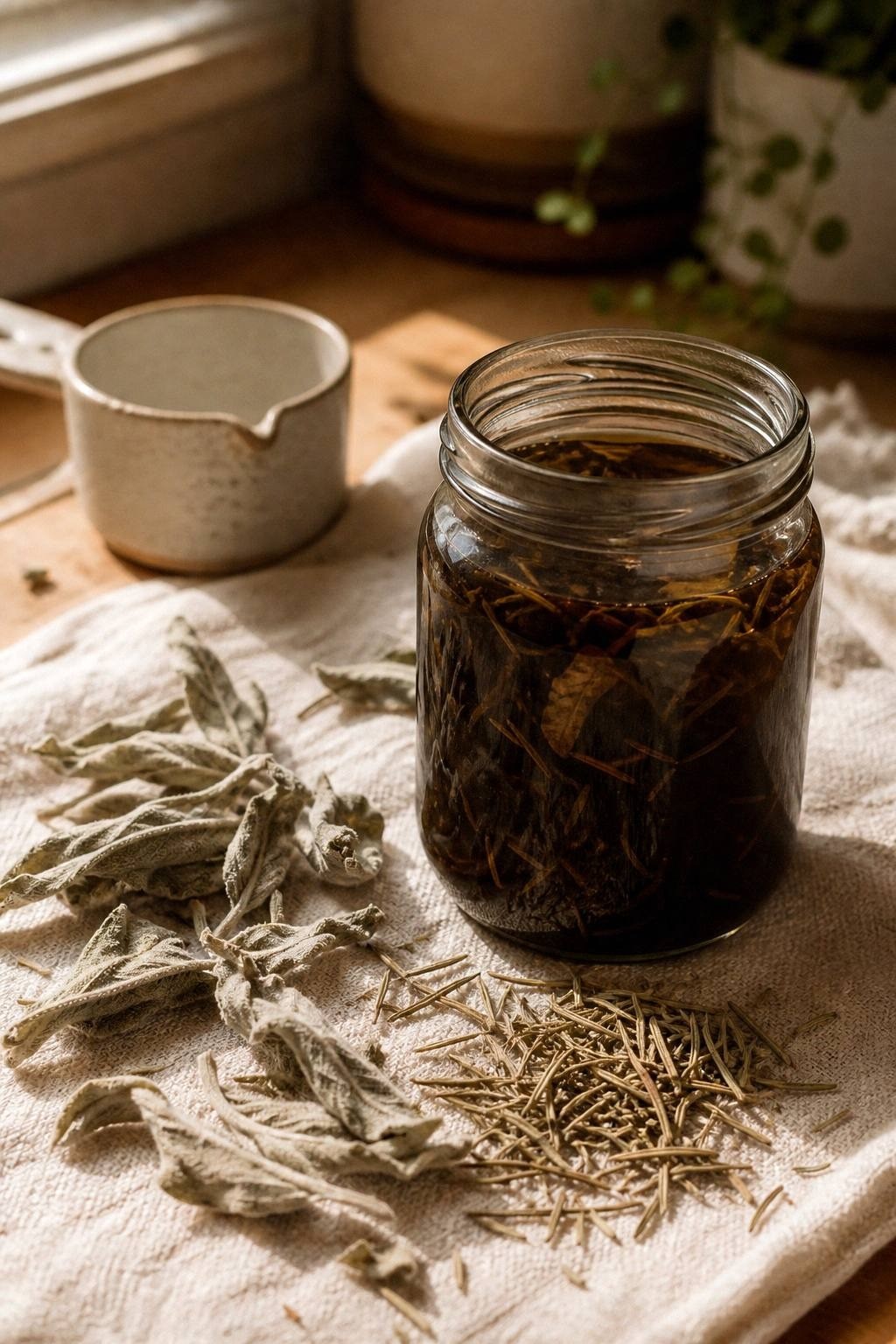
Rosemary essential oil, rosemary-infused carrier oil and a water rinse are different preparations. Evidence for one cannot establish hair growth, gray coverage or split-end repair from the other. This guide explains the evidence, compares six preparation ideas and supplies one attributed rinse-out conditioning-oil recipe. It does not promise six hair-growth tonics.
First distinguish hair care from hair-loss care
The 2015 rosemary-oil comparison concerns a particular preparation used in people with androgenetic alopecia. It does not test a jar of dried rosemary in carrier oil, establish equivalence for every rosemary product or validate adding essential oils by drop count. A trial citation is not a source for a homemade formula.
The American Academy of Dermatology explains that effective hair-loss treatment starts with identifying the cause. Persistent, sudden, patchy or symptomatic hair loss deserves assessment rather than a stronger infusion.
One complete conditioning-oil recipe
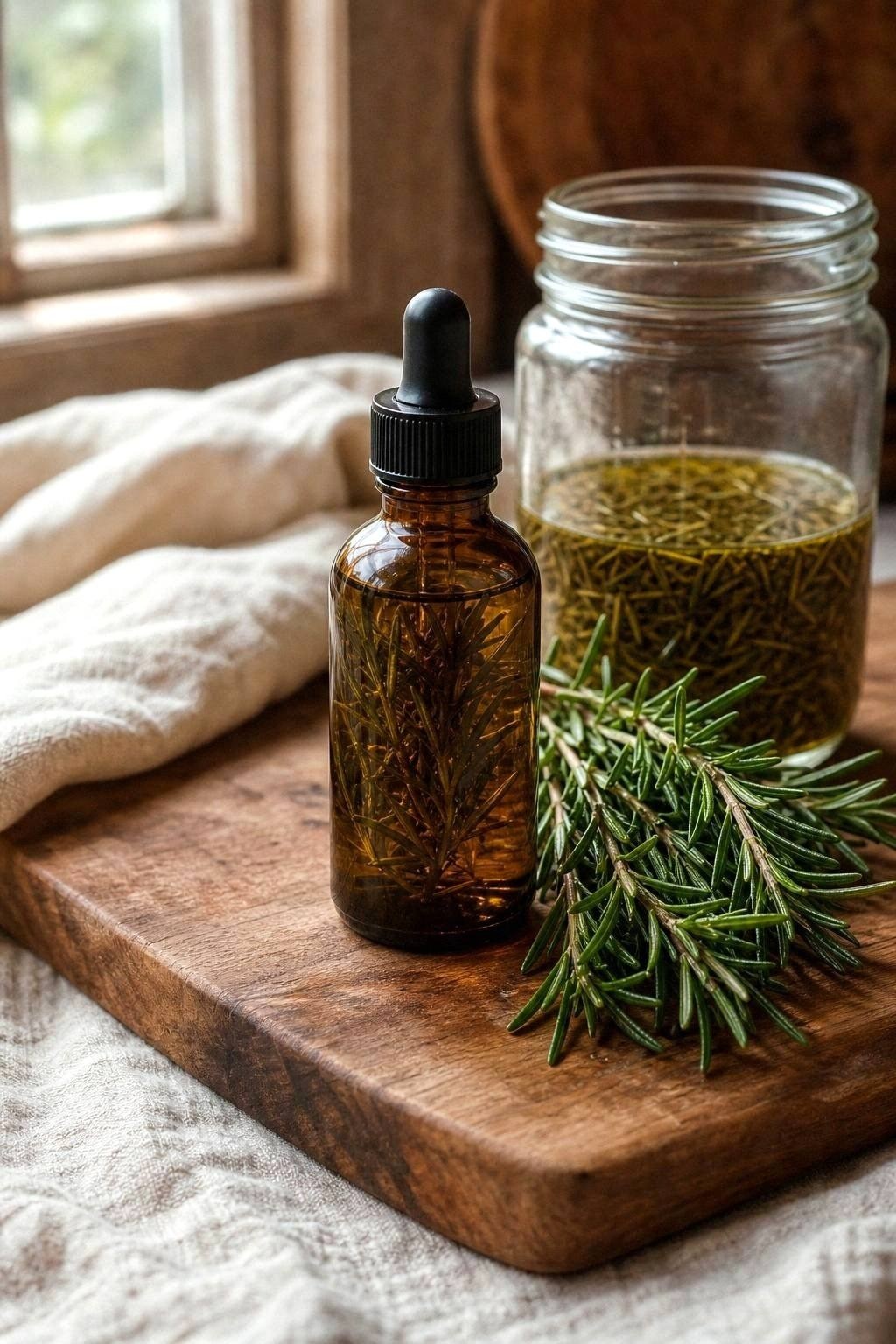
Mountain Rose Herbs’ published hair-oil treatment makes one treatment. Use 1 tbsp coconut oil, 1 tbsp argan oil, 1 tsp jojoba oil and 1 tsp castor oil, plus 4 drops vitamin E oil. Jojoba is a named source alternative to neem; the source explicitly permits omitting its cedarwood essential oil, as done here. This is an oil-conditioning preparation, not a rosemary hair-growth formula. Vitamin E is not claimed to preserve it.
Warm the four carrier oils in a double boiler, remove from heat and stir in the vitamin E. The published directions use warm oil, not hot oil: let it become comfortable to handle before application. Massage a little into hair and scalp, adding only enough to coat. Cover hair with a shower cap, leave 20-30 minutes, then shampoo it out completely; conditioner is optional. The source leaves the applied amount dependent on hair, so the ingredient batch is not a guaranteed volume for every head of hair. Do not infer a weekly growth schedule, overnight exposure or shelf life from this recipe.
Avoid ingredients you are allergic to, and do not apply a DIY oil to an inflamed or damaged scalp. A published craft recipe is not proof of clinical efficacy or individual tolerance. For a labeled product, follow its own directions instead of this recipe’s timings.
Compare six botanical ideas before choosing
| Idea | Preparation and decision |
|---|---|
| Rosemary in carrier oil | Oil infusion. Identify the carrier and botanical; a home infusion is not essential oil or a validated growth treatment. |
| Horsetail/nettle rinse | Water infusion. No preservation or one-week storage life is established for a homemade rinse. |
| Amla/coconut mask | Powder in oil. Powder texture and wash-out vary; gray reversal is not established. |
| Lavender /castor oil | Thick oil mixture. Fragrance and allergy matter; drop counts do not define a validated essential-oil percentage. |
| Hibiscus/aloe mask | Water-rich plant mixture. Fresh plant identity, contamination and irritation need attention; it does not seal split ends. |
| Sage/rosemary rinse | Water infusion. No guaranteed darkening time or gray coverage is established. |
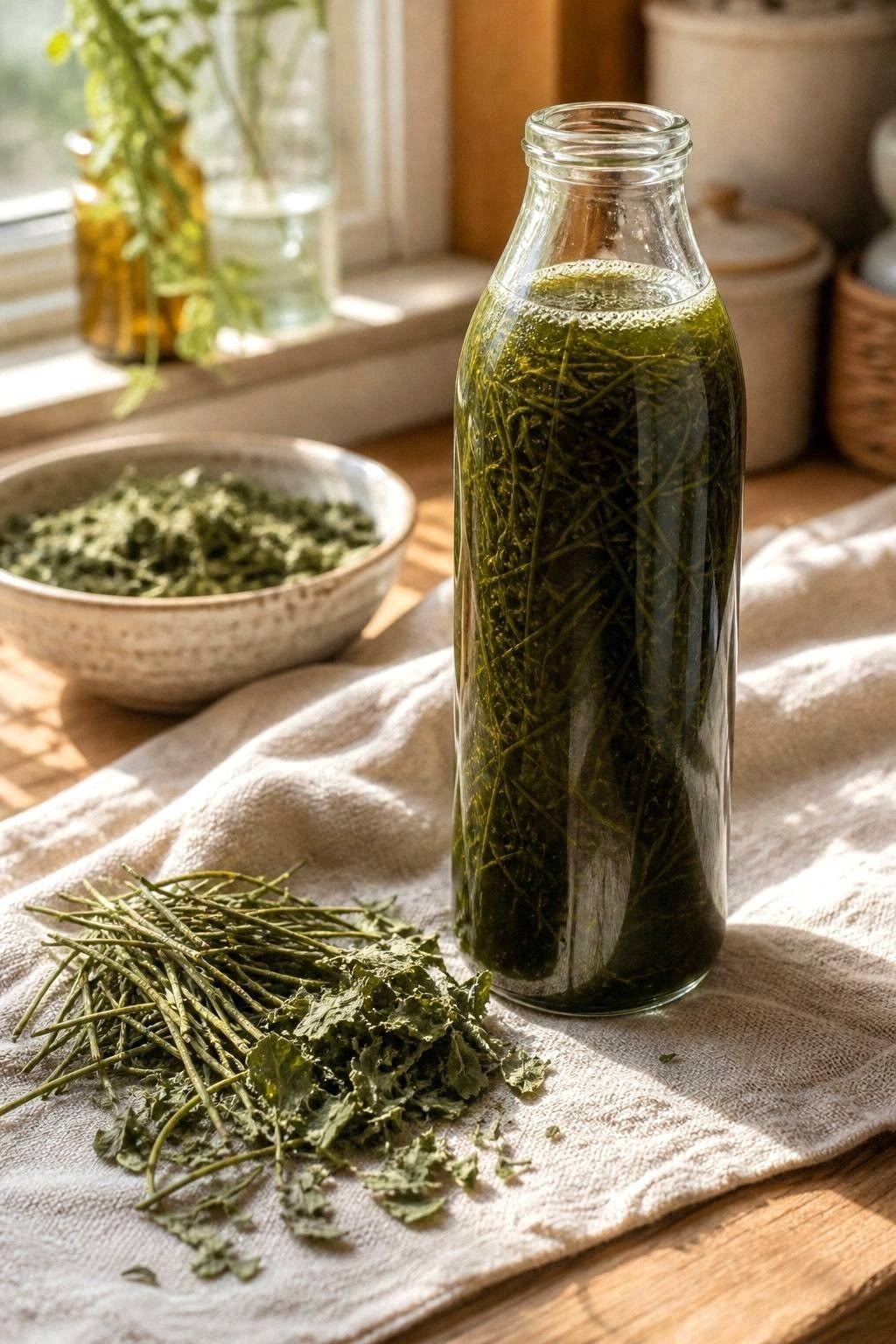
Oil, rinse and mask are not interchangeable
An oil tends to coat hair and is removed differently from a water rinse. A powder mask adds particles; a fresh aloe mixture adds water and organic material. These differences affect application and clean-up, but do not establish follicle repair or a nutrient benefit from topical nettle or horsetail. Hair shaft structure is not evidence that a silica-containing rinse strengthens it.
The previous homemade essential-oil additions and overnight schedules are omitted because their concentrations and formula-specific safety were not established. Follow a labeled hair product’s directions rather than transferring its dose to a kitchen mixture. Don’t put essential oils on skin undiluted or assume a pleasant tingle demonstrates benefit.
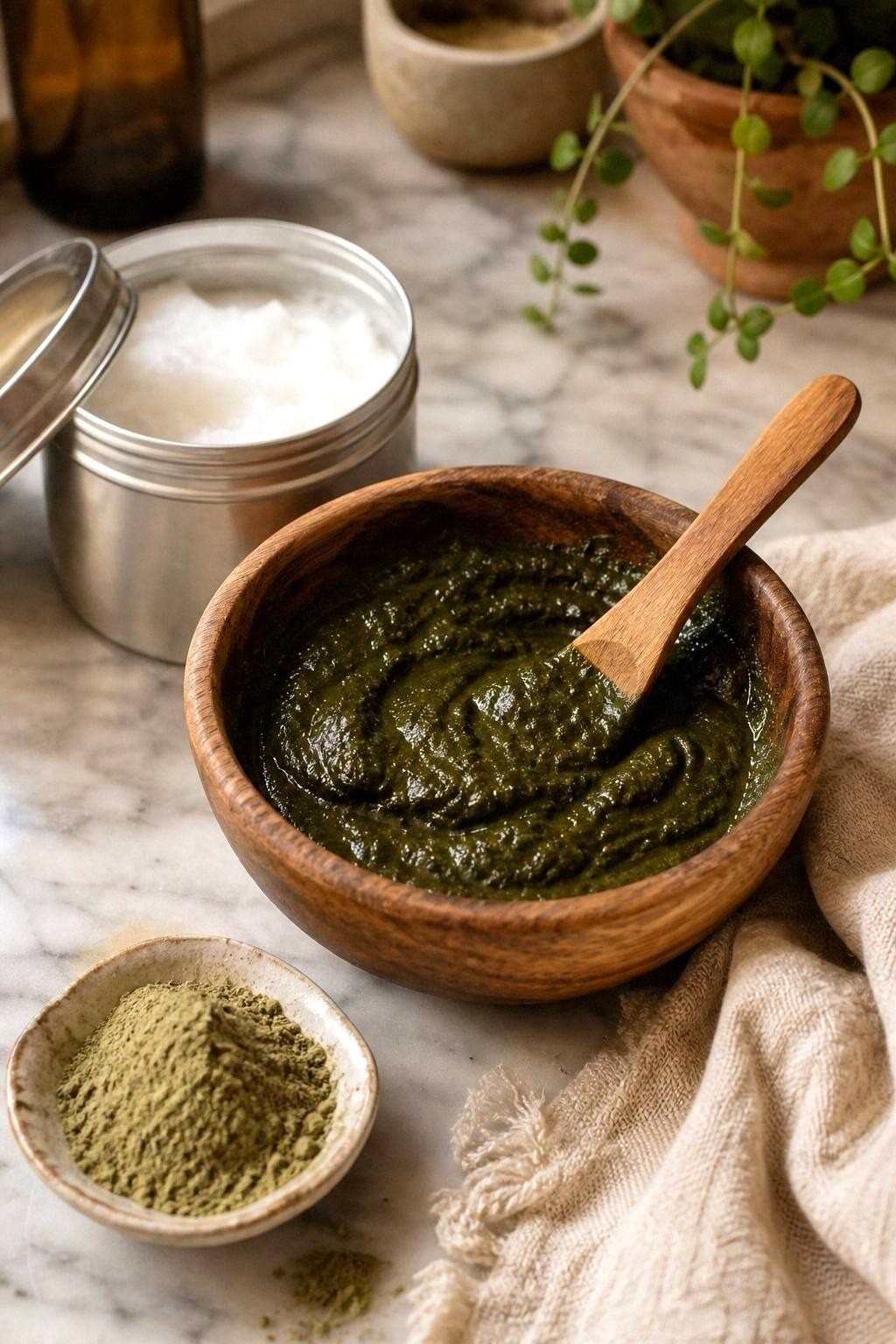
Testing and hygiene have limits
AAD’s new-product testing guidance uses a small test area twice daily for seven to ten days, with rinse-off products kept on for their instructed duration. This may help identify a reaction; it is not clinical testing of a homemade formula. Stop and wash off a product that irritates; obtain care for a severe or persistent reaction.
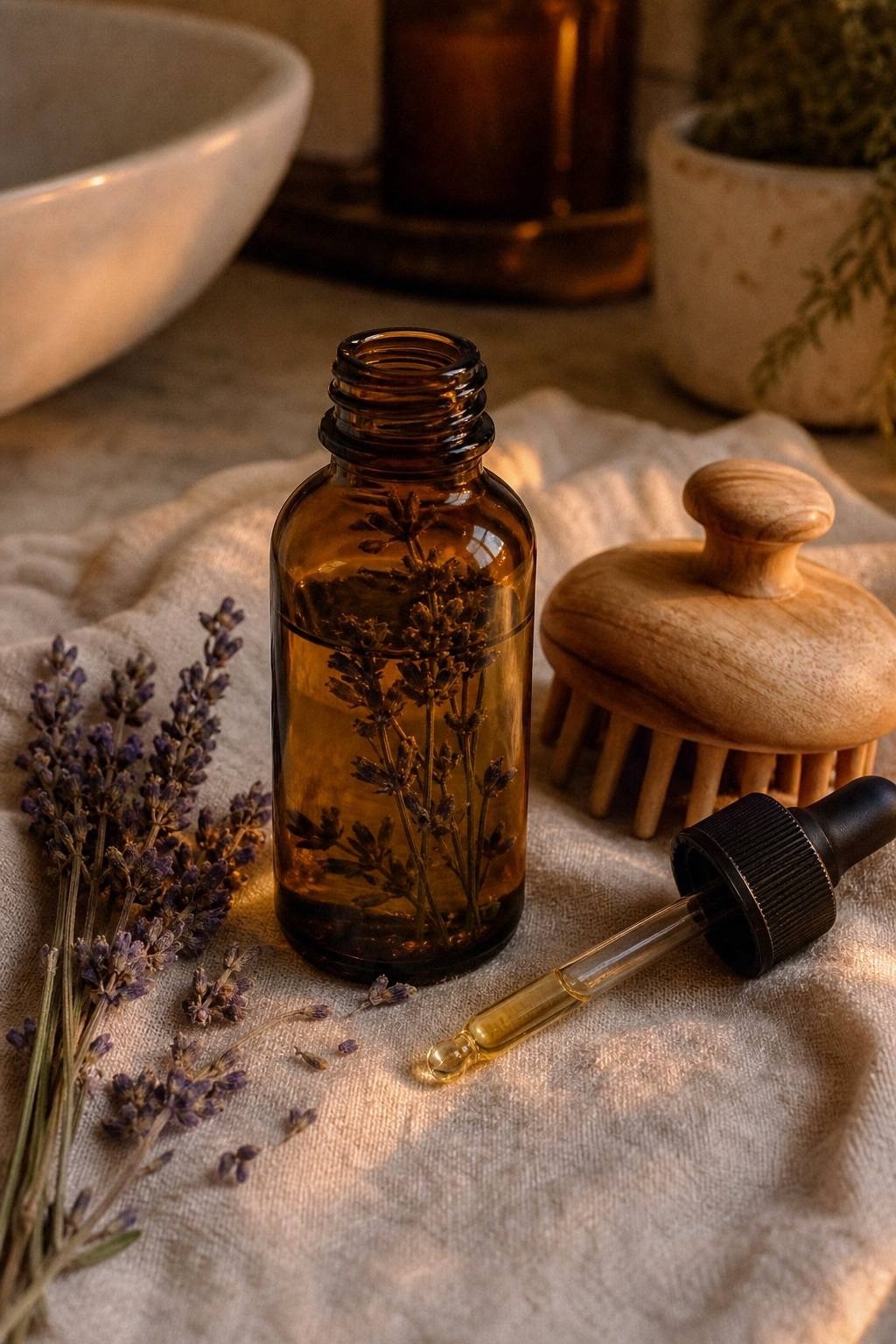
FDA cosmetic microbiological guidance identifies contaminated ingredients, inadequate preservation, storage and handling as possible contamination routes. Refrigeration does not establish a seven-day shelf life for herbal rinse. A normal smell or color does not prove that a product is uncontaminated. Fresh aloe is not automatically a superior or preserved ingredient.
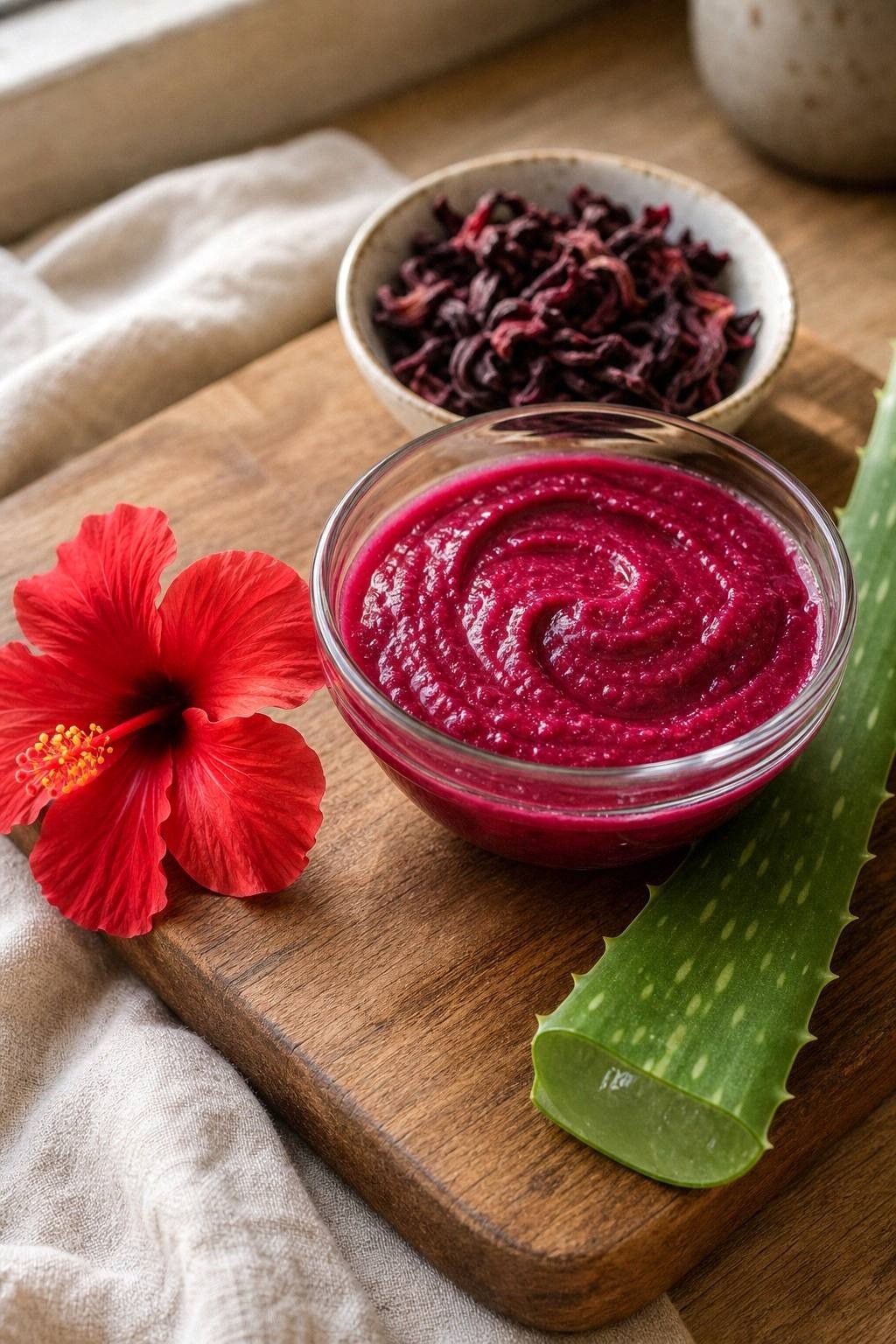
Build a simpler hair-care decision
Start with your actual concern: hair length feel, fragrance tolerance, scalp symptoms or hair shedding. Don’t buy six herbs to address six unverified treatment claims. Keep an ingredient list and avoid known allergens. For scalp disease or persistent shedding, choose professional assessment before a DIY regimen.
The separate rosemary hair-rinse page describes a different preparation; its quantities and claims need their own review. The botanical salve guide compares oil-and-wax balm handling, which is not hair-loss treatment.