A shrub is a sweet-tart fruit and vinegar concentrate. These five methods retain their own ingredient ratios; they do not share a universal maturation time or shelf life. Published recipes provide culinary comparisons, while TFA’s stated cold handling changes are house adaptations.
Before Starting
Wash hands and equipment. Rinse produce and culinary herbs under running water before cutting; scrub melons and cucumbers before peeling. Use only correctly identified ingredients grown for food, never florist flowers or plants treated with pesticides unsuitable for food crops. Use commercial food vinegar labeled 5% acidity, not homemade vinegar of unknown strength, cleaning vinegar or a seasoned rice-vinegar substitute. This is a consistent ingredient choice, not proof that a diluted fruit batch is shelf stable. Use clean nonreactive food containers with room to stir. Refrigerate at 40 F (4 C) or below throughout the stated cold stages. Refrigerate promptly in small clean containers at 40 F (4 C) or below. Discard after more than two cumulative hours without cold holding, or one hour above 90 F (32 C). Do not wait for a large batch to cool on the counter. Normal smell and appearance do not establish safety.
All yields are measured after straining. Sugar dissolves into liquid; adding cup measures of solid fruit, sugar and vinegar does not give an additive liquid yield. Count portions from measured concentrate, at 1 tablespoon per drink. Freeze unused finished concentrate in small freezer-safe containers with expansion room rather than assuming a months-long shelf life. After the specified preparation/rest, use what you need that day; freeze the remainder. No canning instructions or ambient preservation claim is supplied.
1. Strawberry Shrub
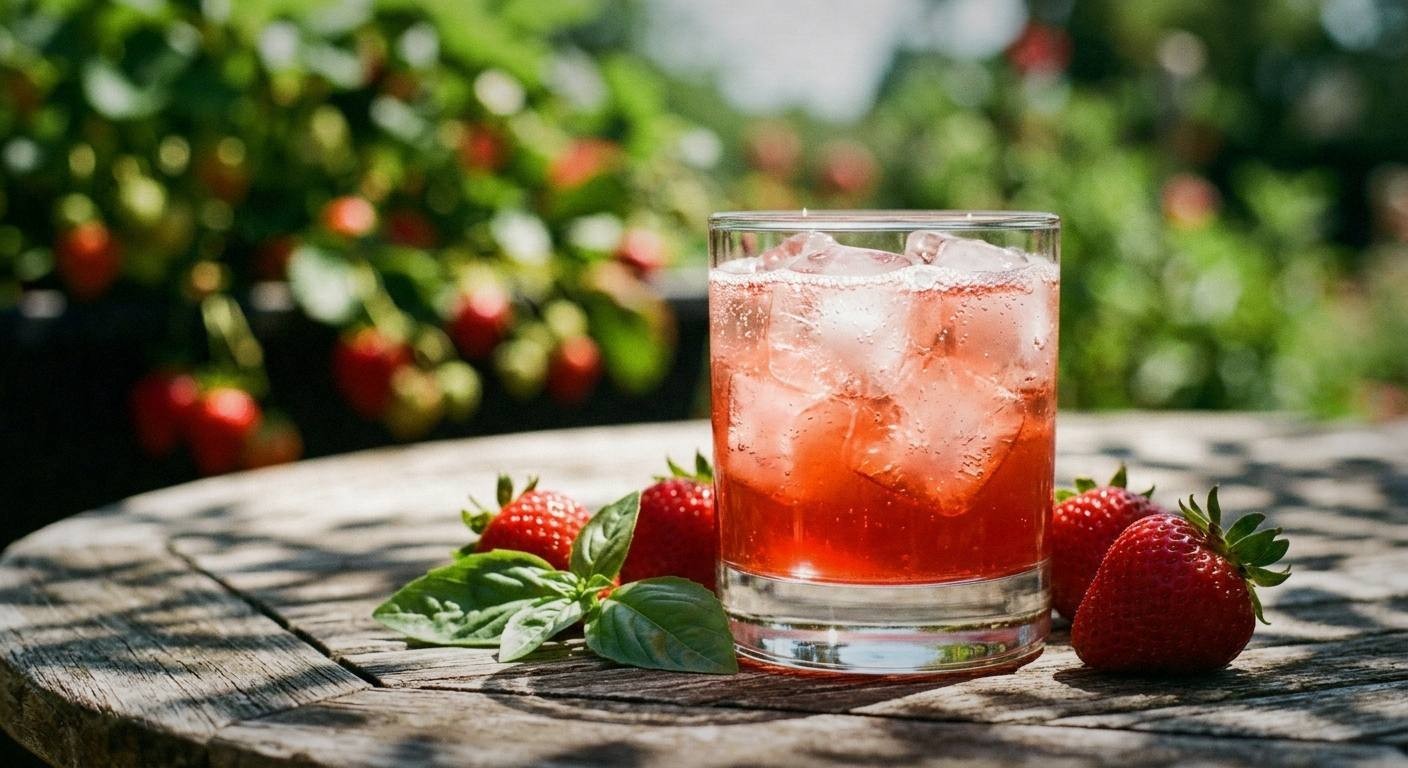
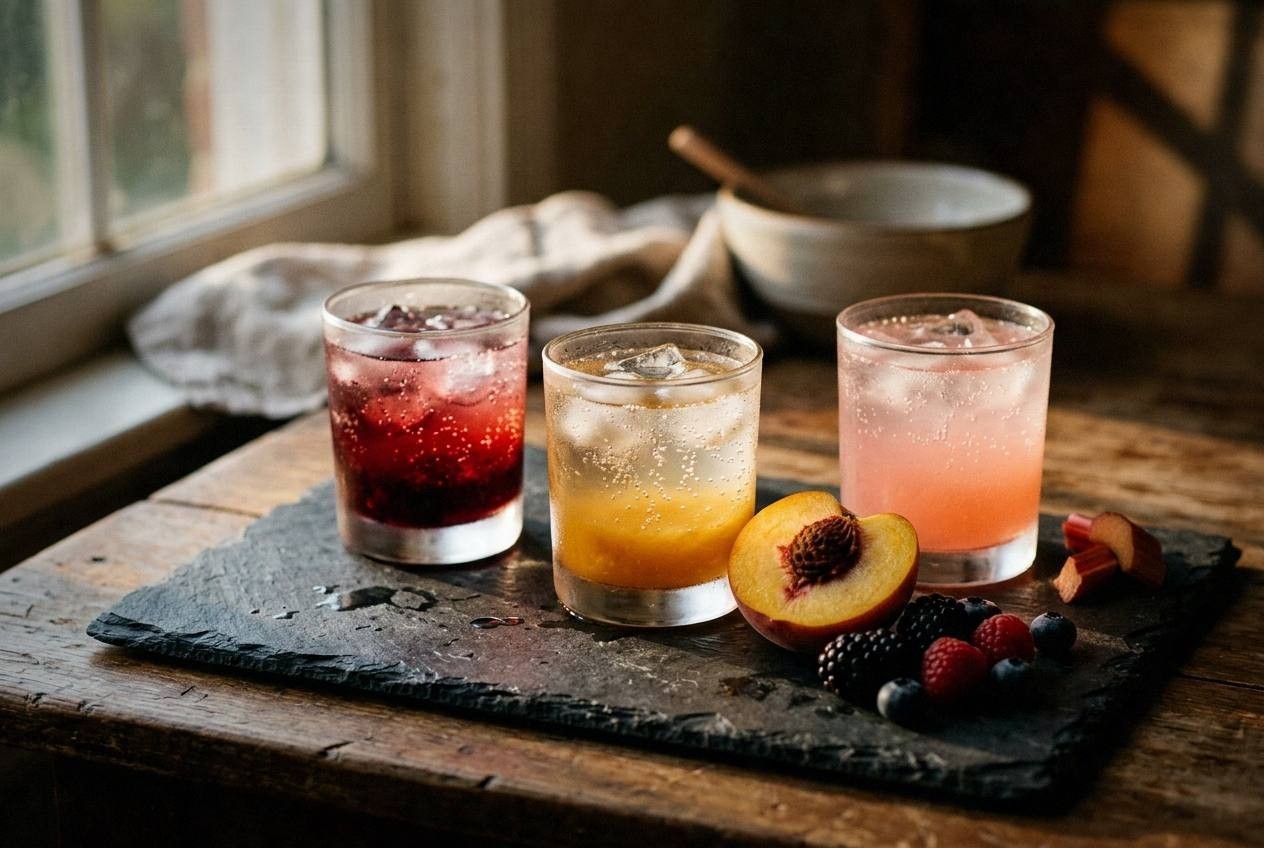
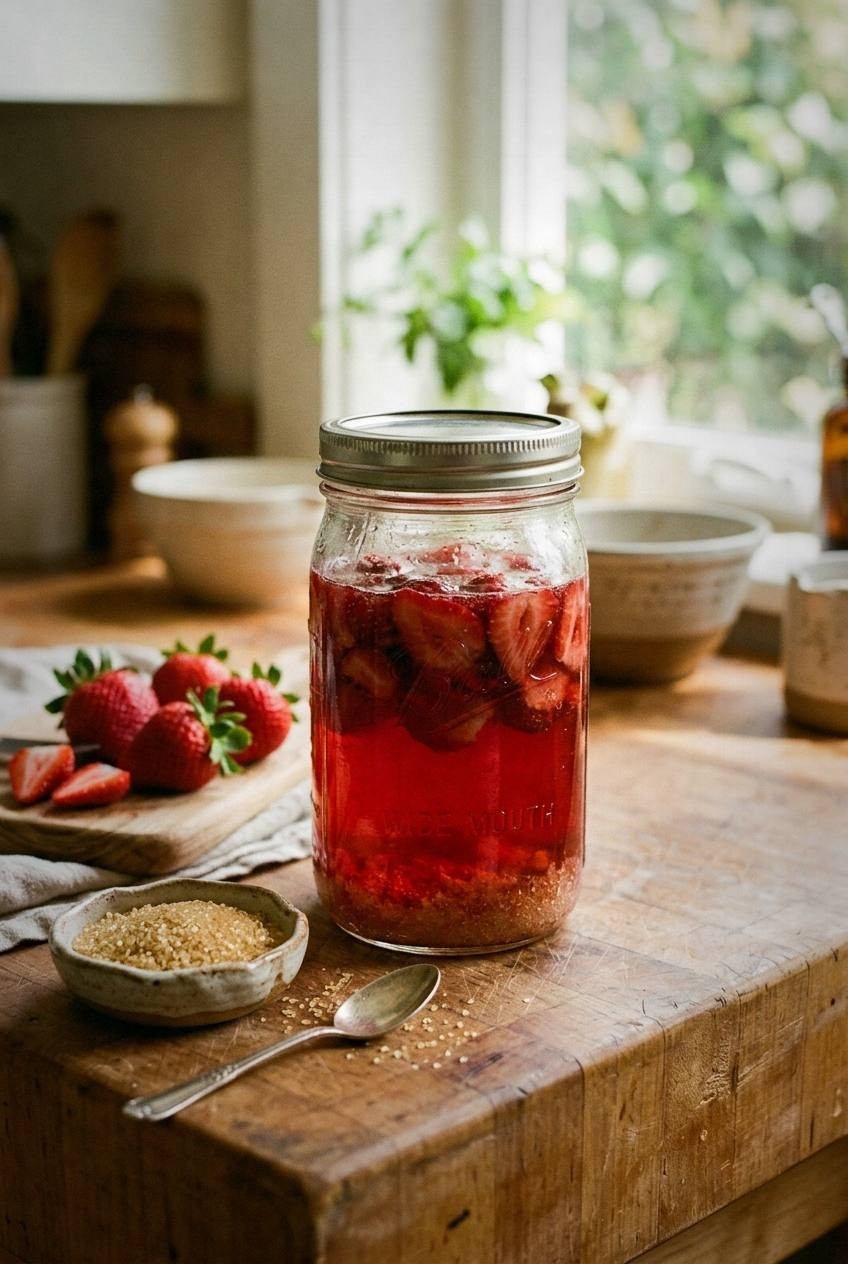
Use 2 cups rinsed quartered strawberries, 1 cup granulated sugar and 1 cup labeled 5% red wine vinegar. Combine all three in a clean container larger than a quart, stir, cover and refrigerate 24 hours. Stir with a clean utensil to dissolve sugar; extra cold resting may be needed. Strain into a measuring jug, then filter again if desired. Measure output and transfer to containers large enough to hold it; do not assume a pint will fit. Allow about 15 minutes active work plus 24 hours cold resting. UC Master Food Preservers’ 2025 strawberry formula supplies the 2:1:1 cup quantities and vinegar-at-start sequence; TFA uses a refrigerated rather than room-temperature rest and does not inherit its long storage guidance. Source planning yield is about 1 3/4 cups, not a guaranteed TFA output. This replaces the old unlocated 1:1:1 strawberry attribution and two-week maturation. Use or freeze the finished concentrate. Make it without extra lime or herbs in the concentrate; a strawberry basil shrub has its own measured formula and cold-rest timing.
2. Raspberry Shrub
Use 2 cups rinsed raspberries, 2 cups white sugar and 2 cups labeled 5% white vinegar. Mash fruit with sugar in a covered nonreactive bowl and refrigerate 2-3 days. Strain, pressing gently, then stir in vinegar and measure output. Bottle in containers sized for that volume and refrigerate. Allow about 15 minutes active work plus 2-3 days resting. Patti Estep’s card supplies this formula; her prose names apple cider vinegar, a different flavor option. Either labeled 5% vinegar can be used, but do not quote the source’s ambiguous printed serving weight or assume 16 portions. If using 2 cups frozen berries, thaw in the refrigerator and include thaw juice; thawing adds time. Freeze remaining concentrate after the day’s use instead of adopting a three-month guarantee.
3. Peach Shrub
Use 1 pound rinsed peaches, weighed before removing pits, 1 cup granulated sugar and 2 cups labeled 5% apple cider vinegar. Slice the sound fruit; discard pits. Combine fruit and sugar in a covered 2-quart jar, bruise lightly and refrigerate 24 hours. Add vinegar, stir and refrigerate another 24 hours, then strain and measure. Allow about 15 minutes active work plus 48 hours chilling. Aran Goyoaga’s original rests at room temperature and calls its output roughly a quart; TFA refrigerates both rests and measures the actual output. Extra cold resting may be needed for undissolved sugar. This adaptation does not inherit a month-long storage promise. Use or freeze after straining.
4. Blueberry Shrub
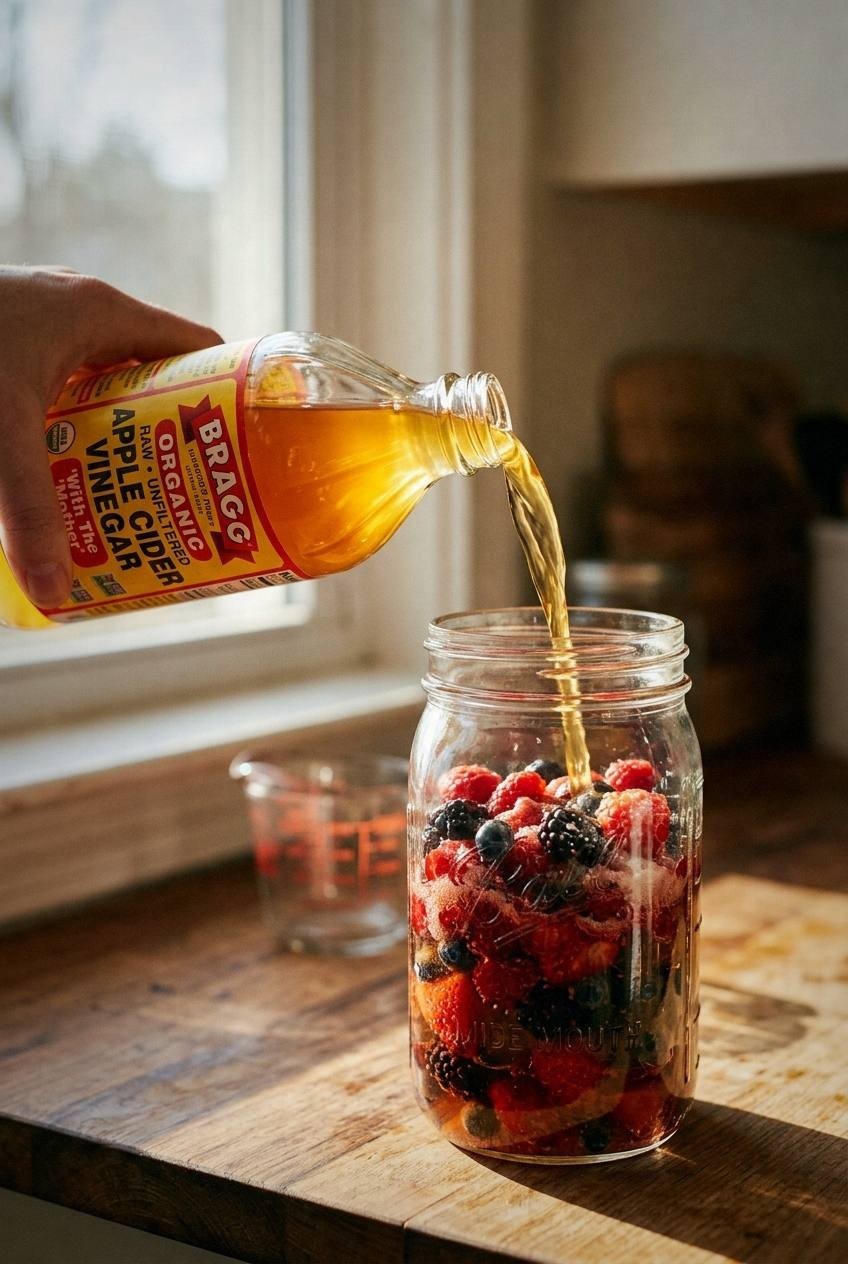
Use 2 cups rinsed blueberries, muddled; 2 cups labeled 5% apple cider vinegar; 1 1/2 cups sugar; 4 rinsed fresh culinary thyme sprigs, each about 3 inches; and one rinsed, peeled 1-inch piece ginger, thinly sliced. Combine in a saucepan, bring to a simmer and stir until sugar dissolves. Transfer carefully to small heat-safe containers, cool promptly in an ice bath and refrigerate a covered 24-hour infusion. Strain and measure output. Allow about 15 minutes active prep plus heating/cooling, then 24 hours resting; plan about 25 hours total. Kristin Guy’s Blueberry Council formula is the comparison; TFA specifies vinegar and sprig size and replaces its unspecified cool-place rest with refrigeration. Do not seal a hot container for days on a shelf. Use or freeze the finished concentrate.
5. Rhubarb Shrub
Use 2 cups rinsed rhubarb stalks diced into 1/4-inch pieces, 1 cup sugar and 1 cup labeled 5% apple cider vinegar. Discard all leaves; they are not a drink ingredient. Mix stalks and sugar in a covered bowl and refrigerate 4-5 days, stirring with a clean utensil every 12 hours. Strain, press gently and stir in vinegar. Measure and refrigerate the output. Allow about 15 minutes active work plus 4-5 days resting. Sylvia Fountaine’s formula supplies the quantities and cold process. Her approximate 1 1/2-cup yield is a planning comparison, not a guaranteed TFA yield. This page does not add an optional further week of maturation to a day-use/freezer plan or claim probiotic benefits.
Five Measured Serving Ideas
With finished concentrate ready, each takes about 5 minutes. Drink mixes are house flavor proportions; they are not prescribed daily tonics.
| Use | Measured mix and portion |
|---|---|
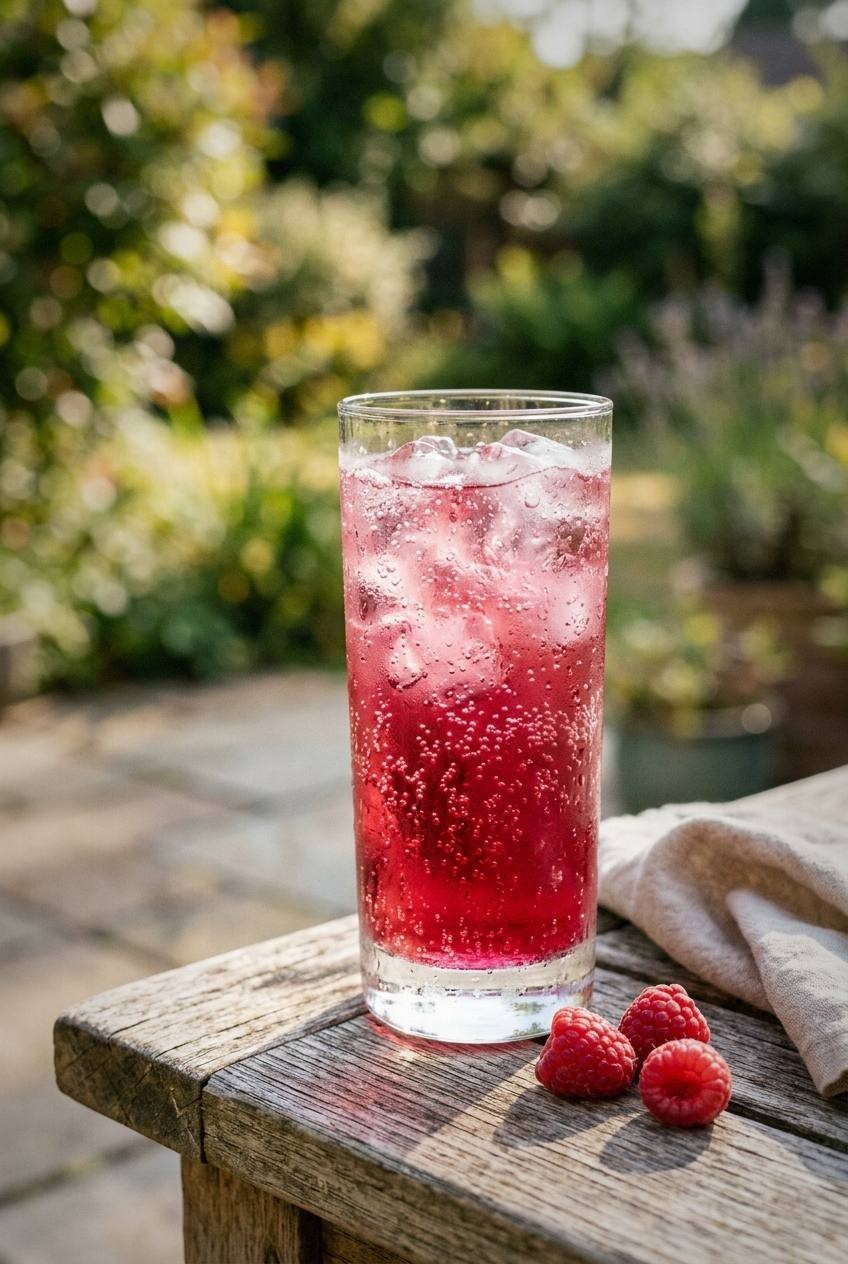
| Sparkling shrub | 1 tablespoon concentrate + 1 cup chilled sparkling water, stirred over ice in a 16-fluid-ounce glass; one drink |
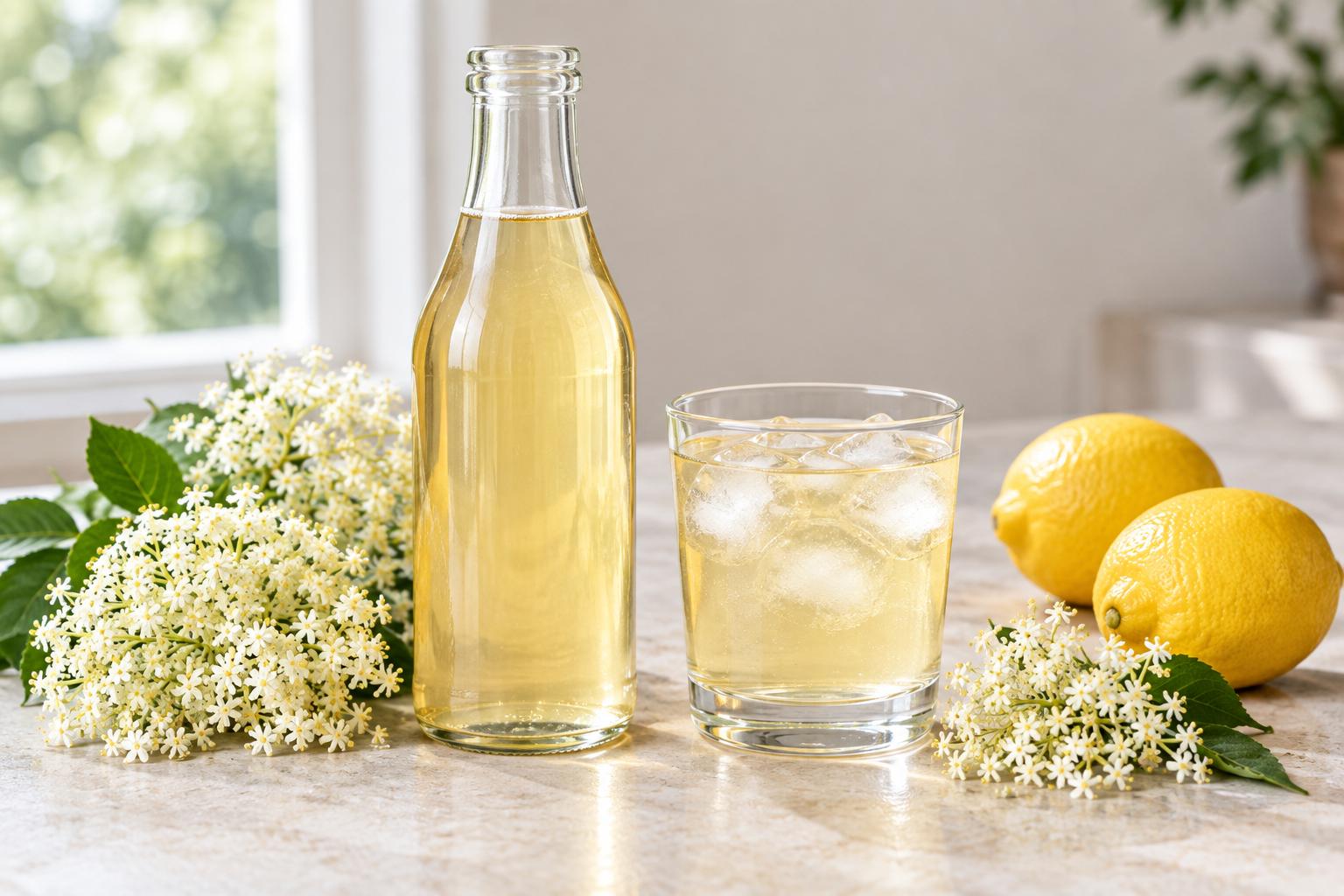
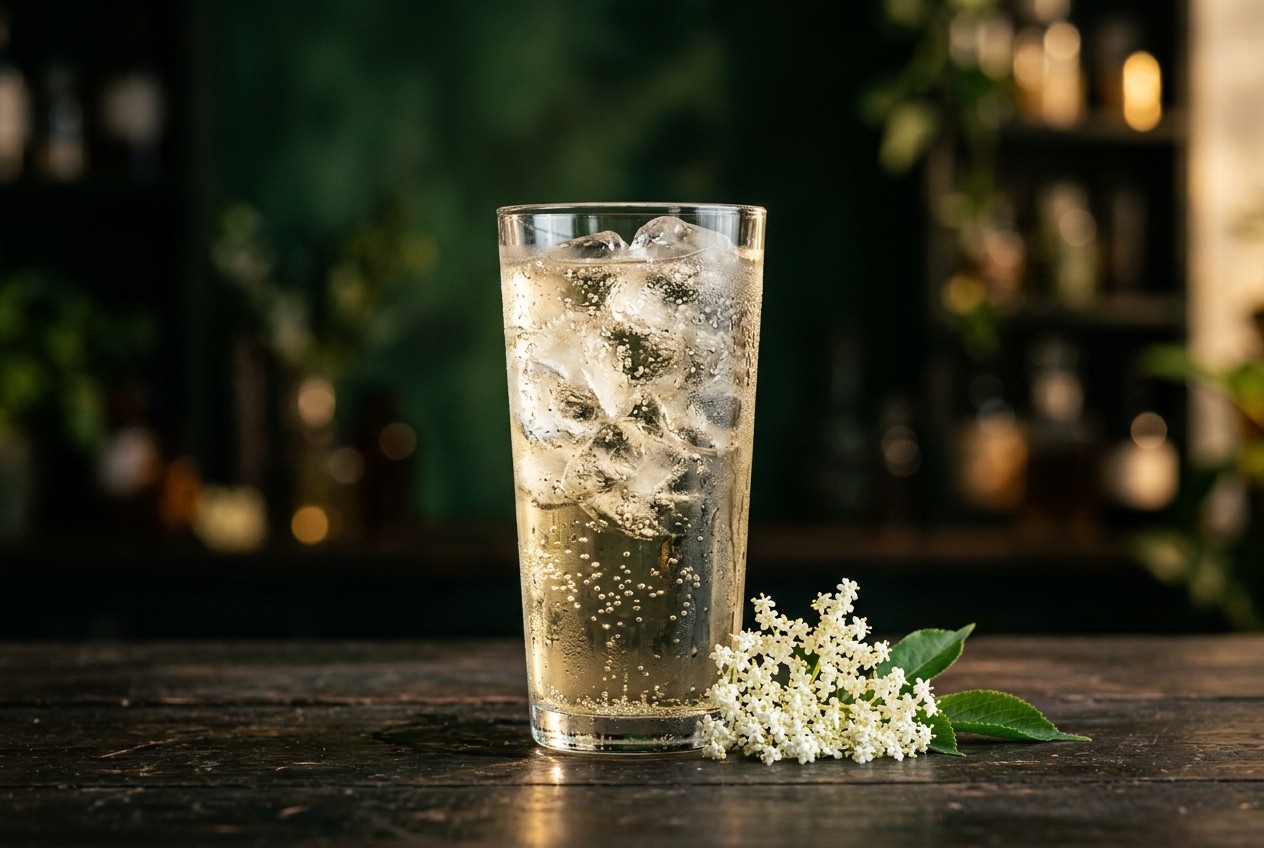
| Cordial spritz | 1 tablespoon shrub + 1 teaspoon commercial food elderflower cordial + 1/2 cup soda, stirred over ice in a 12-fluid-ounce glass; one drink; cordial label applies |
| Fruit mocktail | Gently press 2 rinsed quartered strawberries with 1 tablespoon shrub, add ice and 1/2 cup soda in a 12-fluid-ounce glass; one drink |
| Dressing | Whisk 1 tablespoon shrub + 3 tablespoons olive oil with optional 1/16 teaspoon salt and 1/16 teaspoon ground pepper; 4 tablespoons before seasonings, use with the current meal |
| Spirit spritz | 1 fluid ounce shrub + 2 fluid ounces gin or vodka + 3 fluid ounces soda over ice in a 12-fluid-ounce glass; one alcoholic drink |
For still or warm water use 1 tablespoon shrub per 1 cup potable water; mix and serve promptly. Vinegar is an acidic flavor ingredient, not digestive treatment. Do not automatically replace both citrus and syrup in any cocktail; start with the measured spirit spritz above.
Flavor Changes and Storage
White sugar may be replaced cup-for-cup with dry turbinado sugar for flavor; dissolution may take longer. White wine or red wine vinegar labeled 5% can replace apple cider vinegar at the stated cup amount. Different vinegars and fruits do not inherit each other’s yields or preservation properties. Honey, maple syrup, arbitrary fruit swaps and unmeasured herb additions are not automatic equivalents to these five formulas; use a separately specified recipe for them.
Unexpected gas, pressure, mold, slime or off odor means discard the concentrate without tasting; ordinary color change does not clear a batch. These preparations are refrigerated mixers, not spontaneous ferments or tested preserves. No kitchen or shelf-life testing was performed.