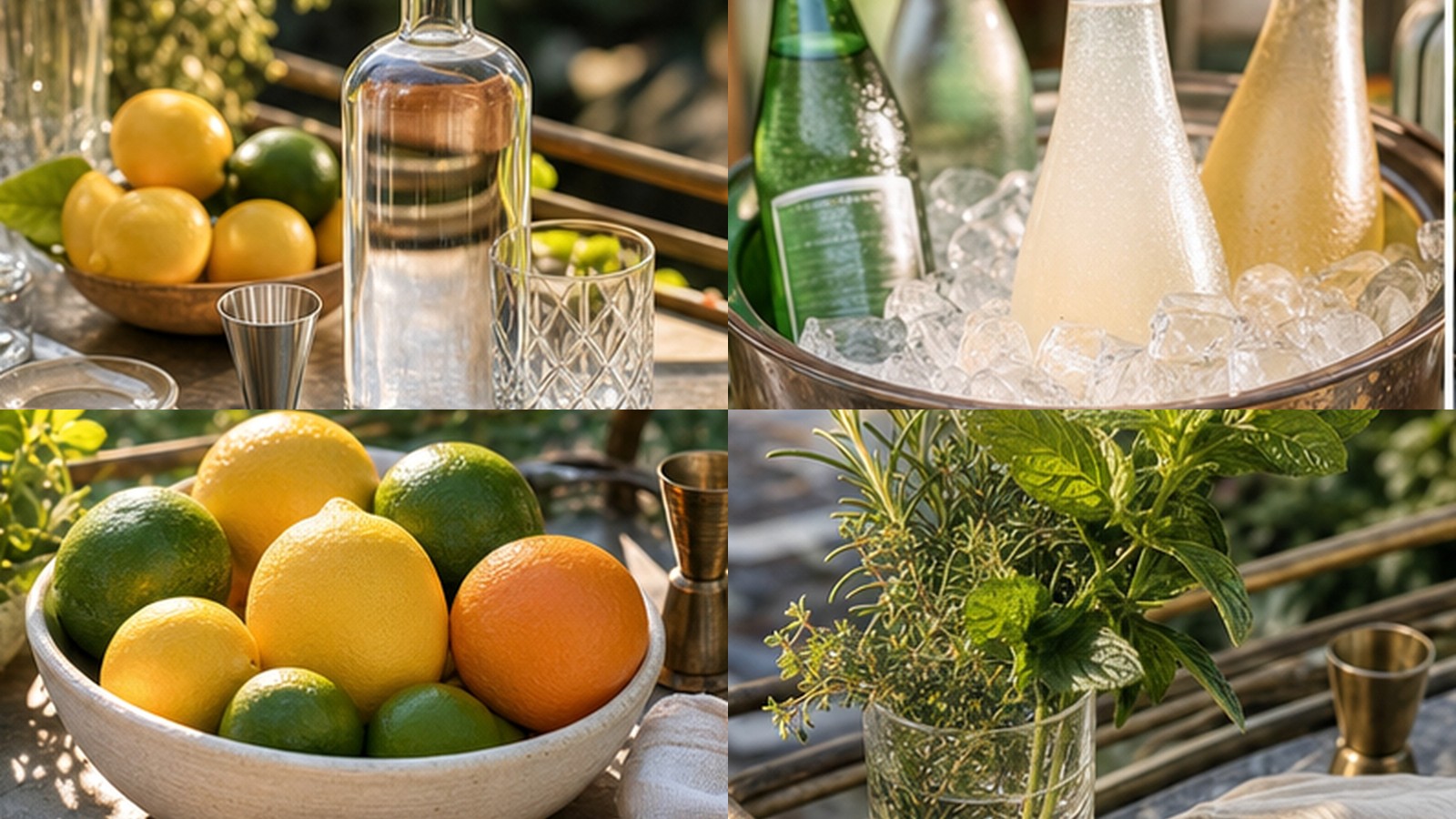
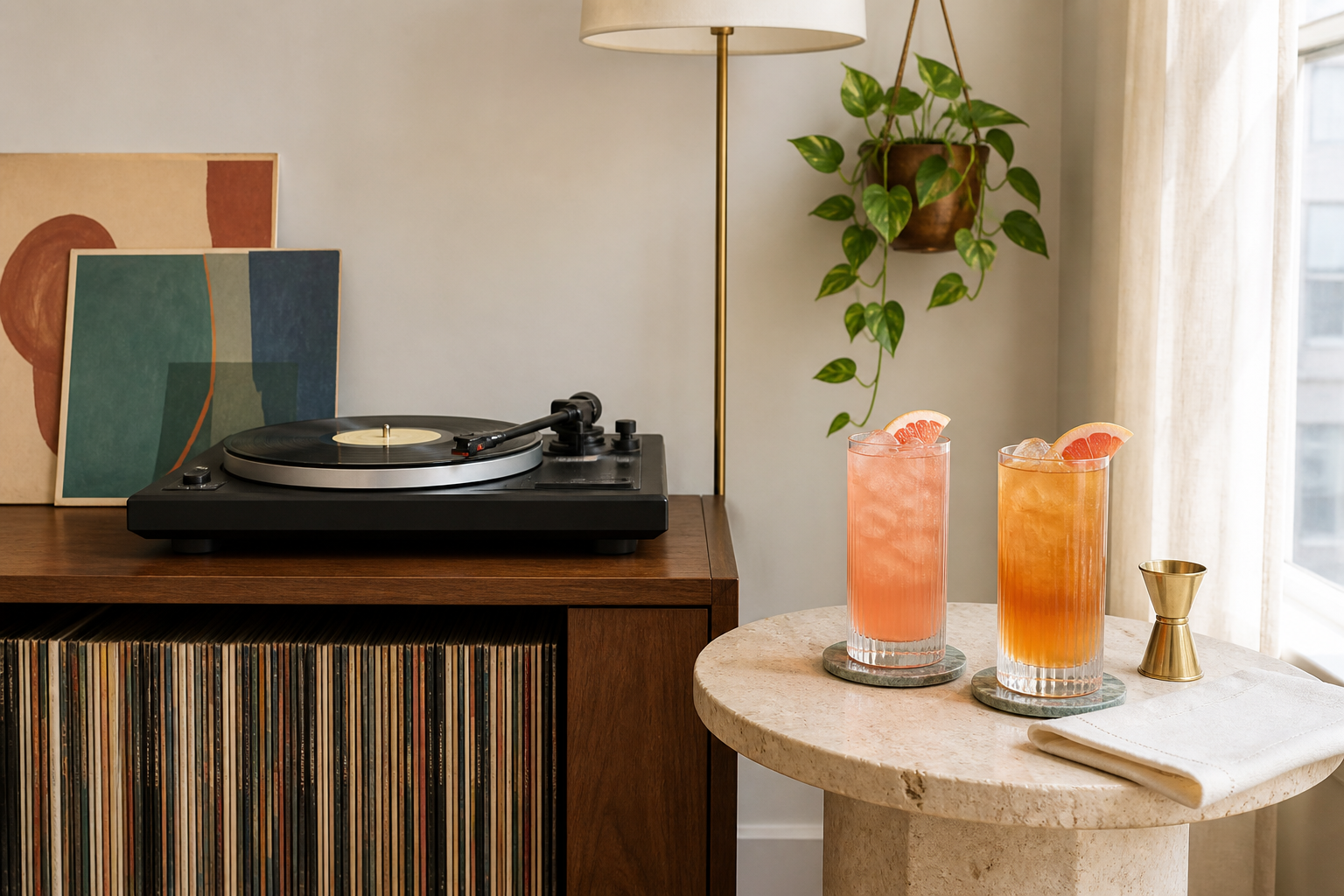
A record console can share a small home bar corner, but the turntable and the pour shouldn’t share the same few inches. Give the equipment a dry, level zone and move bottles, ice, plants, and finished drinks onto a tray or adjacent surface.
The result feels more collected, not less. You still get walnut, vintage glass, brass light, and a favorite record in one view, without asking the turntable to double as a cocktail table.
Divide the console into dry and pour zones
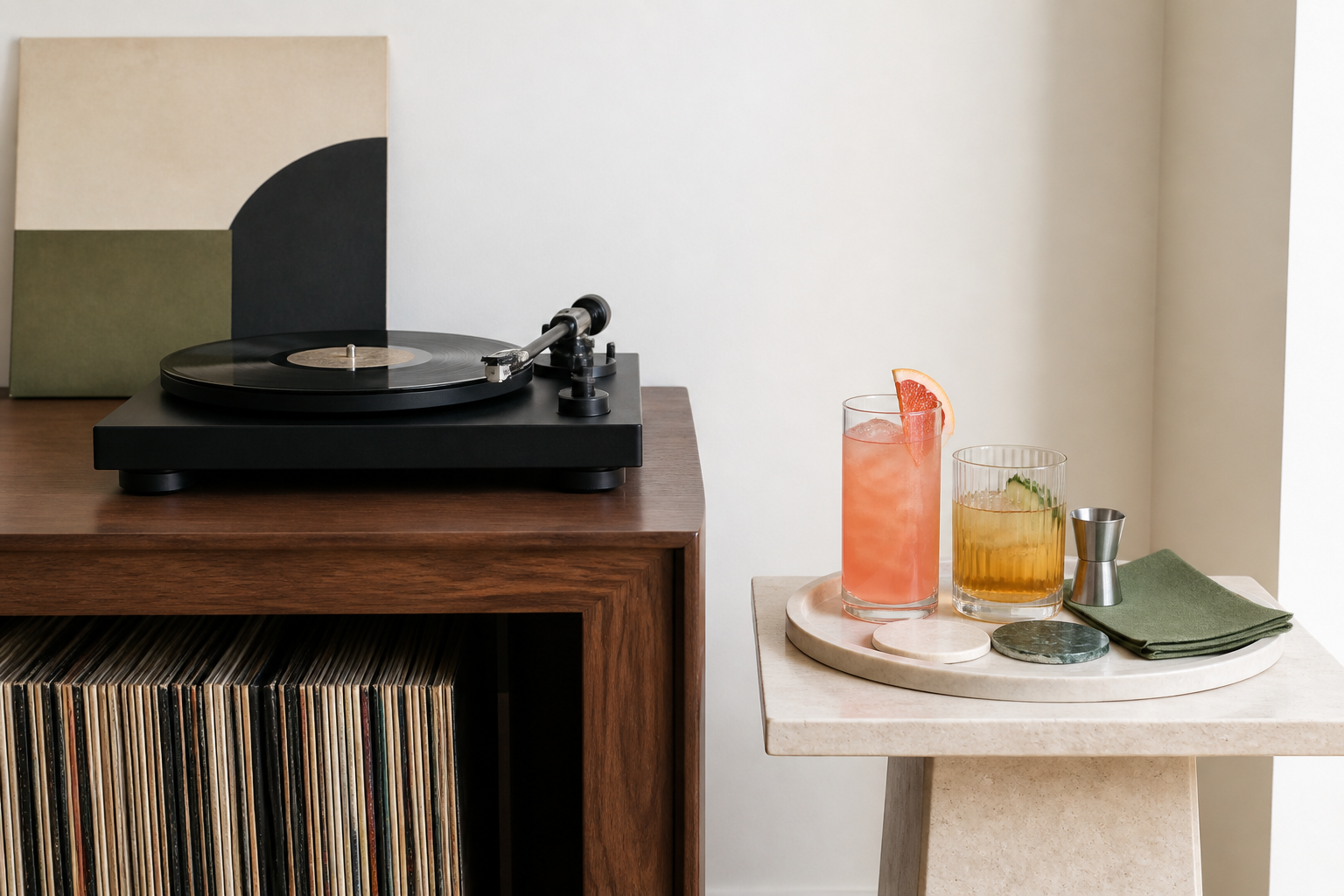
Start with the line you won’t cross. Everything related to records stays on the dry side: turntable, sleeves, brush, headphones, and the lamp if its cord is secure. Everything that can drip stays on the pour side: bottles, jigger, ice, citrus, glassware, and plants that need water.
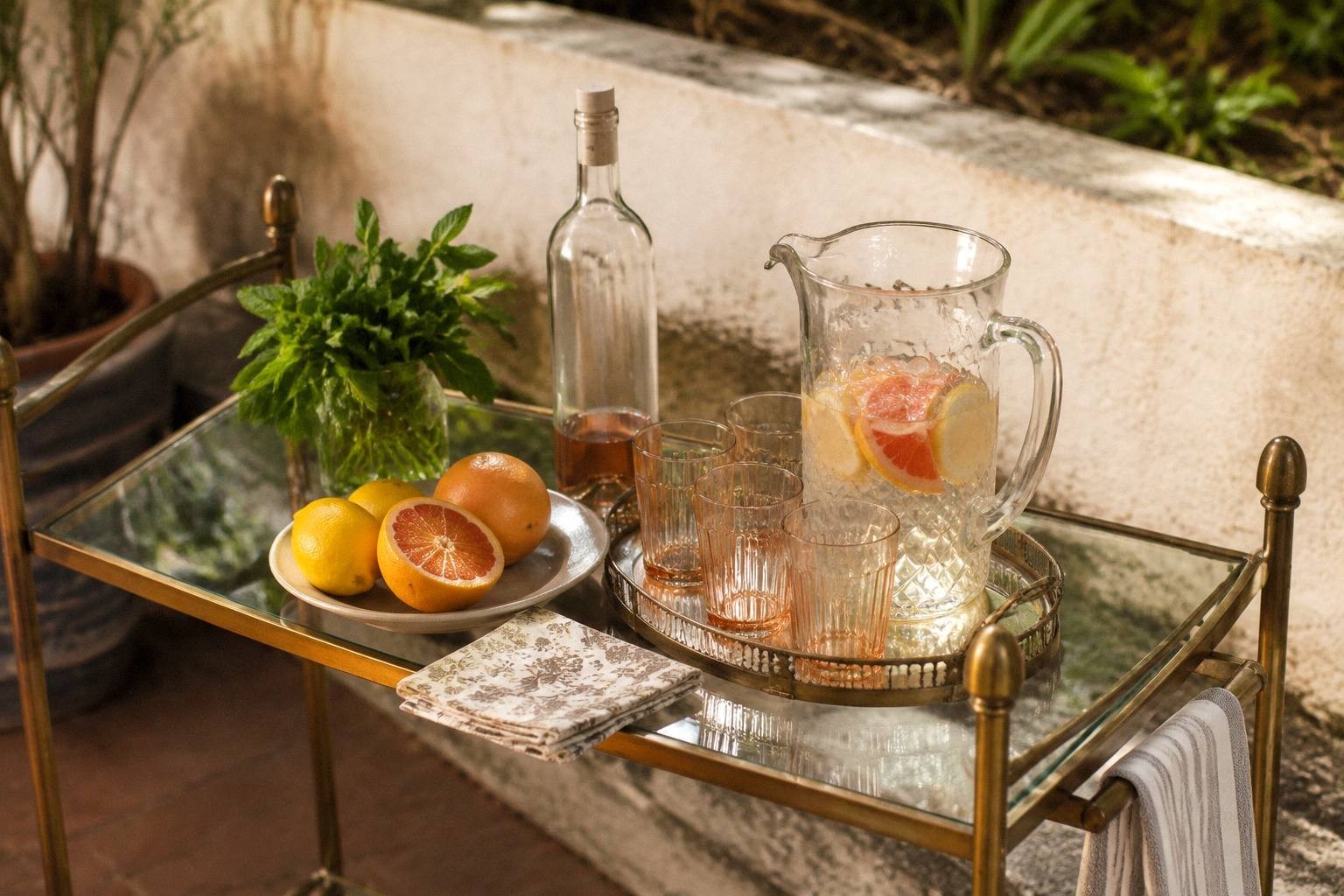
A tray makes that boundary visible. It catches small drips, gives tools one home, and can move to the kitchen when you need to mix a drink. If the console is narrow, put the tray on a side table or slim cart instead of squeezing it beside the turntable.
Keep finished drinks off the record surface even when they look good there. Place a coaster on a nearby stool or table before you sit down. The best home bar layout is the one that doesn’t make you choose between changing the record and finding somewhere safe for the glass in your hand.
Measure the corner before you buy anything
Measure four things:
- The wall width
- The furniture depth
- The open height above the turntable with its lid raised
- The walking space left when drawers, cabinet doors, and the record bin are open
Write down the turntable’s actual footprint, then add the room its lid and tonearm need. Don’t buy furniture from a styled photograph. A shallow console that looks perfect online may be too narrow for the feet of your turntable, while a deep bar cart may eat the only comfortable path through the room.
Tape the furniture outline on the floor before buying. Walk past it carrying a laundry basket or two grocery bags. If you have to turn sideways, the corner is too deep for daily life.
For an existing console, empty the top and put back only the turntable. Open the lid, move the tonearm, and change a record. Whatever surface remains after that motion is your real usable space, not the full measurement on the product page.
Keep the turntable level, dry, and steady
Set the turntable on a rigid, level surface where normal footsteps and opening a cabinet don’t make it wobble. If speakers make the furniture vibrate, move them to separate stands or another stable surface rather than surrounding the platter with more barware.
Keep the lid’s path clear. A lamp shade, trailing vine, or row of bottles that blocks the lid will eventually be knocked aside while someone is holding a record by the edges.
The Library of Congress advises handling discs by their edges and storing disc recordings upright in a cool, dry environment. Its care and handling guide for sound recordings is worth reading if the collection is growing. In this shared corner, that means records stay vertical, away from radiators, sunny windows, wet greenery, and the ice bucket.
Store bottles, tools, glasses, and records without crowding
The corner only needs what you use on ordinary nights.
Keep bottles low
Store three to five working bottles on a lower shelf or enclosed cabinet, not in a wall of glass around the turntable. Low storage keeps the visual weight grounded and leaves the top open for changing records.
If you’re starting from nothing, three-bottle home bar ideas for small apartments covers a compact working set. Buy for the drinks you make, not for the empty spaces on a cart.
Keep tools together
One jigger, one bar spoon, one opener, and a small citrus tool can live in a shallow cup or drawer. A shaker belongs in the kitchen unless you use it every week. The console isn’t improved by displaying twelve tools you walk past to find the one you need.
Keep glassware to one shelf
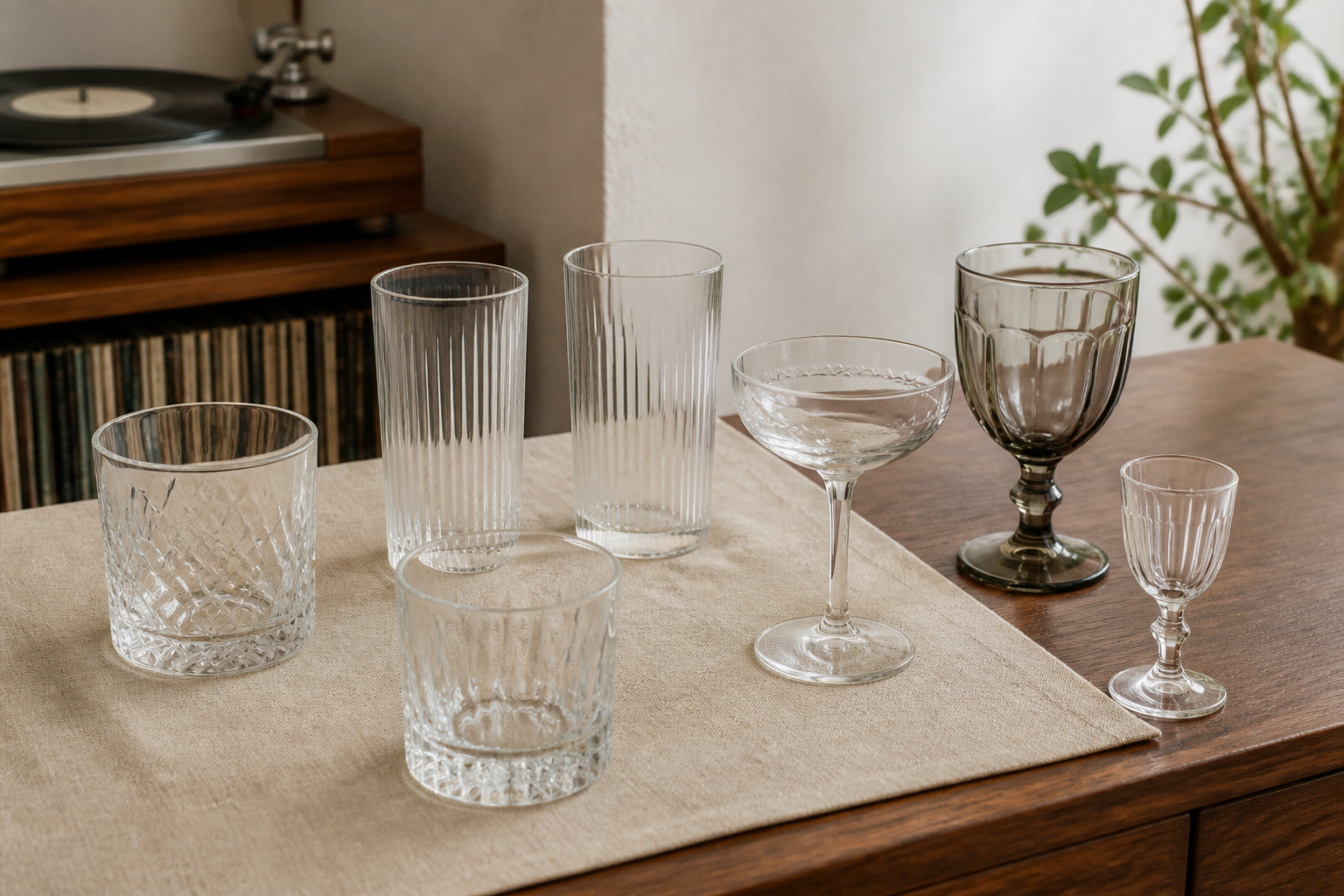
Choose six to eight glasses in two useful shapes, such as highballs and rocks glasses. Put daily glassware on the easiest shelf and store special pieces elsewhere. Cheap glassware that looks like vintage barware explains what to look for without filling the room with mismatched pieces.
Keep records vertical
Use a cube, cabinet, or divided lower shelf that supports records upright. Don’t stack them flat under bottles or slide them into the only space where an ice bucket fits. Music storage and drink storage can share the furniture, but they shouldn’t share the compartment.
Light the corner without adding heat or clutter
A small shaded lamp gives the corner a warm pool of light and makes labels, glass rims, and record spines easier to see. Put it behind or beside the turntable, never where the lid or tonearm can hit it.
Route the cord along the back of the furniture and keep it out of drawers and walking paths. Avoid a candle on the console. Open flame, sleeves, alcohol, dried botanicals, and reaching hands aren’t a useful combination.
Greenery softens wood and metal, but choose a plant that doesn’t shed needles or need constant misting. Put its pot on another shelf with a waterproof saucer. A trailing plant mounted above the dry zone looks lovely only if watering it can’t drip onto the equipment.
Three layouts that work in a small room
Layout 1: console plus side tray
This is the smallest and most flexible version.
- Turntable and records live on the console.
- A 14- to 18-inch tray sits on a sturdy side table.
- Bottles stay in the cabinet or kitchen until needed.
- Two glasses and a jigger come out for the evening.
Use this when you don’t host large groups and want the corner to look like a listening space first.
Layout 2: console plus narrow cart
Put a slim cart beside the console with enough space to open every drawer and record bin.
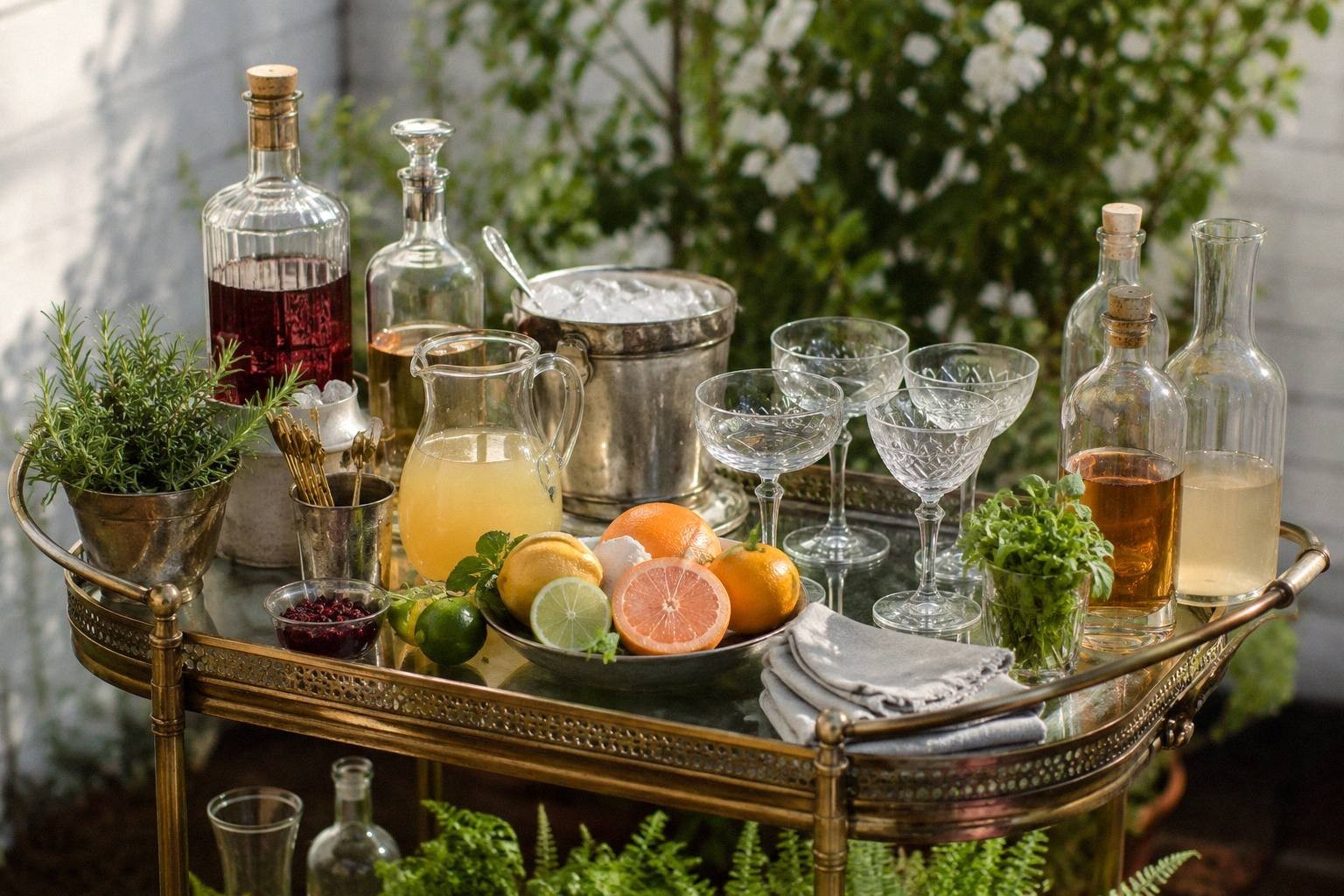
- Top shelf: pour tray, two bottles, and glassware
- Lower shelf: backup bottles, napkins, and a small ice bucket brought out at serving time
- Console: turntable, records, and lamp only
This works when you host often enough to want a permanent pour surface. Choose a cart only after taping its footprint on the floor. Small-space drink station ideas without a bar cart is the better answer when the cart blocks the room.
Layout 3: bookshelf listening bar
Use a sturdy wide shelf for the turntable and a separate shelf for glassware and bottles.
- Put the turntable at a comfortable standing height.
- Keep the pour shelf below or to the side, never directly above the equipment.
- Store records vertically on lower shelves.
- Use doors or baskets to hide backups and cleaning cloths.
Check the furniture maker’s load limits and assembly instructions. Records and filled bottles become heavy quickly, and a tall unit should be secured according to its manufacturer guidance.
What belongs on the surface
On an ordinary night, keep it to:
- The turntable
- The record currently playing
- One small lamp
- A dry record brush or accessory
- A separate tray with two glasses and the ingredients for one drink
During a gathering, move the drink tray farther from the equipment and give it a clear left-to-right serving order. The drink station guide can scale the pour away from the listening corner when more than a few people are serving themselves.
What to skip
- An open ice bucket beside the turntable. It sweats, gets bumped, and takes the exact space a record needs.
- A forest of bottle display. Keep the working set small and backups closed away.
- A watered plant on the console. Put it above or beside the furniture on a protected surface.
- Speakers tucked against the turntable. If the furniture vibrates, separate them.
- Records stacked flat under bar tools. Give them upright support.
- A candle between sleeves and spirits. Use a shaded lamp.
- A cart that narrows the walkway. Tape the footprint first.
Small home bar and record player checklist
Measure
- Turntable width, depth, and open-lid height
- Console or shelf depth
- Drawer and cabinet swing
- Walking space with everything open
- Tray or cart footprint
Separate
- Dry zone for turntable and records
- Pour zone for bottles, tools, ice, and glasses
- Watered plants on a protected third surface
- Speakers moved if they shake the console
Edit
- Three to five working bottles
- Two useful glass shapes
- Four essential tools or fewer
- One lamp
- One tray
Common questions
Can I put a turntable on a bar cabinet?
Yes, if the top is rigid, level, deep enough for the turntable’s feet, and clear enough to open the lid and move the tonearm. Keep drinks, ice, and watered plants on a separate tray or surface.
Can records and liquor bottles share the same cabinet?
They can occupy separate compartments. Store records upright in a dry section and bottles low in another section where a leak can’t run into the record bin.
How many bottles does a small home bar need?
Start with three bottles chosen for drinks you actually make. Add bitters, vermouth, or another bottle only when a recipe earns it. A smaller working set leaves room for glassware and keeps the corner usable.
Do I need a bar cart beside the record player?
No. A tray on a side table creates a clear pour zone and stores flat when you aren’t using it. A cart makes sense only if it fits the walking path and you host often enough to use the extra storage.
Where should the speakers go?
Place them where they don’t make the turntable’s surface vibrate. Separate stands or a different shelf may work better than placing speakers on the same console. Test at your normal listening volume before arranging bottles or art around them.
A small corner doesn’t need to do everything at once. Let the console play the record, let the tray hold the pour, and enjoy the fact that both are finally within reach.