Forage 8 wild spring plants for herbal drinks and iced teas: dandelion, violet, elderflower, nettle, clover, pine needles, wild mint, chickweed.
April is the forager’s opening bell. Snow retreats, soil warms, and the first green shoots push up in ditches, meadows, and forest edges. Within a 20-minute walk of most homes in North America, at least a dozen edible plants are coming up right now. Eight of them make exceptional drinks.
This guide covers identification, harvest timing, and a specific drink recipe for each plant. Some become iced teas. Others become syrups, cordials, or infused waters. All of them are free, seasonal, and carry flavors you cannot replicate with anything from a store.
A word before we start: foraging demands certainty. Positive identification is not optional. Bring a field guide. Cross-reference with a second source. When in doubt, leave it. Samuel Thayer’s The Forager’s Harvest remains one of the best references for North American wild plant identification and preparation.
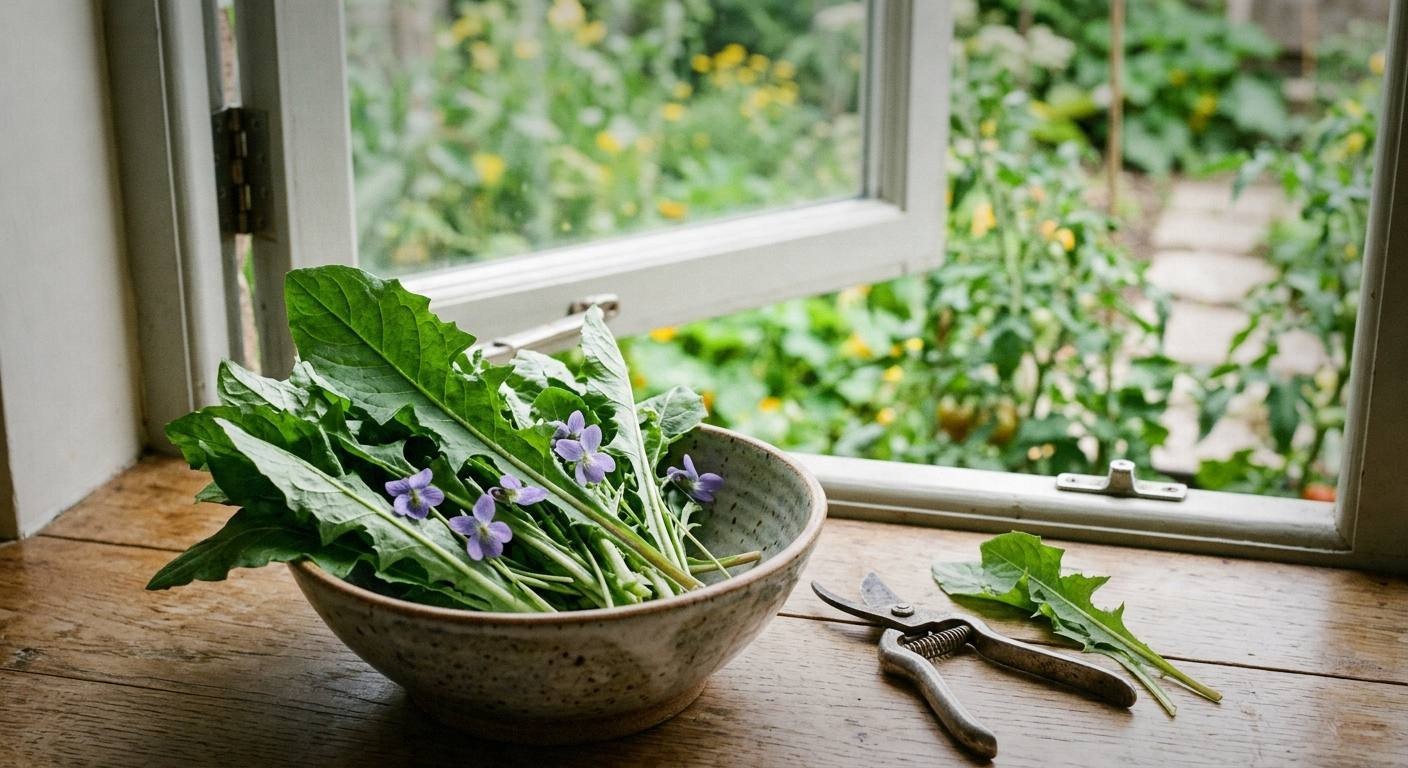
At a Glance
| Plant | When to Pick | What to Make | Difficulty |
|---|---|---|---|
| Dandelion | March-May | Iced dandelion tea, syrup | Beginner |
| Violet | April-May | Violet lemonade | Beginner |
| Elderflower | May-June | Cordial, sparkling water | Intermediate |
| Nettle | March-May (young) | Iced nettle tea | Intermediate |
| Red Clover | May-September | Iced clover tea | Beginner |
| Pine Needles | Year-round | Pine needle iced tea | Beginner |
| Wild Mint | April-October | Mint water, simple syrup | Beginner |
| Chickweed | March-June | Green juice, infused water | Beginner |
Before You Start
The 50-foot rule. Never forage within 50 feet of a road. Car exhaust deposits heavy metals on nearby plants. Avoid railroad tracks, industrial sites, and anywhere that might have been sprayed with herbicides or pesticides.
The 10% rule. Take no more than 10% of any plant stand. Leave enough for the plant to regenerate and for wildlife that depends on it. If you find a small patch, admire it and move on.
Positive ID is mandatory. Learn from a field guide with photographs and botanical descriptions. Apps can supplement your knowledge but should never be your only source. Some edible plants have toxic lookalikes.
Wear gloves for nettles. Stinging nettle earns its name. The tiny hairs inject formic acid on contact. Gloves and long sleeves are essential during harvest. Heat or thorough drying neutralizes the sting completely.
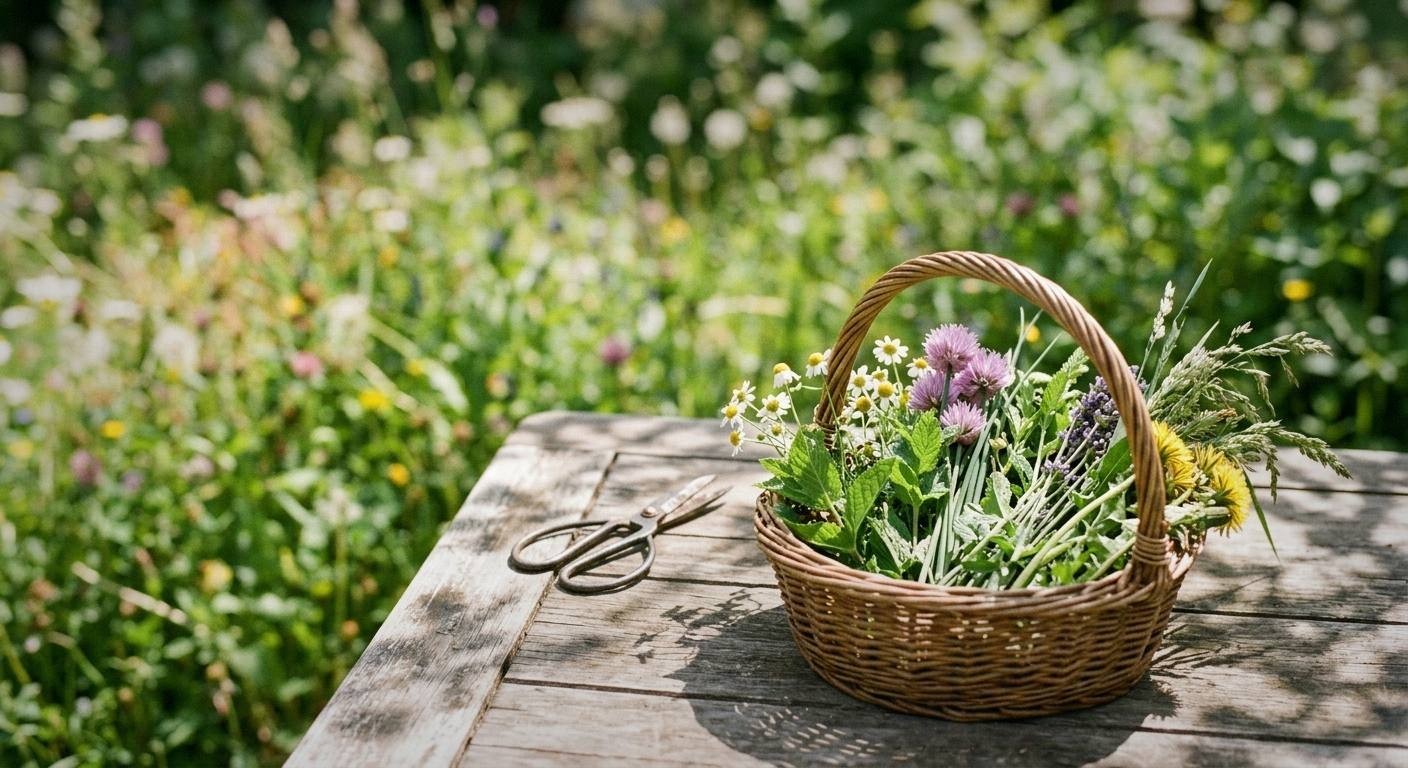
Bring the right containers. Paper bags breathe and prevent wilting. Plastic bags create condensation that accelerates decay. A woven basket is traditional for good reason.
The 8 Plants
1. Dandelion (Taraxacum officinale)
What to look for: Bright yellow composite flowers on hollow stems. Rosette of deeply toothed leaves at the base. White milky sap when you snap a stem. Grows in lawns, meadows, roadsides, and disturbed soil everywhere.
When to pick: Flowers from March through May for the sweetest flavor. Roots year-round, but spring roots are less bitter.
Where to find it: Your lawn, probably. Open fields, park edges, gravel shoulders (observe the 50-foot rule). Dandelions thrive in full sun.
The drink: Iced Dandelion Flower Tea
Collect 2 cups of open dandelion flowers. Snip or pinch off the green sepals at the base (they are bitter). Steep the yellow petals in 4 cups of boiling water for 20 minutes. Strain, stir in 2 Tbsp honey, cool, and serve over ice with a squeeze of lemon.
The flavor is mild, slightly honey-like, with a faint bitterness that the honey rounds out. For a richer dandelion experience, the dandelion syrup recipe concentrates hundreds of flowers into a golden syrup that tastes remarkably like honey.
2. Wild Violet (Viola sororia)
What to look for: Heart-shaped leaves on thin stems. Five-petaled flowers in purple, blue, or white. Low-growing, often in clusters under trees or along shaded paths.
When to pick: Flowers appear April through May. Pick when fully open.
Where to find them: Shaded lawns, forest edges, under deciduous trees, along creeks.
The drink: Violet Lemonade
Steep 1 cup of violet flowers in 2 cups of boiling water for 4 hours or overnight. The water turns deep blue. Strain. Add the juice of 2 lemons. The acid shifts the pH and the liquid transforms from blue to vivid pink. Add 1/4 cup simple syrup, stir, and serve over ice. The color change alone makes this worth foraging for.
3. Elderflower (Sambucus nigra)
What to look for: Large flat-topped clusters (umbels) of tiny creamy-white flowers with a sweet, muscat-grape fragrance. Grows on shrubs or small trees with compound leaves, 5 to 7 leaflets per stem.
When to pick: Late May through June when the flowers are freshly opened and fragrant. Once they start browning, the flavor turns musty.
Where to find them: Hedgerows, stream banks, field edges, woodland clearings. Common across eastern North America and Europe.
The drink: Elderflower Cordial
The elderflower cordial recipe is a full guide. In brief: combine 20 elderflower heads, 4 cups sugar, 6 cups water, and the zest of 2 lemons. Let steep for 48 hours, strain, and bottle. Dilute with cold sparkling water at a 1:4 ratio. Floral, honeyed, and unmistakably spring.
Important: Do not confuse elderflower with water hemlock (Cicuta), which also grows near water. Water hemlock has a different flower structure (smaller, looser clusters) and smells unpleasant. Consult your field guide.
4. Stinging Nettle (Urtica dioica)
What to look for: Square stems, opposite serrated leaves, covered in fine stinging hairs. Grows 2 to 6 feet tall when mature. Pick only the top 4 to 6 leaves of young plants (under 12 inches) before flowering.
When to pick: March through May, while plants are young and tender. After flowering, leaves become gritty with calcium carbonate crystite deposits.
Where to find them: Rich, moist soil near streams, forest edges, farmyards, and compost piles. They favor nitrogen-rich ground.
The drink: Iced Nettle Tea
Wearing gloves, harvest 2 packed cups of young nettle tops. Blanch in boiling water for 60 seconds (this neutralizes the sting). Steep blanched nettles in 4 cups of fresh boiling water for 10 minutes. Strain, cool, and serve over ice with lemon and honey. The tea is pale straw-yellow with a grassy, mineral-rich flavor similar to green tea.
Nettle is exceptionally high in iron, calcium, and vitamins A and C. A clinical review in the journal Molecules documented nettle’s traditional and evidence-based uses, including anti-inflammatory and antihistamine properties.
5. Red Clover (Trifolium pratense)
What to look for: Round, reddish-purple flower heads made of many tiny tubular florets. Three-part leaves with a characteristic lighter chevron pattern. Grows in meadows, lawns, and field margins.
When to pick: May through September when flower heads are fully colored and open.
Where to find them: Open fields, pastures, roadsides, lawns. One of the most common wildflowers in temperate climates.
The drink: Iced Red Clover Tea
Collect 1/2 cup of fresh red clover blossoms. Steep in 3 cups of boiling water for 15 minutes. Strain, sweeten lightly with honey, cool, and pour over ice. The flavor is delicate, slightly sweet, and floral. Blends well with mint or lemon.
6. Pine Needles (Pinus strobus preferred)
What to look for: Eastern white pine has soft needles in bundles of five. Avoid yew (Taxus), Norfolk Island pine, and Ponderosa pine, which can be toxic. White pine needles are long, soft, and have a clean citrus-pine scent when crushed.
When to pick: Year-round, though spring growth (light green tips) is sweetest and most tender.
Where to find them: Forests, parks, yards. White pine is the most common pine in eastern North America.
The drink: Pine Needle Iced Tea
Chop 1/2 cup of fresh white pine needles. Simmer (not boil) in 3 cups of water for 15 minutes. Boiling destroys vitamin C, which pine needles contain in surprisingly high concentrations. Strain, add honey to taste, cool, and serve over ice. The flavor is resinous, bright, and lemony.
7. Wild Mint (Mentha arvensis)
What to look for: Square stems (all mints have square stems). Opposite, toothed leaves with a strong minty fragrance when crushed. Small pink, purple, or white flowers in whorls around the stem. Grows near water.
When to pick: April through October. Best before flowering for maximum essential oil content.
Where to find them: Stream banks, wet meadows, ditches, edges of ponds. Mint loves moisture.
The drink: Wild Mint Infused Water
Bruise a large handful (about 20 leaves) of wild mint by slapping them between your palms. Drop into a pitcher with 6 cups of cold water and let infuse in the refrigerator for 2 to 4 hours. Add sliced cucumber and lemon for a spa-style water. For a richer preparation, make a cold brew herbal tea using wild mint as the base.
8. Chickweed (Stellaria media)
What to look for: Small, oval opposite leaves on trailing stems. Tiny white star-shaped flowers with deeply notched petals that look like 10 petals but are actually 5 split ones. A single line of fine hairs runs along one side of the stem, switching sides at each leaf node. This alternating hair line is the most reliable identification feature.
When to pick: March through June, before hot weather causes it to bolt and become stringy.
Where to find it: Garden beds, shaded lawns, forest edges, compost piles, disturbed soil. Often considered a weed, it is mild-flavored and highly nutritious.
The drink: Chickweed Green Water
Blend 2 packed cups of fresh chickweed with 3 cups of cold water and the juice of 1 lime. Strain through cheesecloth. Sweeten with 1 Tbsp honey. Serve over ice. The flavor is mild, green, and clean, similar to cucumber water with a slight herbal undertone.
Variations
Foraged iced tea blend. Combine nettle, red clover, and wild mint in equal parts for a mineral-rich spring iced tea with natural sweetness and cooling finish.
Foraged simple syrups. Any of these plants can be turned into a simple syrup by simmering with equal parts sugar and water for 15 minutes, then straining. Violet, elderflower, and pine needle syrups are particularly good as cocktail or mocktail bases.
Dried for later. Spread foraged plants on a screen in a warm, dry room for 3 to 5 days. Store in glass jars away from light. Dried nettle, clover, and mint retain excellent flavor for iced teas through autumn.
Common Questions
What if I cannot identify a plant with certainty? Leave it. No drink is worth a trip to the emergency room. Take a photo, note the location, and research it at home. Join a local foraging group or attend a guided walk led by an experienced forager. Samuel Thayer’s books are thorough starting points for self-study.
Are there poisonous lookalikes for these 8 plants? Most of these are low-risk. Dandelion, clover, and mint have no dangerous lookalikes in North America. Elderflower requires caution: distinguish it from water hemlock (different leaf structure, unpleasant smell). Nettle is unmistakable once it stings you. Pine needles require species identification since yew is toxic. When in doubt, refer to a field guide.
Can I forage in public parks? Laws vary by municipality. Many public parks allow foraging for personal use. National parks generally prohibit it. State forests often permit it. Check local regulations before harvesting. Private land requires the owner’s permission.
How do I wash foraged plants safely? Rinse gently in cool water. Soak leafy plants for 5 minutes in a bowl of water to dislodge insects and debris. Inspect each piece. If foraging near agricultural areas, consider a brief soak in water with a splash of vinegar (1 Tbsp per quart) to help remove surface residues, though this does not eliminate systemic pesticides.

Camille writes about botanical drinks, herbal cocktails, and the old plant wisdom that makes them work. Most days you'll find her in the garden or the kitchen, turning herbs into something worth sipping.