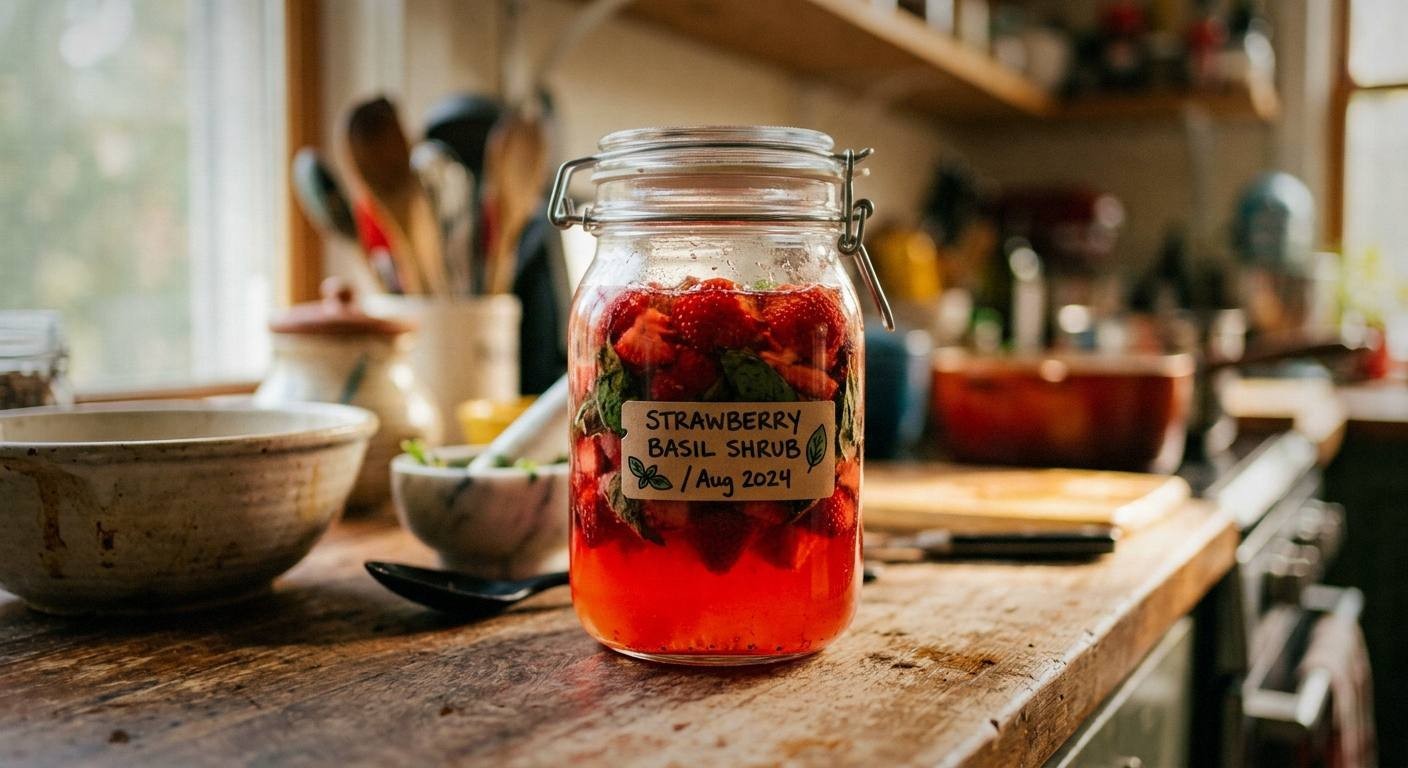
Strawberry, basil and vinegar make a sweet-tart mixer. Candice Walker’s original recipe card supplies the base proportions; its prose lists twice as much basil. This page follows the card’s 1/4 cup packed leaves. TFA refrigerates the first two-hour rest instead of leaving fresh fruit on the counter.
Ingredients and Timing
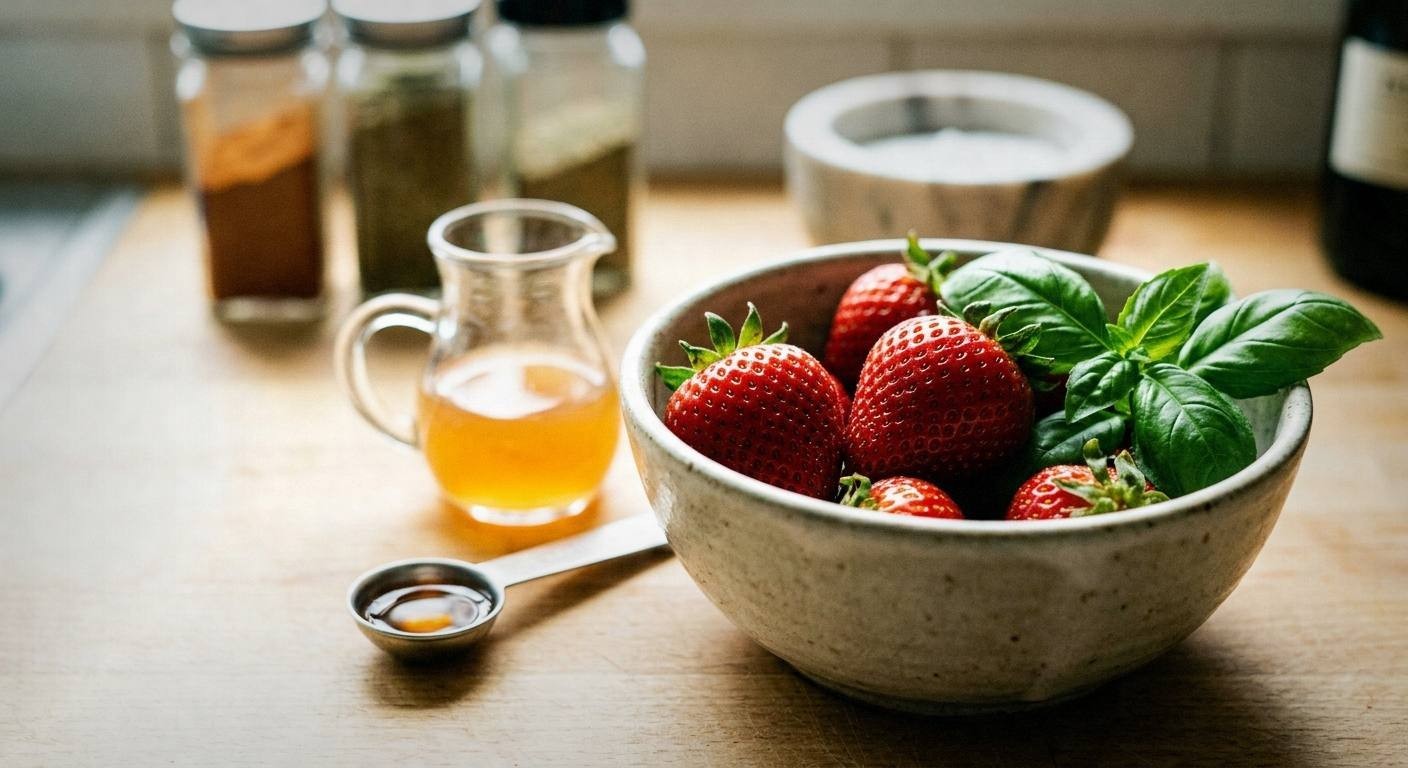
- 2 cups fresh strawberries, rinsed, hulled and quartered
- 1/4 cup packed rinsed fresh culinary basil leaves
- 1 cup turbinado sugar
- 1 cup commercial champagne vinegar or apple cider vinegar labeled 5% acidity
Allow about 15 minutes active prep plus a 2-hour cold maceration and 48-hour refrigerated infusion: about 50 hours 15 minutes total. Cold sugar dissolution can take longer. Measure strained yield; do not promise two cups, twenty portions or calories from the starting ingredients. Each tablespoon of finished concentrate makes one suggested drink; one measured cup supplies 16 such pours.
Method
- Combine berries, basil and sugar in a clean nonreactive bowl and muddle gently. Cover and refrigerate at 40 F (4 C) or below for 2 hours.
- Add the measured vinegar, muddle again, transfer to a clean covered container with ample room and refrigerate for 48 hours. Stir with a clean utensil if sugar remains undissolved.
- Strain through a fine sieve, pressing gently with a clean spoon. Measure the finished concentrate, discard solids and transfer to clean containers sized to the measured output.
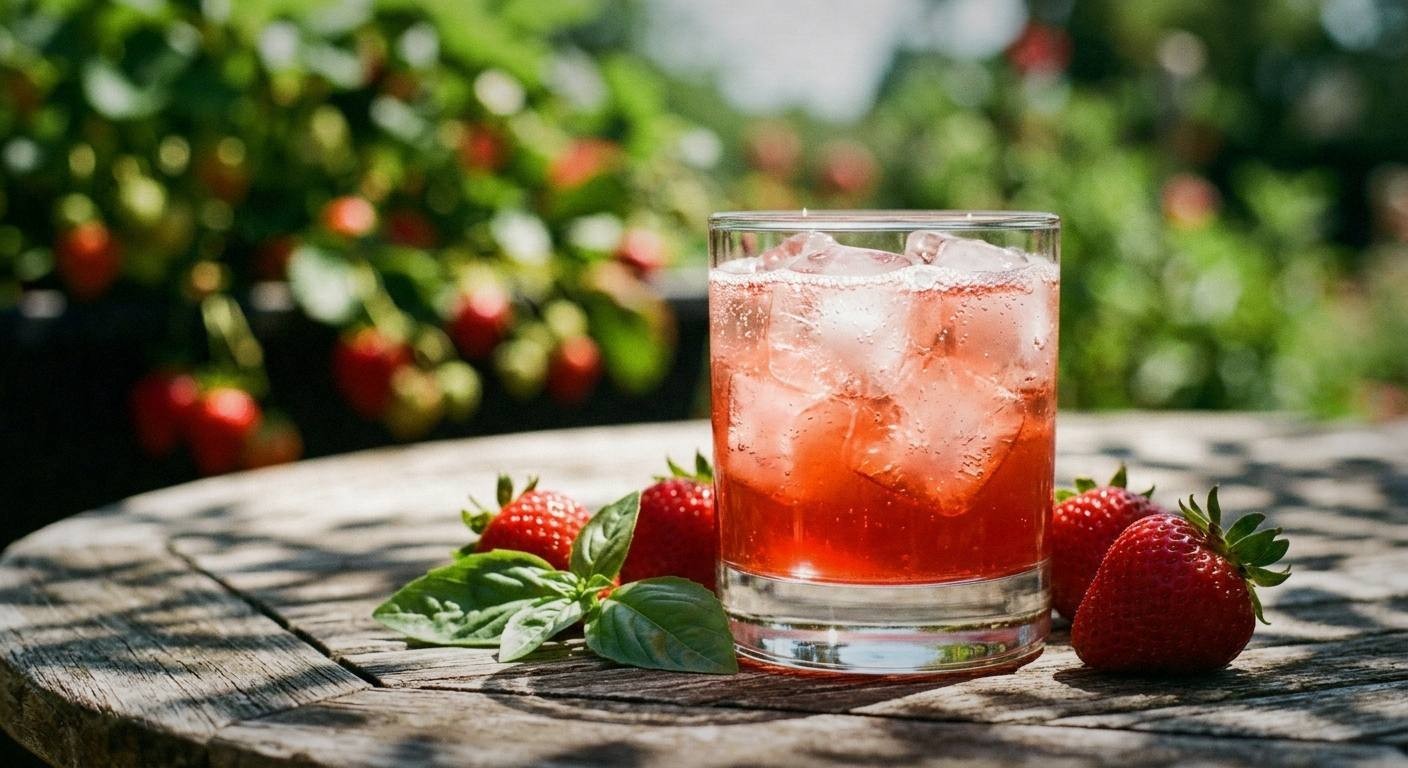
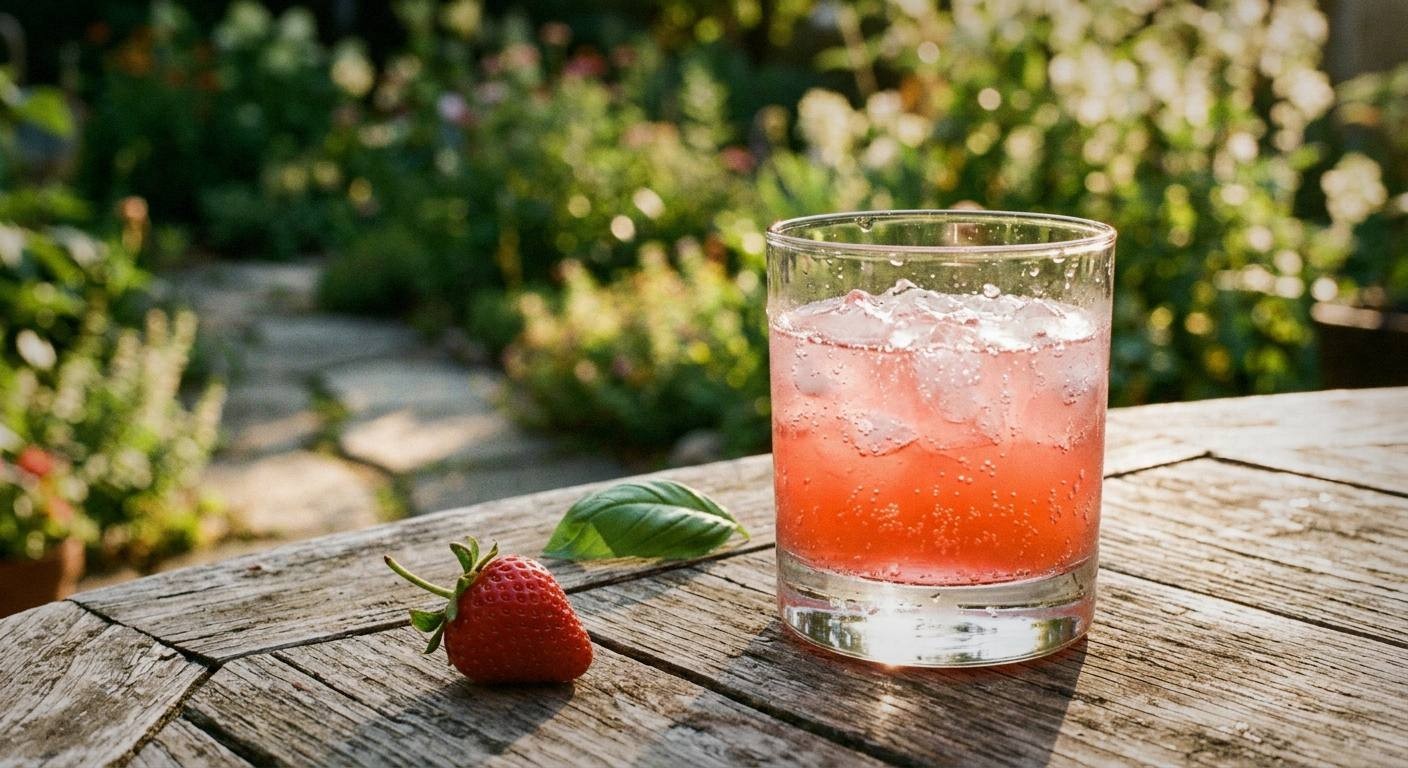
- Keep cold. Use the amount needed that day after straining and freeze the remainder in small freezer-safe containers with expansion room. For one drink stir 1 tablespoon concentrate into 1 cup chilled sparkling water over ice in a 16-fluid-ounce glass.
Five Ways to Serve It
With concentrate prepared, allow about 5 minutes for each. These house serving ratios keep the base quantities intact.
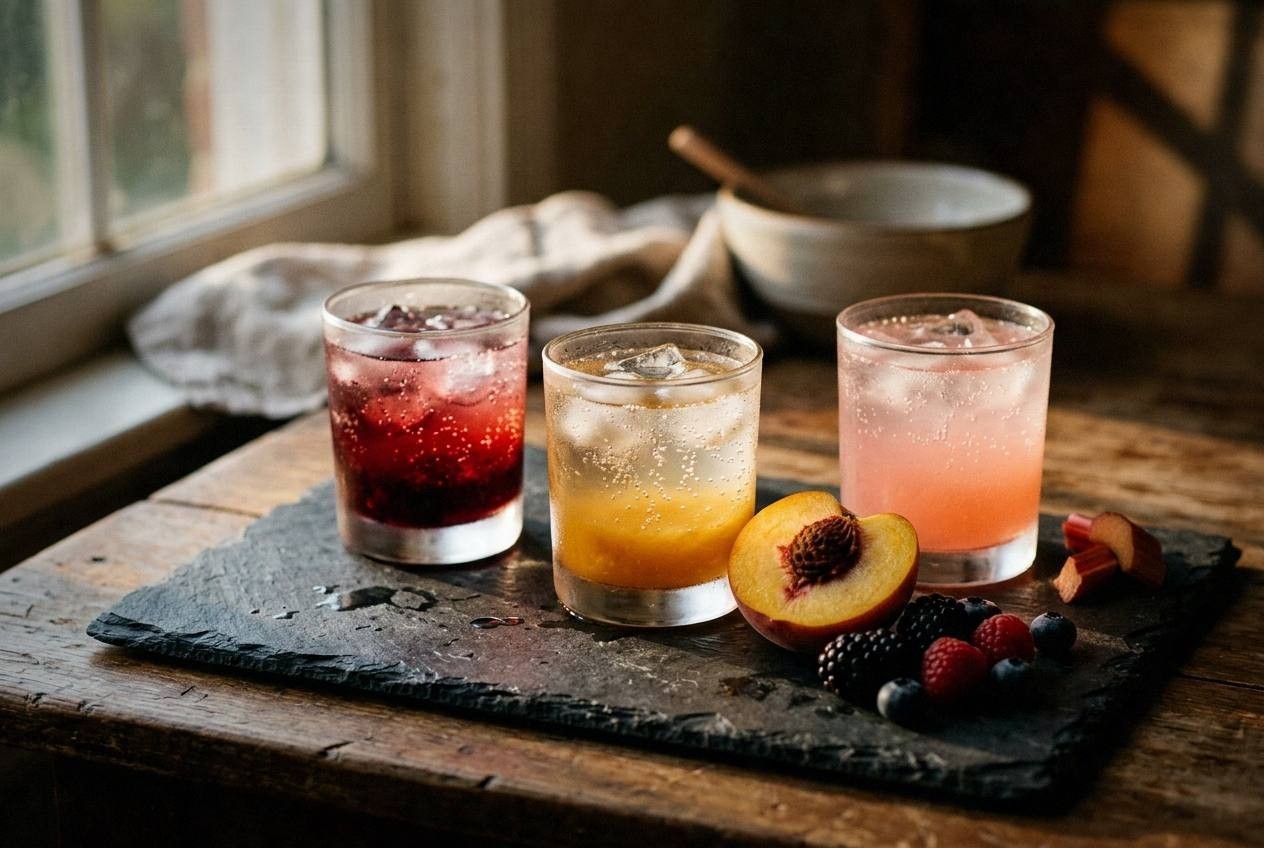
- Sparkling drink: 1 tablespoon shrub + 1 cup soda water in a 16-fluid-ounce glass with ice. For a stronger flavor use 2 tablespoons in the same water and glass; this is a 1:8 rather than 1:16 volume dilution.
- Cocktail: 1 fluid ounce shrub + 2 fluid ounces gin or vodka + 3 fluid ounces soda over ice in a 12-fluid-ounce glass; one alcoholic drink.
- Dressing: whisk 2 tablespoons shrub with 3 tablespoons olive oil, giving 5 tablespoons before seasoning. Use with the current meal.
- Warm drink: 1 teaspoon shrub in 1 cup warm potable water; one cup plus the teaspoon pour. This is flavor, not digestive treatment.
- Mocktail mixer: use the sparkling drink above; do not assume shrub replaces grenadine or both syrup and acid in any unrelated recipe at identical volumes.
Variations
For a basil-free batch omit only the basil; retain berries, sugar, vinegar and the chilled process. A mint variation replaces the basil with 1/4 cup packed rinsed culinary mint leaves using the same method and conservative final handling. For frozen berries use 2 cups strawberries thawed under refrigeration, including thaw juice, instead of fresh; measure output rather than predicting dilution. Dry granulated sugar can replace turbinado at the same cup volume, with changed flavor and dissolution. A berry or peach swap needs its own measured formula and timing; the former blanket 48-hour stone-fruit claim is removed. Woody herbs and arbitrary sweeteners are not unspecified substitutions.
Handling and Limits
Wash hands and equipment. Rinse produce and culinary herbs under running water before cutting; scrub melons and cucumbers before peeling. Use only correctly identified ingredients grown for food, never florist flowers or plants treated with pesticides unsuitable for food crops. Refrigerate promptly in small clean containers at 40 F (4 C) or below. Discard after more than two cumulative hours without cold holding, or one hour above 90 F (32 C). Do not wait for a large batch to cool on the counter. Normal smell and appearance do not establish safety. Use clean utensils at every stage. No months-long or shelf-stable preservation claim is made; normal oxidation is not a safety test. Discard unexpected fizz, gas pressure, mold, slime or off odor without tasting. The source author’s long storage advice is not adopted for this changed cold process. This is a refrigerated mixer, not a fermentation instruction. These are TFA culinary adaptations, checked for quantities and handling against the sources below. They have not been kitchen tested; source comparisons do not certify flavor, shelf life or medical suitability.