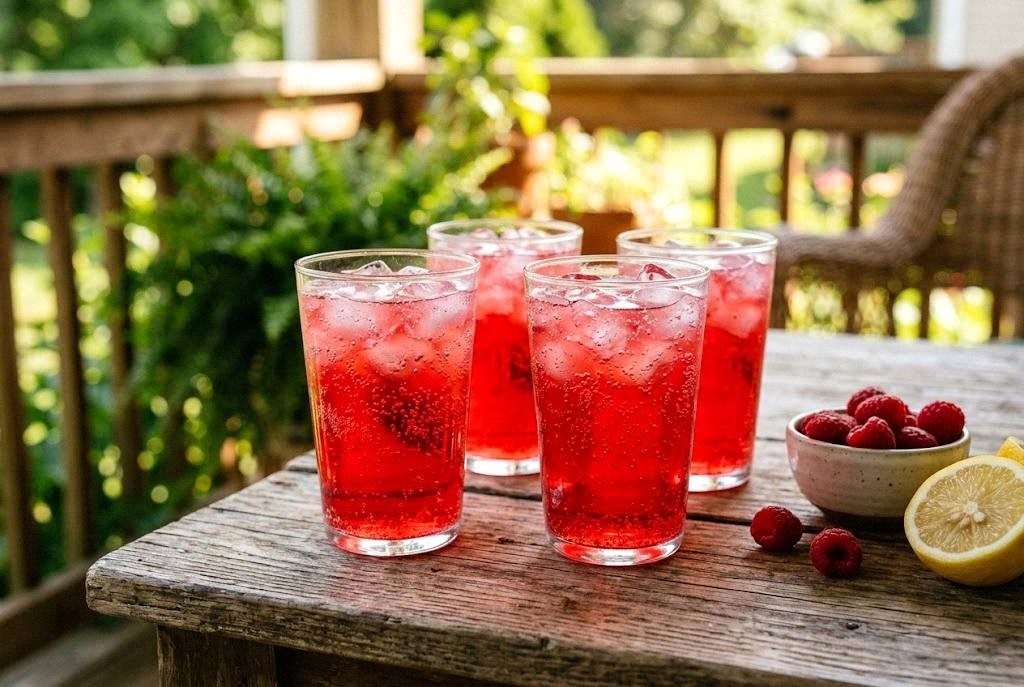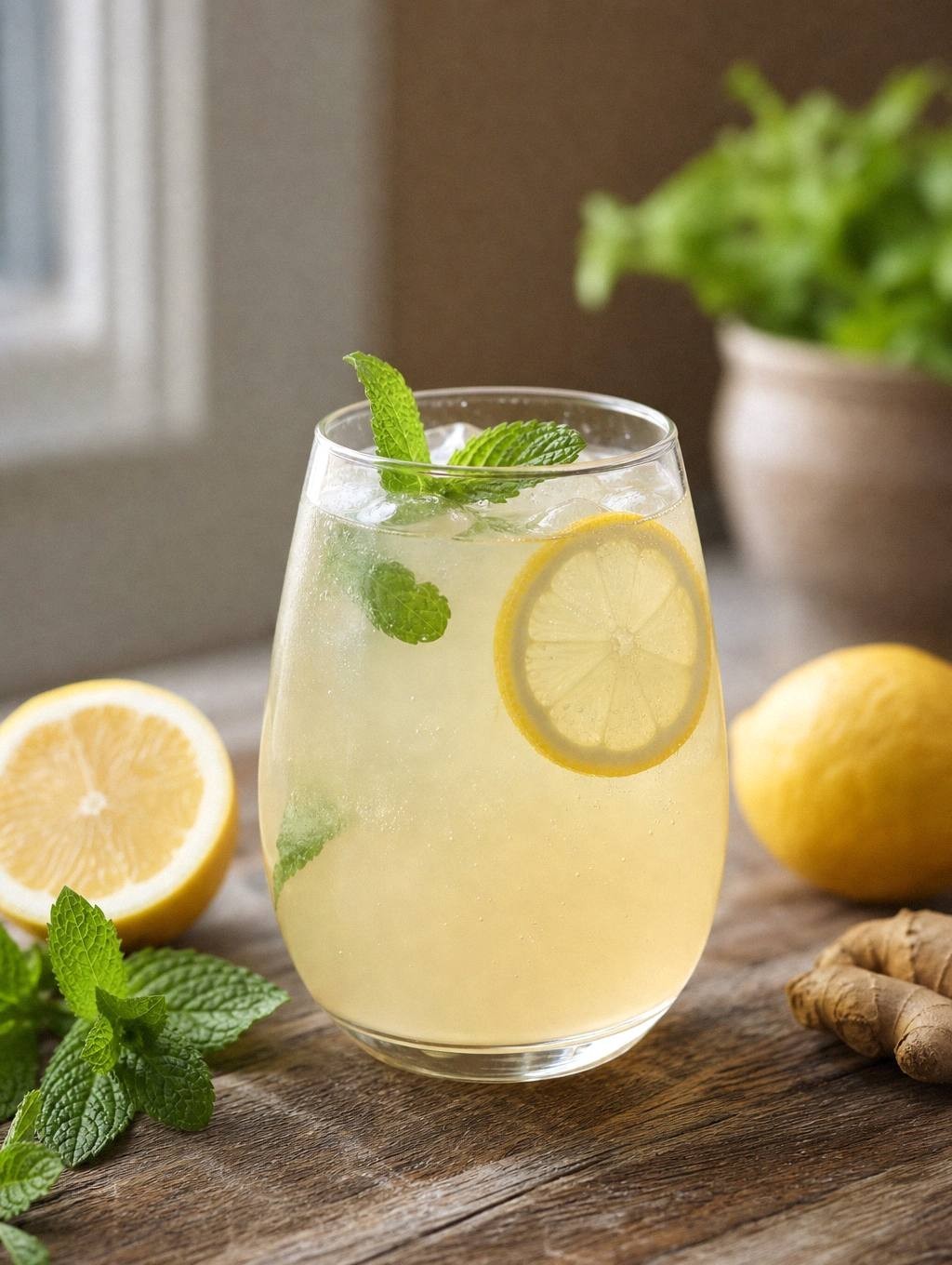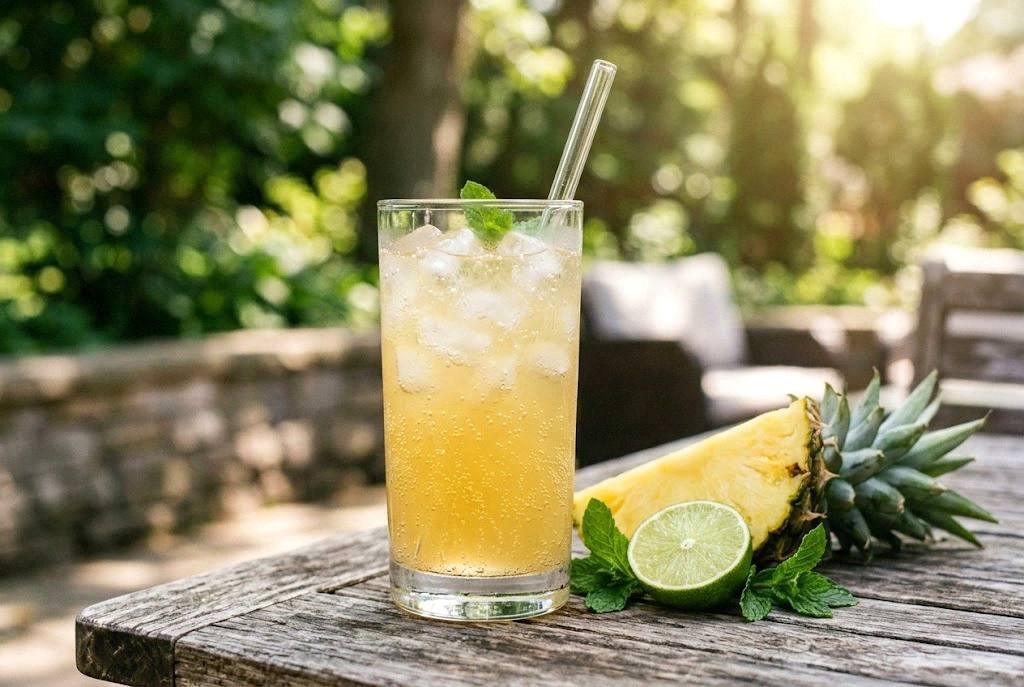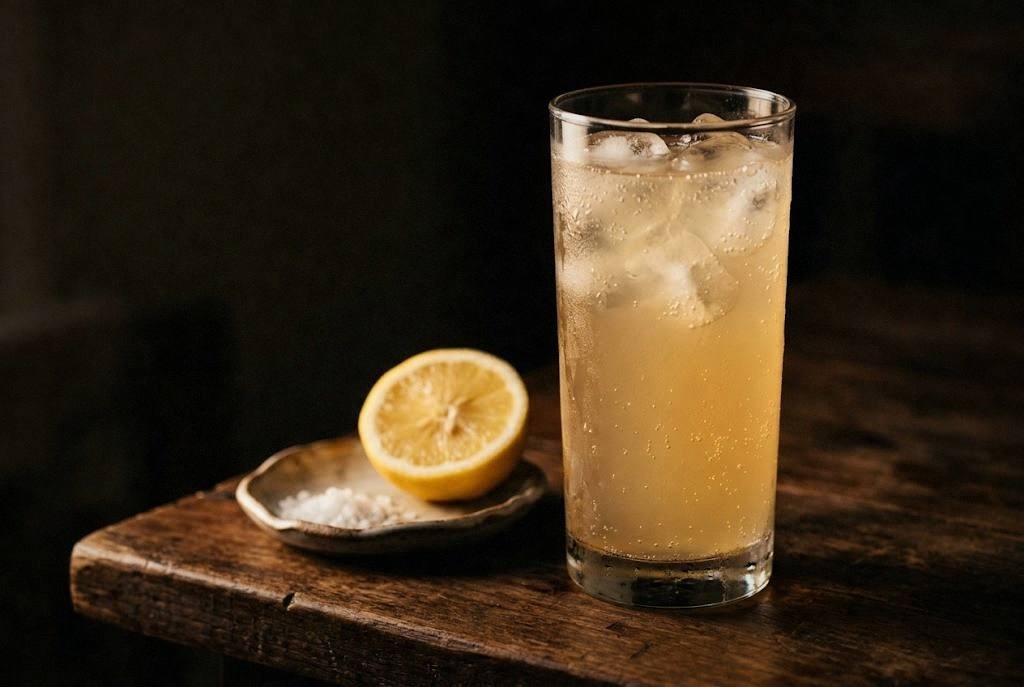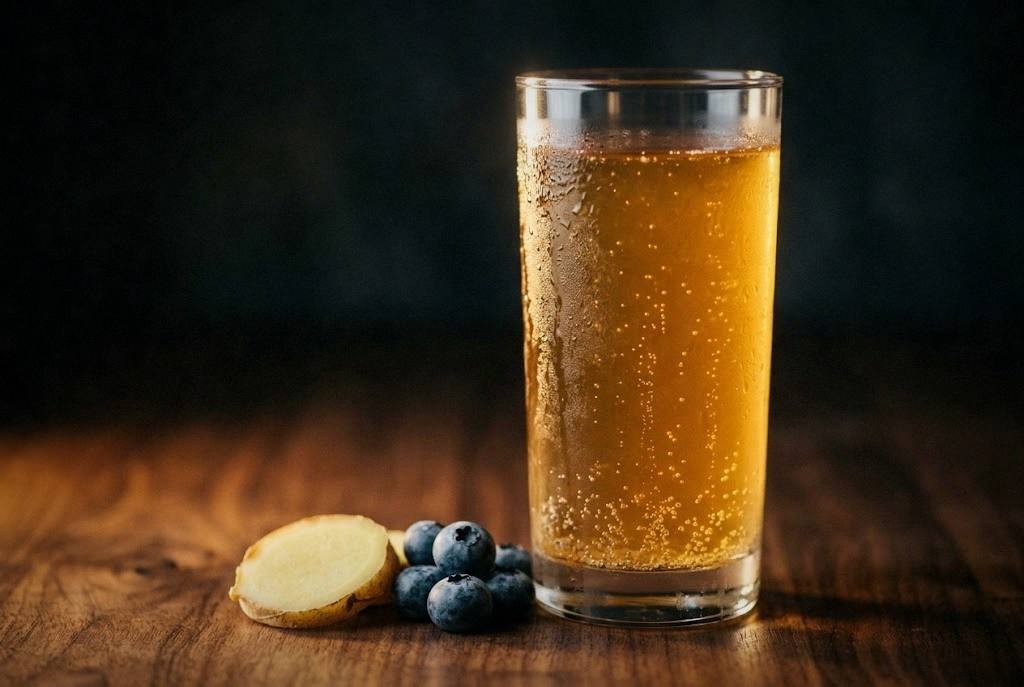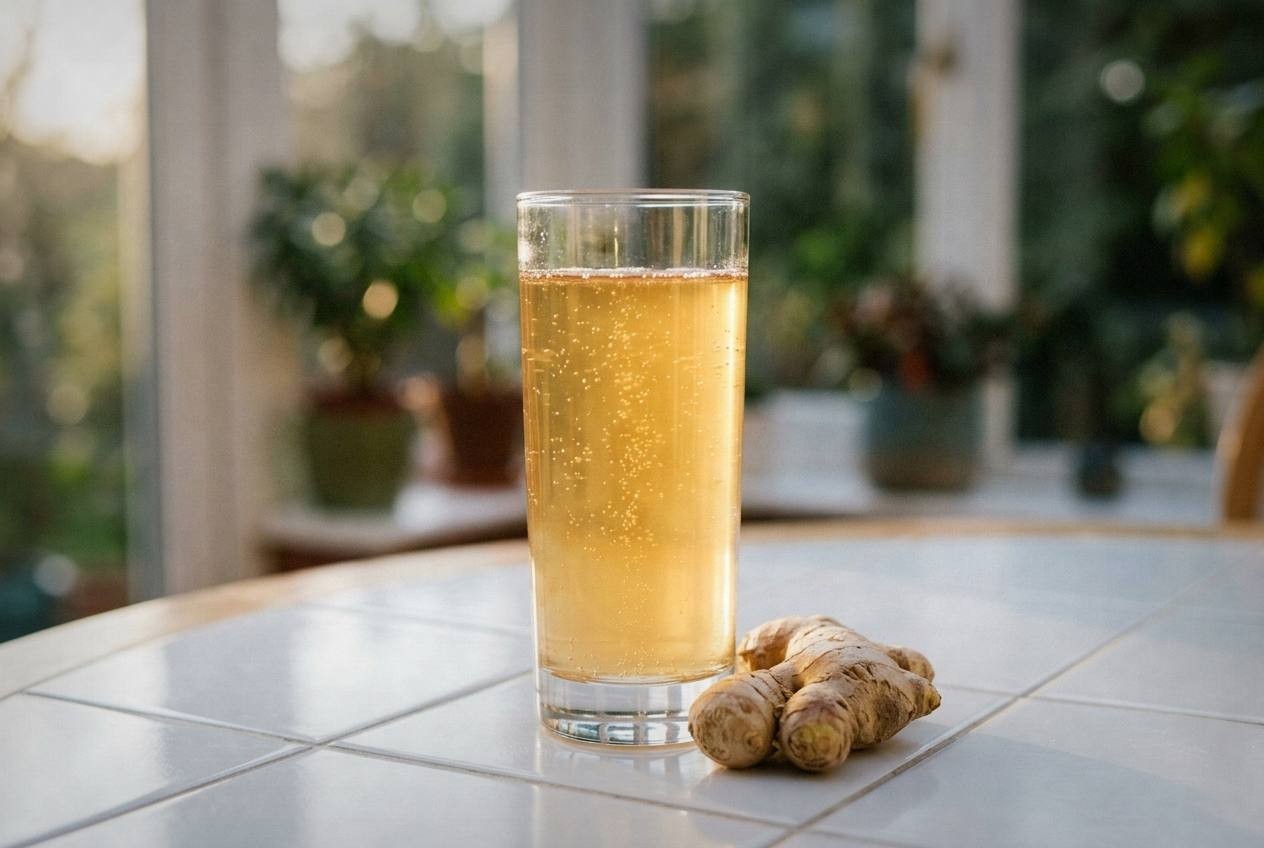
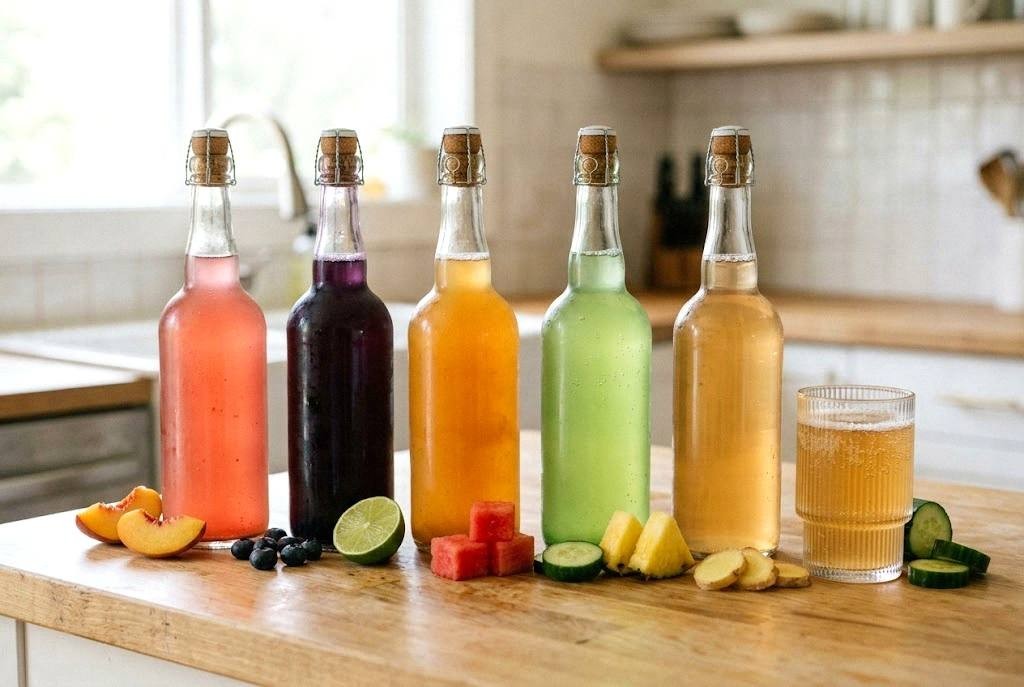
Summer kombucha flavors for second fermentation, including peach basil, blueberry lime, watermelon mint, pineapple ginger, and cucumber lemon.
Summer kombucha flavors should taste cold, bright, and clean. That sounds obvious until you open a bottle that tastes like fruit salad left in a hot car.
Second fermentation is where homemade kombucha gets fun, but it is also where people overdo it. Too much fruit makes the bottle foam everywhere. Too many herbs make it taste like lawn clippings. The better move is small amounts, ripe fruit, and enough acid to keep the drink crisp.
If you are new to this, start with homemade kombucha for beginners before bottling. For more ideas, keep kombucha flavoring recipes nearby.
Base Ratio
Use 1 cup finished plain kombucha per 16-ounce pressure-safe bottle. Add 1 to 2 tablespoons fruit or juice, then a small herb or spice accent.
That ratio looks restrained. It is. Kombucha is already acidic and alive. You are flavoring it, not turning it into juice.
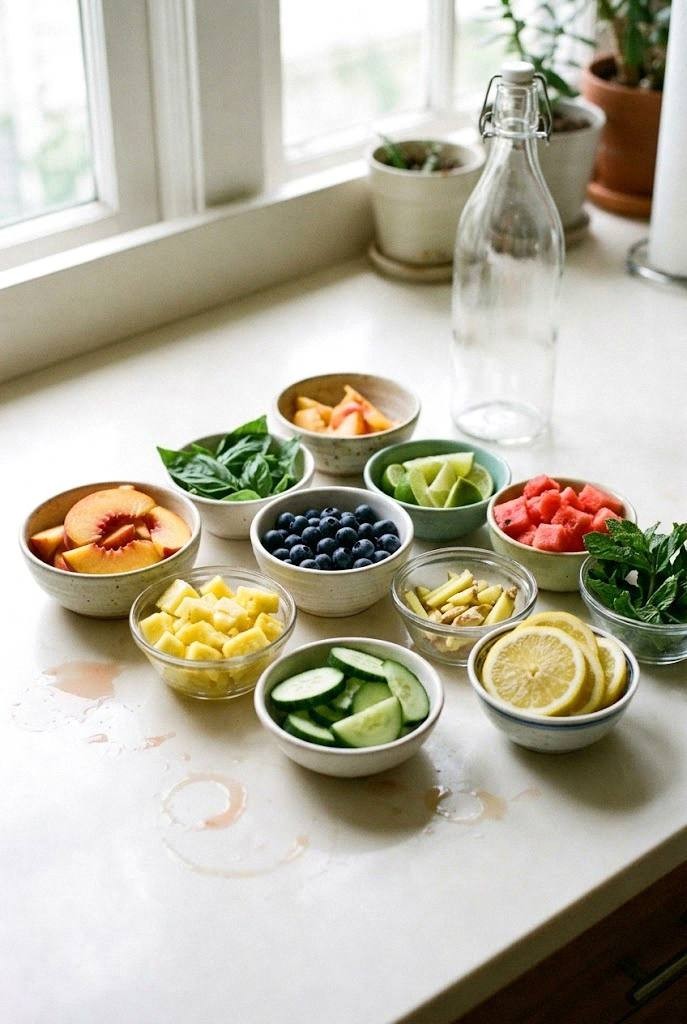
Five Summer Kombucha Flavors
Peach Basil
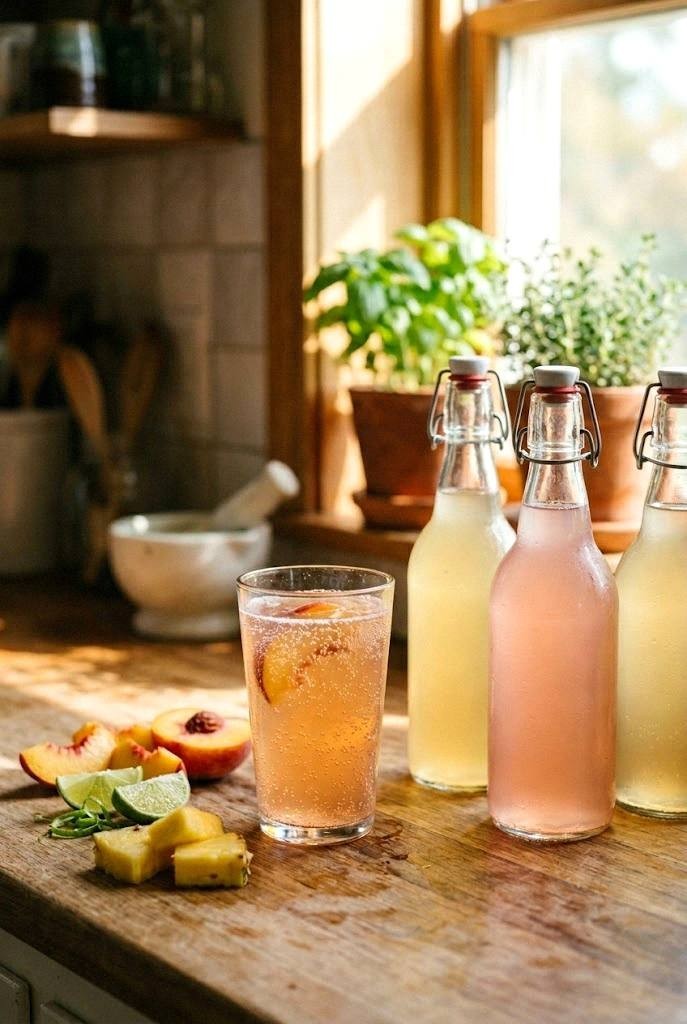
Add 1/4 cup diced ripe peach and 4 basil leaves to one bottle. This is the softest flavor in the group. Use a peach that smells good before you cut it. Crunchy peaches do not magically improve in kombucha.
Blueberry Lime
Add 1/4 cup blueberries and 1 tablespoon lime juice. Lightly crush the berries first if you want deeper color. This one links nicely with the same fruit logic as the blueberry limeade mocktail.
Watermelon Mint
Add 1/4 cup watermelon juice and 6 mint leaves. Strain the watermelon juice before bottling so you do not get pulp blocking the bottle neck.
Pineapple Ginger
Add 1/4 cup pineapple juice and 2 thin slices fresh ginger. This one carbonates fast because pineapple brings plenty of sugar. Check it early.
Cucumber Lemon
Add 3 cucumber slices and 1 tablespoon lemon juice. This is the cleanest, driest option. It is the bottle I would open with lunch.
How Long to Second Ferment in Summer
Most bottles need 1 to 3 days at room temperature. In a warm kitchen, pineapple and berry versions can carbonate in 24 hours. Cucumber and lemon may take longer.
Do not use decorative bottles. Use pressure-safe bottles and leave headspace. If you are still learning your batch, burp the bottles carefully once a day over the sink.
Food safety researchers continue to study kombucha because home recipes vary a lot. A 2025 Food Protection Trends study found that kombucha acidity increased and pH decreased over fermentation time, and those findings are being used to shape safer consumer guidance. Translation for the home kitchen: clean equipment, enough starter, and acidity still matter.
Source: Food Protection Trends kombucha safety study.
Troubleshooting
If your kombucha gushes, chill the next bottle before opening and use less fruit in the next batch. If it tastes too sweet, let first fermentation go longer before flavoring. If the herb flavor is too strong, use fewer leaves and strain before chilling.
Mold, fuzzy growth, rotten smells, or a batch that never acidifies are not worth rescuing. Toss it and start again.
Common Questions
Can I use frozen fruit?
Yes. Thaw it first and use less than you think. Frozen fruit releases juice quickly and can push carbonation.
Should I puree fruit for kombucha?
I would not. Purees make bottles harder to open cleanly and can create too much foam. Small diced fruit or strained juice is easier.
Can I make these with store-bought plain kombucha?
Usually, yes, as long as it is raw and active. Pasteurized kombucha will not carbonate the same way.
Printable recipe
Summer Kombucha Flavors for Second Fermentation
Summer kombucha flavors for second fermentation, including peach basil, blueberry lime, watermelon mint, pineapple ginger, and cucumber lemon.
Ingredients
- 5 cups finished plain kombucha from first fermentation
- 1/4 cup diced ripe peach
- 4 basil leaves
- 1/4 cup blueberries
- 1 tablespoon fresh lime juice
- 1/4 cup watermelon juice
- 6 mint leaves
- 1/4 cup pineapple juice
- 2 thin slices fresh ginger
- 3 cucumber slices
- 1 tablespoon fresh lemon juice
Instructions
- Add one flavor combination to each pressure-safe 16-ounce bottle.
- Pour 1 cup finished plain kombucha into each bottle, leaving headspace.
- Seal bottles and ferment at room temperature for 1 to 3 days.
- Burp carefully once daily if you are still learning your carbonation level.
- Refrigerate when the kombucha tastes fizzy and balanced.
- Strain into a glass before serving if you prefer a cleaner drink.
Keep browsing
Turn this into the next thing you make

Camille writes about botanical drinks, herbal cocktails, and the old plant wisdom that makes them work. Most days you'll find her in the garden or the kitchen, turning herbs into something worth sipping.