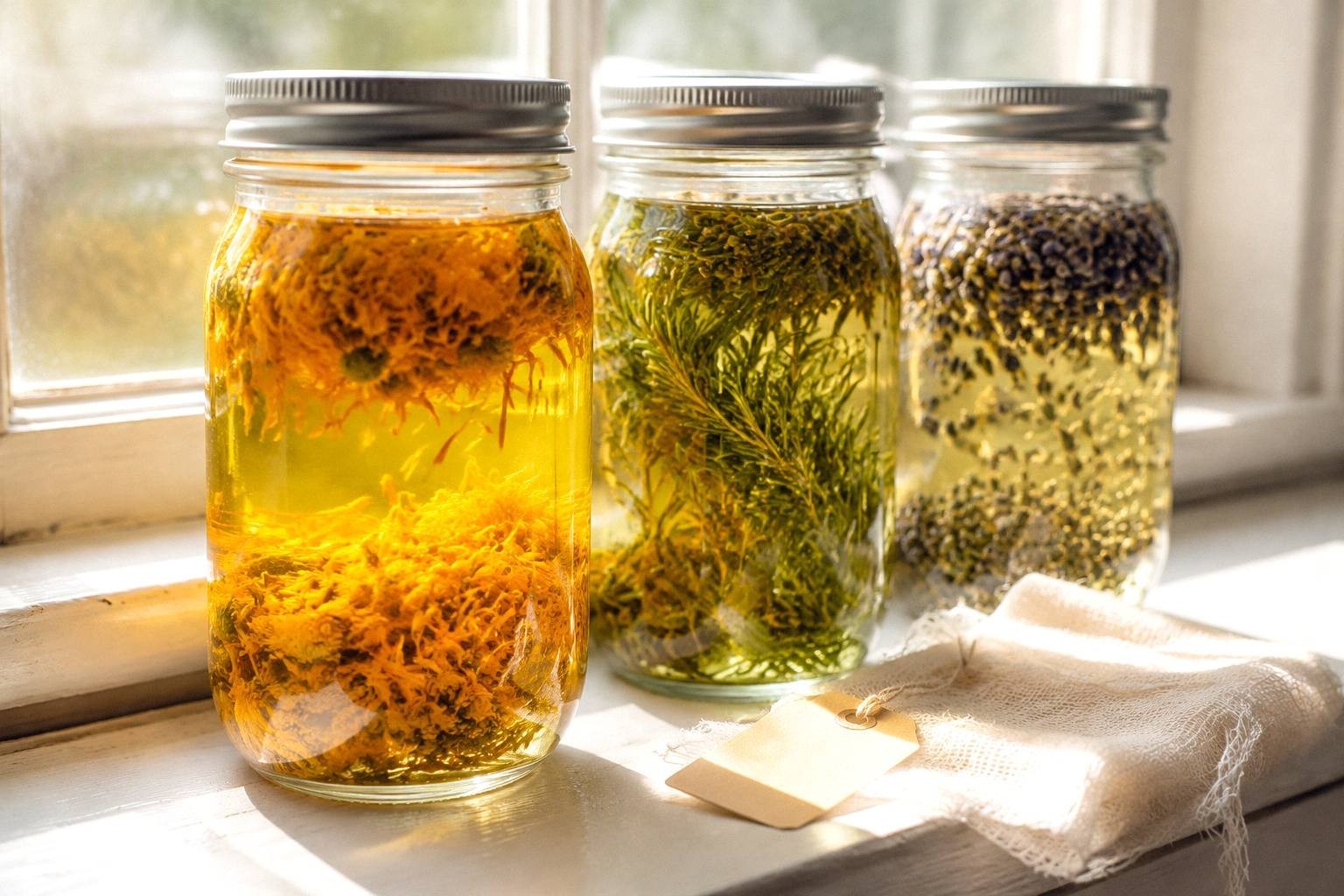
Sun-infused herb oils are one of the oldest projects in home herbalism. You steep dried calendula, rosemary, or lavender in a good carrier oil and warm it in a sunny window for two to four weeks, until the oil takes on the color and character of the plant. The work takes fifteen minutes. The sun does the rest.
A jar started this week is ready by early November, in time to become a hand salve, a bedtime body oil, or a small holiday gift.
Quick answer
Sun-infused herb oils work best when the herbs are fully dry, the jar is clean, and the label tells you what is inside and when it started. Keep the first batch small so you actually use it.
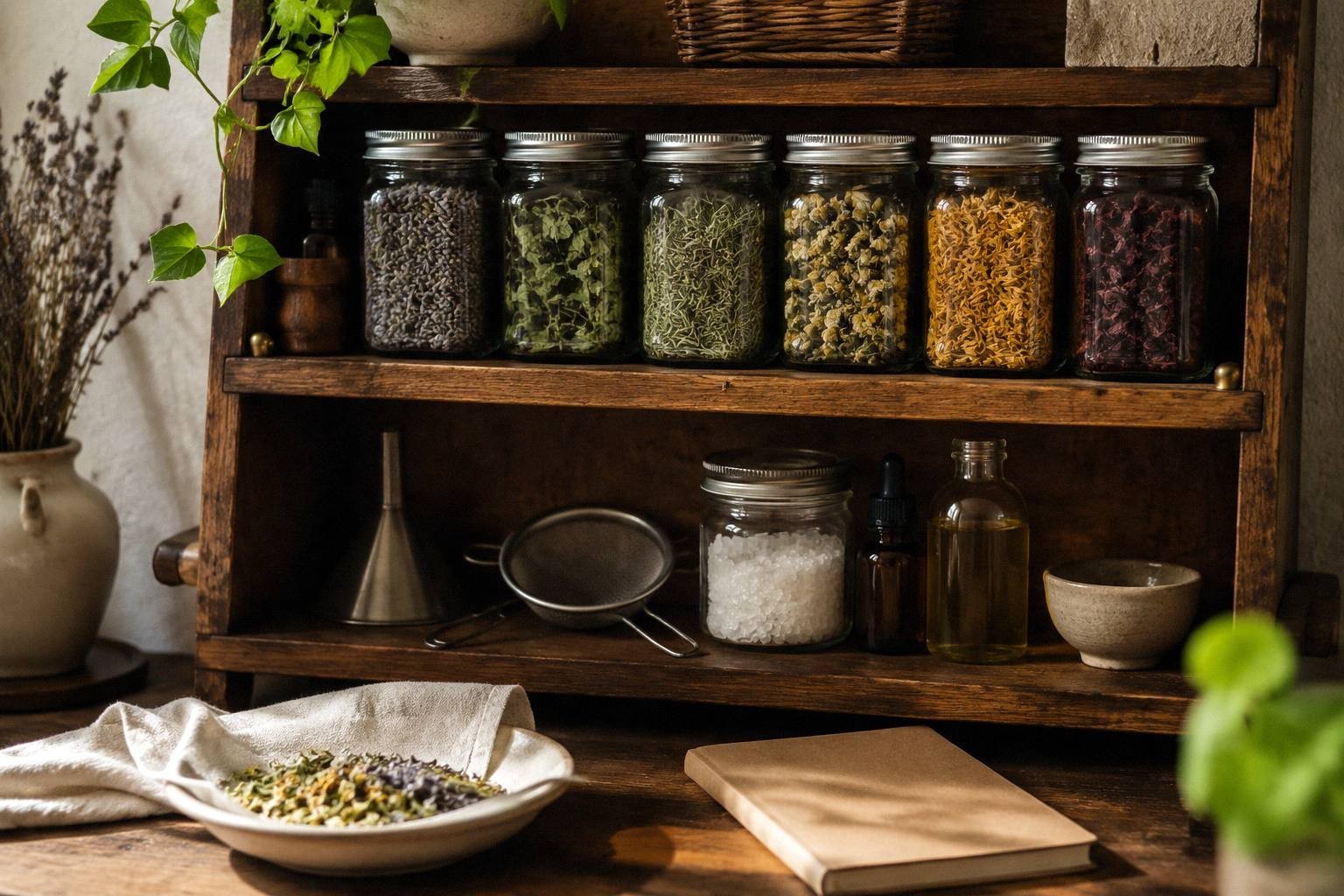
Herb oil jar checklist
- Dried herbs
- Clean dry jar
- Carrier oil
- Label date
- Warm bright spot
- Strainer
- Storage bottle
Related helpful guides
- Beginner Apothecary Shelf Checklist
- Calendula Hand Salve for Beginners
- Herbs to Grow for Drinks, Tea, and Bath Soaks
- Rosemary Hair Growth Oil and Herbal Hair Tonics
What to save from this guide
- The checklist above for the next time you shop, prep, host, or make the recipe
- The practical problem this guide solves before you spend money or set the table
Why Fall Is a Good Time to Start
Sun infusion runs on gentle, steady warmth. Summer gives you the most, but a south-facing window in early fall still works. The jar just needs the longer end of the range, three to four weeks instead of two. A jar started now is finished right when you want calendula salve for dry, wind-chapped hands and a few small gifts for the holidays.
Pick the sunniest, warmest windowsill in the house, and keep the jar away from radiators and stovetops. Warm is good. Hot to the touch is too much.
The Jar Method, Step by Step
You need one quart jar per herb, and the method is the same for all three.
- Start bone dry. Wash the jar in hot soapy water and let it dry completely, overnight if needed. Water ruins this project.
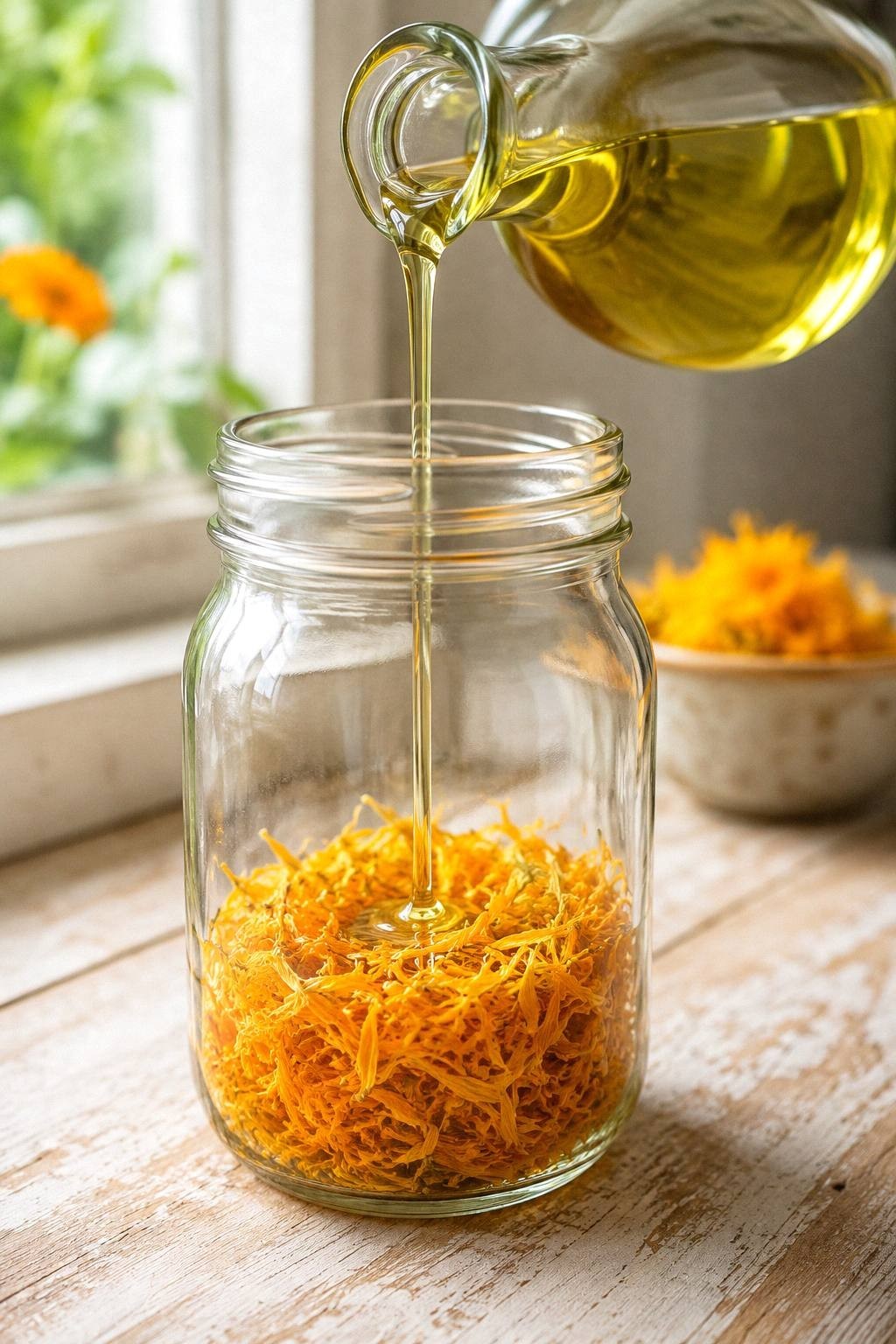
- Fill about halfway with dried herb. Calendula petals, lavender buds, or crumbled rosemary all work. Don’t pack it down. The herb swells as it drinks up oil.
- Cover with carrier oil until every bit of herb sits at least 1 inch under the surface, leaving about 1 inch of space below the rim. Anything poking above the oil line can mold. Plan on roughly 2 cups of oil for a quart jar, a little more or less depending on how loosely the herb is packed.
- Release the air pockets. Run a clean butter knife around the inside of the jar, then cap it tightly.
- Label the jar with the date. Future you won’t remember when it went up on the sill.
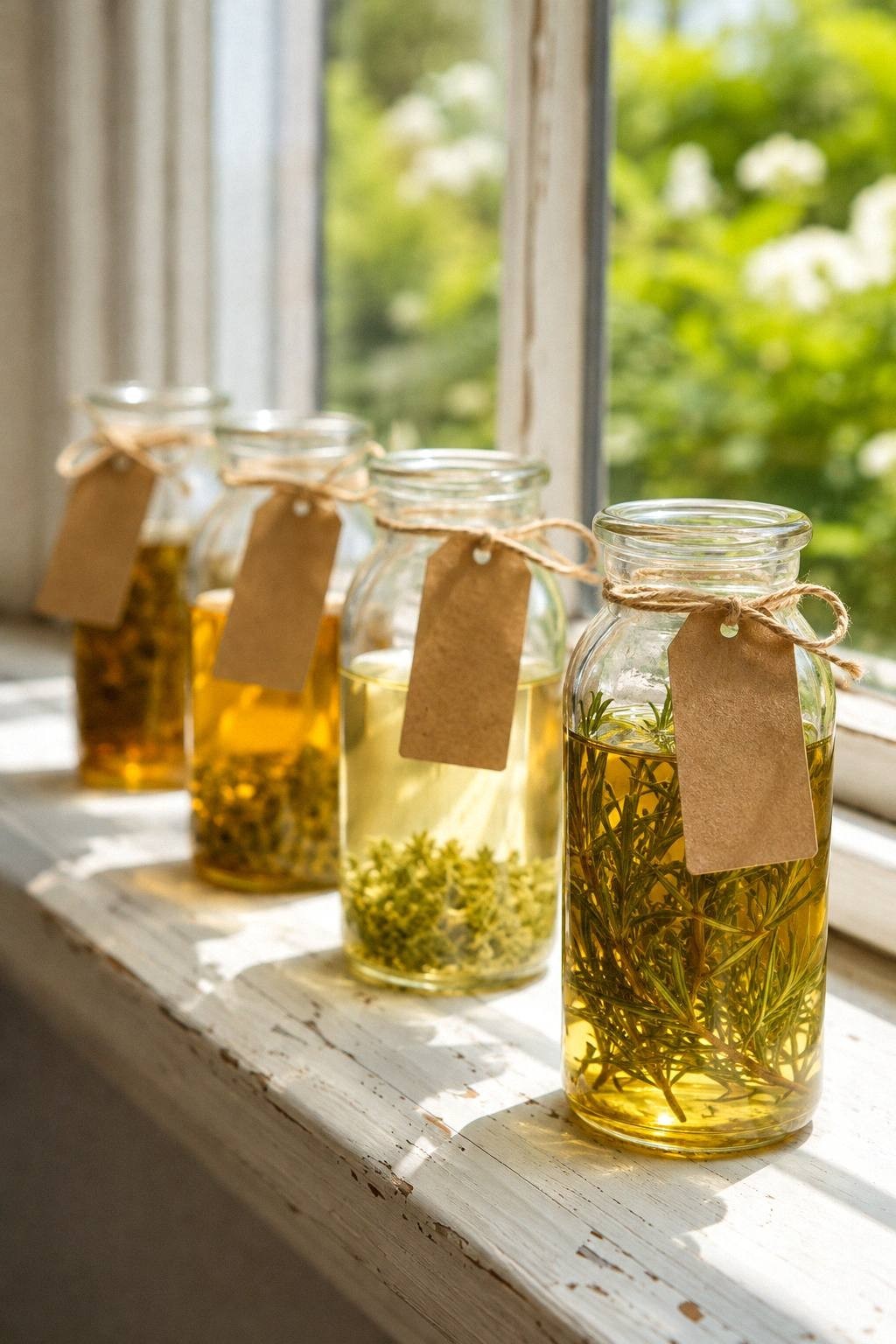
- Set it in a warm, sunny window for 2 to 4 weeks. Shake gently every day or two and nudge any floaters back under. A brown paper bag around the jar softens harsh direct sun. Two weeks gives a lighter infusion, four gives a deeper one. Calendula turns the oil a clear gold, rosemary goes faintly green, lavender stays pale with a soft scent.
Choosing a Carrier Oil
Any of these three works for any of the herbs. They differ in feel and in what the finished oil does best.
| Carrier oil | Skin feel | Best use |
|---|---|---|
| Olive (extra virgin) | Rich, a little heavy | Salve bases, dry-skin body oil |
| Jojoba | Light, absorbs fast | Face oil, hair and scalp oil |
| Sweet almond | Silky, middle weight | Everyday body and massage oil |
Olive oil is my default for calendula because most of that batch becomes salve anyway. Jojoba is technically a liquid wax, which makes it the smart pick for rosemary meant for hair. Sweet almond feels nicest straight on skin, so use it for small batches you’ll finish quickly.
The Three Herbs Worth a Jar
Calendula (Calendula officinalis). The classic. The dried petals release a deep gold color and the resins that make calendula the backbone of skin salves. If you grow it, it’s the best argument for a backyard medicine garden , since one good patch dries enough petals for a year of jars.
Rosemary (Salvia rosmarinus). Piney, warming, and the traditional base for scalp and hair oils. Use fully dried leaves, crumbled off the stem.
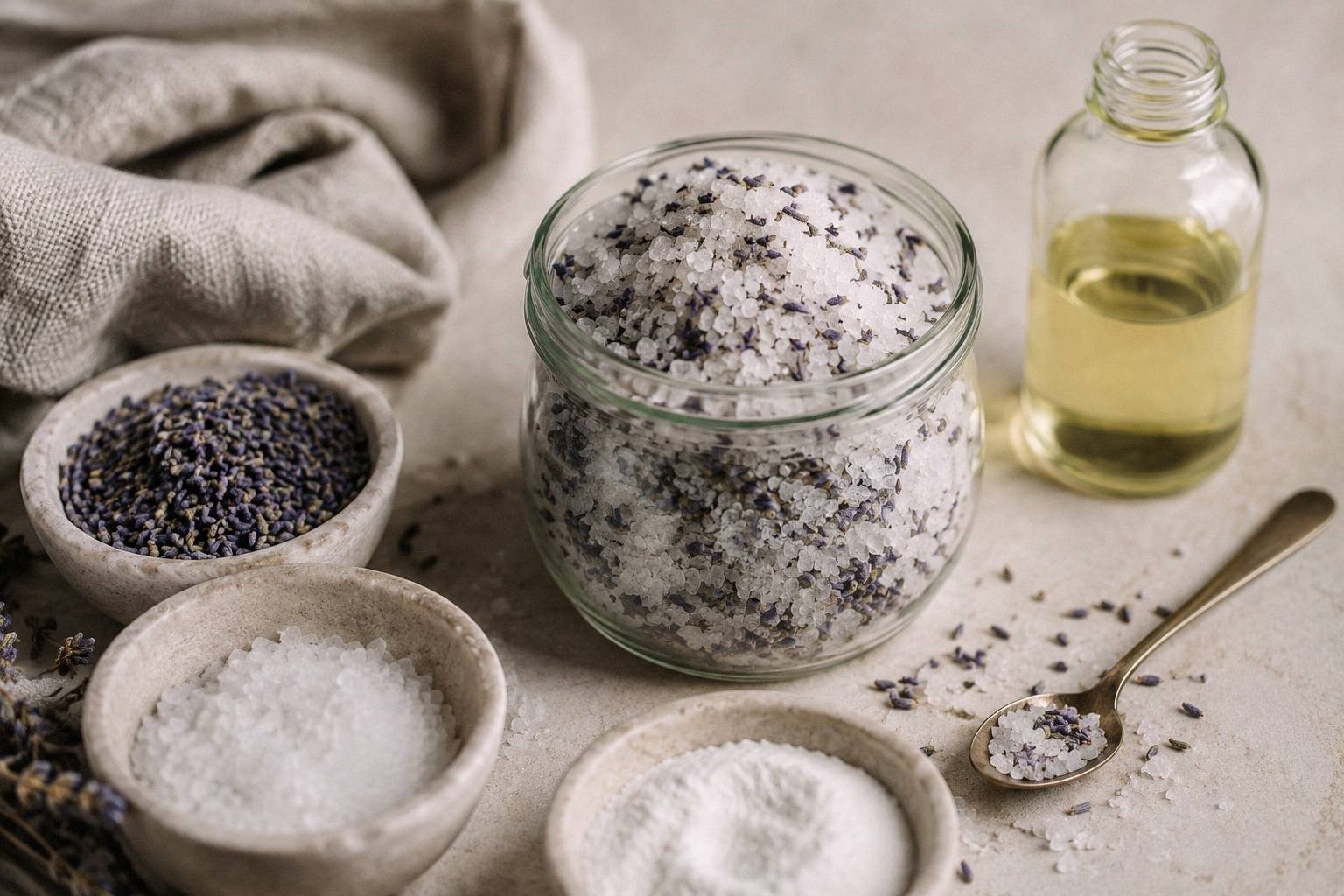
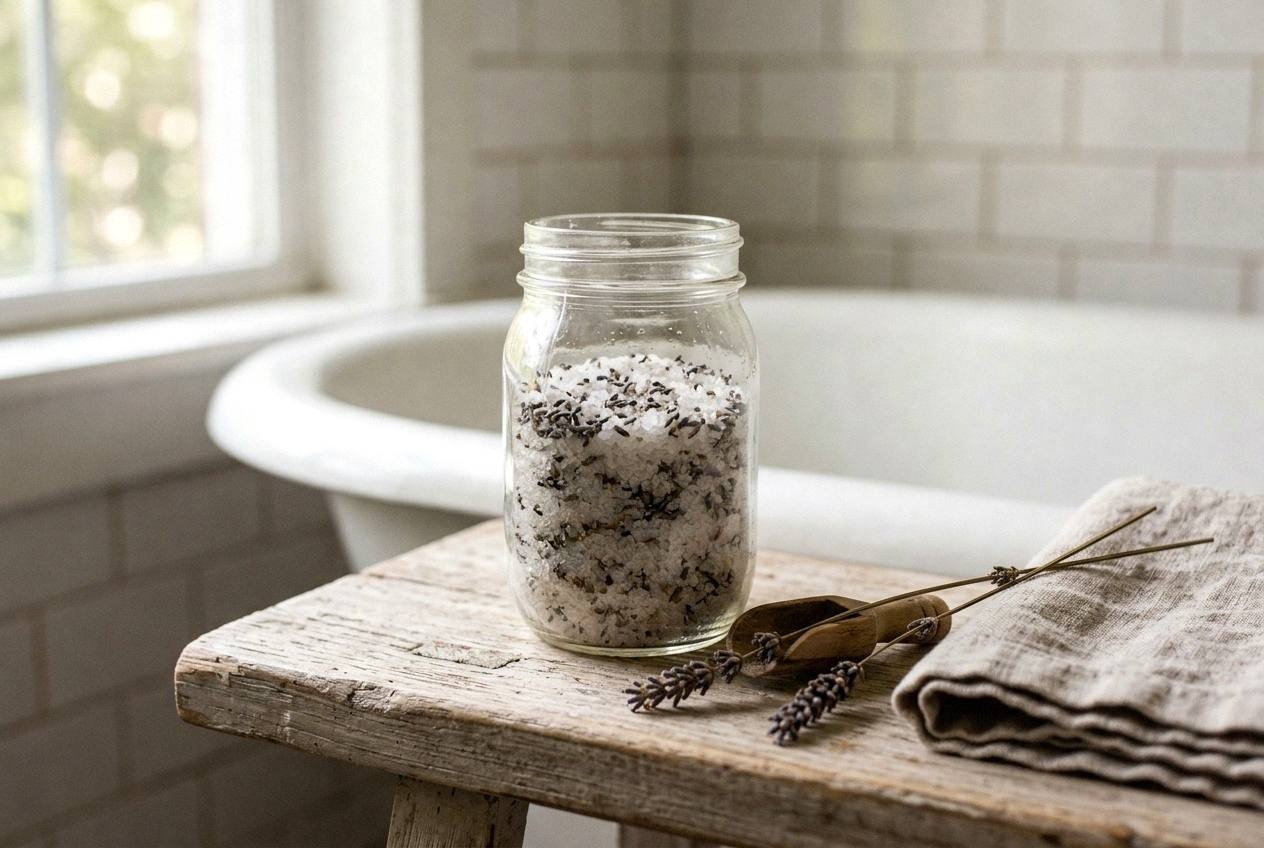
Lavender (Lavandula angustifolia). Dried buds give a soft, honeyed lavender instead of the sharp punch of essential oil. It makes a lovely bedtime body oil, and it pairs with a jar of lavender bath salts as a gift set.
Straining and Storing
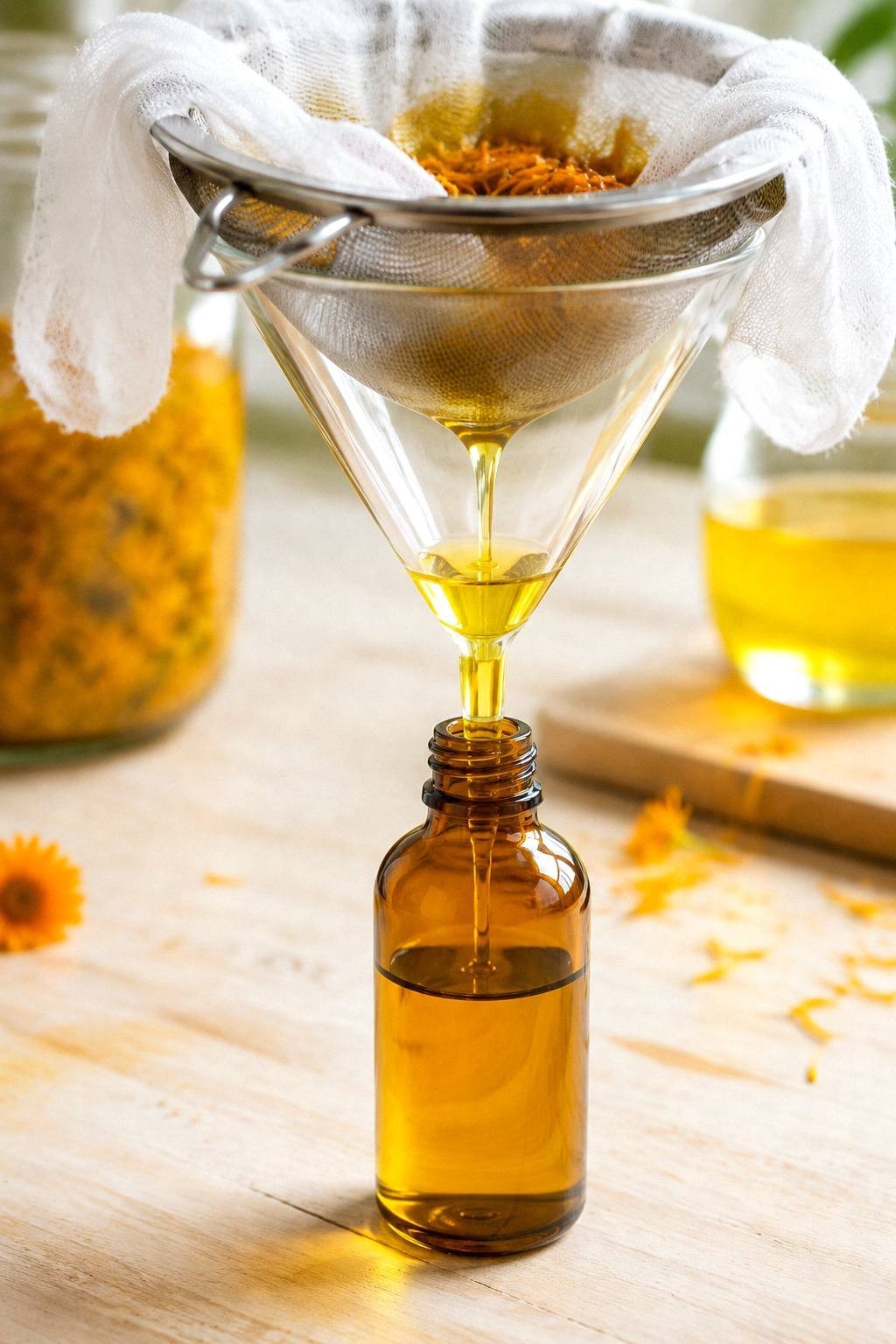
When the color and scent are where you want them, line a fine mesh strainer with cheesecloth and pour the whole jar through into a clean bowl. Gather the cloth and press or twist to wring out the last few tablespoons, which hold the most pigment. Pour the oil into a clean, dry amber bottle.
Label the bottle with the herb, the carrier, and the strain date, then keep it in a cool, dark cupboard. Sunlight finishes an infusion but is hard on a finished oil. Use it within a year, or sooner if it starts to smell off.
What to Do With a Finished Oil
- Body oil, as is. A little on damp skin after a shower works well. Calendula in sweet almond is the one people ask about.
- Salve base. A basic salve uses 4 ounces of infused oil to 1 ounce of beeswax, melted together gently and poured into small tins. My full method is in the botanical healing salves guide .
- Hair and scalp oil. Rosemary in jojoba, massaged in about 30 minutes before washing. It fits right into the routine from the rosemary hair growth oil tonics .
The Non-Negotiable Tips
Dried herbs only. Fresh plant material carries water, and water trapped under oil is how a jar molds or spoils. Fully dried herbs avoid the problem. If a leaf bends instead of snapping, it isn’t dry enough.
Patch test first. Rub a little finished oil inside your elbow and wait a day before using it broadly.
These are topical oils. This method is for skin and hair, not for cooking. Label the bottle clearly so nobody mistakes it for kitchen oil.
Troubleshooting
Cloudy oil or bubbles under the lid. Moisture got in from damp herbs, a wet jar, or condensation. Toss the batch, dry everything thoroughly, and start over. You’ve lost only a couple of cups of olive oil.
A sharp, crayon-like smell. That’s rancidity, the oil oxidizing. It usually means old carrier oil, or storage in heat and light after straining. Compost it.
Pale, weak color at four weeks. Either the herb was old (dried herbs fade after about a year) or the sill wasn’t getting real sun. Strain anyway, then re-infuse the same oil over a fresh batch of dried herb for a double-strength result.
Start one jar this week, even if it’s just calendula in olive oil. By the holidays you’ll have a bottle of gold on the shelf with your own handwriting on the label.