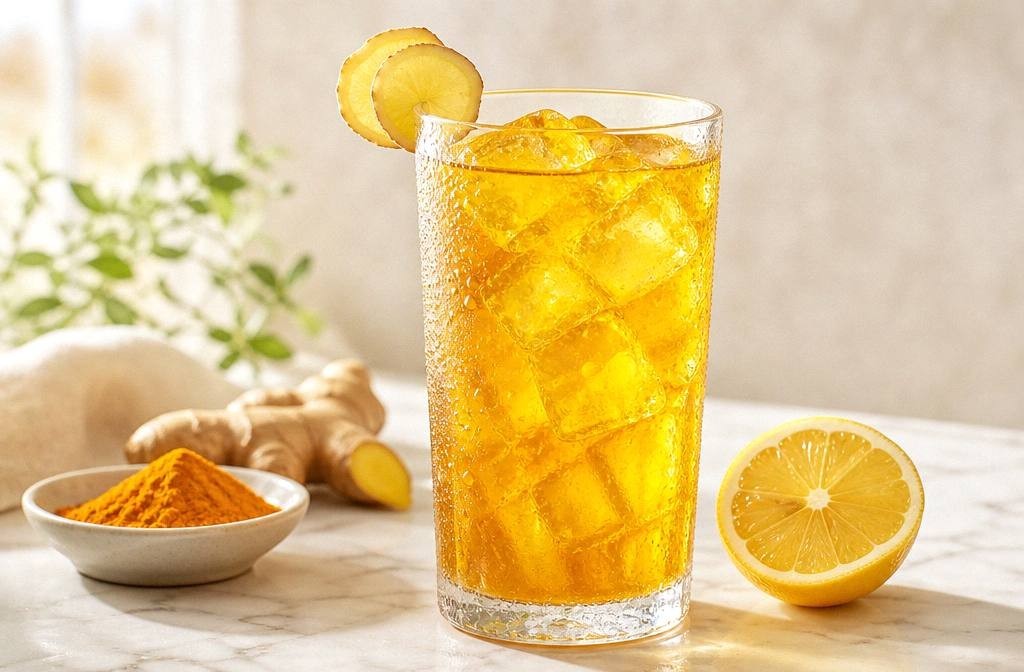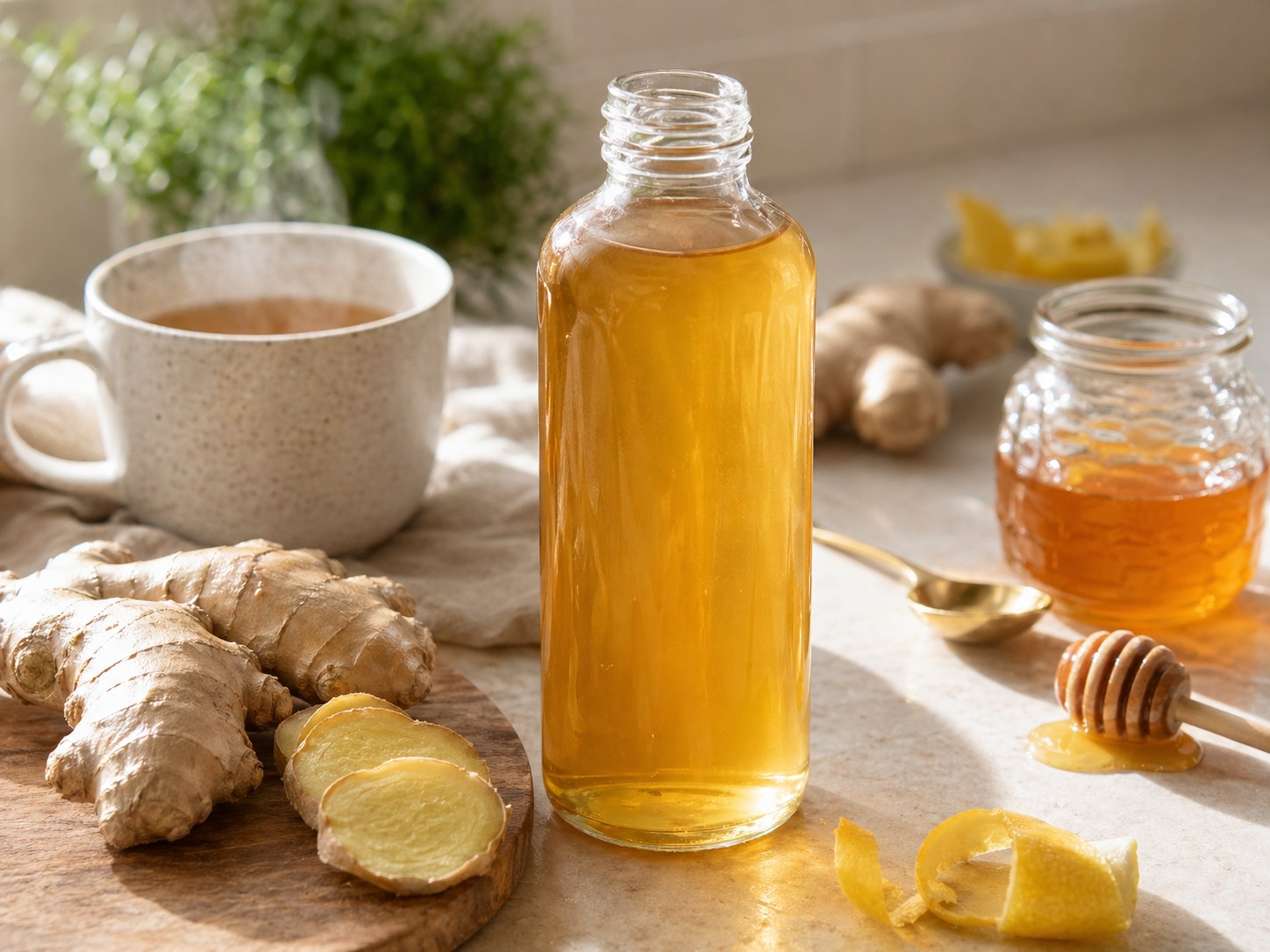
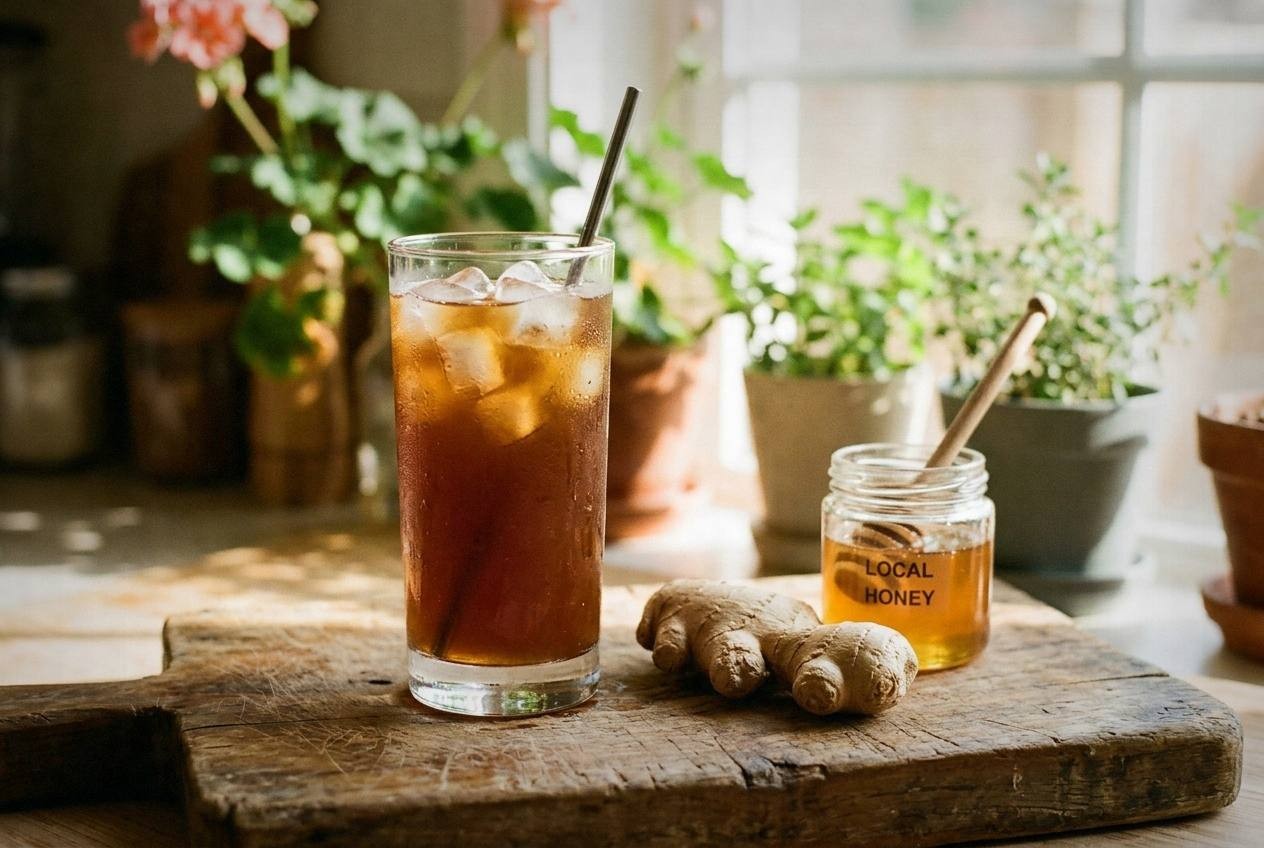
Ginger, vinegar and maple make a sharp diluted switchel. This is a culinary drink; it is not a detox, electrolyte replacement, digestive treatment or metabolic aid.
Maple Ginger Switchel
4 drinks; 10 1/6 fluid ounces each before ice. 15 minutes with chilled water; ginger extraction may take longer.
Ingredients
- Fresh culinary ginger (Zingiber officinale) for 1/3 US cup strained juice (start with 170 g washed ginger; have extra if needed)
- 1/2 cup apple cider vinegar labeled 5% acidity
- 3 tablespoons maple syrup
- 1 tablespoon lemon or lime juice
- 4 cups chilled potable water
- Ice for glasses, optional
Method
- Grate or process washed ginger finely using equipment approved for that use. Squeeze through clean fine cheesecloth into a measuring cup; strain fibers. Measure 1/3 cup ginger juice; process more ginger if short. Do not assume a 170 g root always yields 1/3 cup.
- Stir measured ginger juice, vinegar, maple syrup, citrus and 4 cups cold water in a clean 2-litre pitcher.
- Divide into four equal servings of 10 1/6 fluid ounces each before ice, in 16-fluid-ounce glasses. Serve immediately or refrigerate covered at 40 F or below.
- Use within 24 hours under continuous refrigeration, following the source’s one-day make-ahead limit and any shorter ingredient label. Discard if cold handling is uncertain.
Use identified food-grown culinary ginger (Zingiber officinale), not foraged plants sold or described as wild ginger. NC State Extension identifies common cooking ginger separately from Asarum canadense, a wild ginger it says not to consume . These are not interchangeable ingredients.
Measured liquid totals 5 1/12 US cups (40 2/3 fluid ounces). Brad Leone / Bon Appetit Maple Ginger Cider Switchel supports fresh ginger juice and a one-day make-ahead window; a 5-inch root is not a guaranteed juice yield.
Concentrate, pitcher and flavor variants
To keep a concentrate, omit the 4 cups water until serving. This measured base totals 1 1/12 cups (8 2/3 fluid ounces); divide into four 2 1/6-fluid-ounce portions and add 8 fluid ounces cold water to each. For eight drinks double every ingredient; finished liquid is 81 1/3 fluid ounces, so use a 3-litre pitcher. Honey may replace 3 tablespoons maple 1:1 for guests over one year; dissolve it first in 1 tablespoon warm water taken from the recipe’s 4 cups, then cool. For milder ginger use 1/6 cup ginger juice plus 1/6 cup water in place of 1/3 cup juice, with other quantities unchanged. Commercial labeled 5% plain food vinegar may replace apple cider vinegar 1:1; do not use cleaning vinegar or assume a home ferment’s acidity. Sparkling version replaces the 4 cups still water with 4 cups 0.0% sparkling water added at serving. Lemon and lime are interchangeable at the measured tablespoon. Optional garnish: one small washed food-grown mint sprig per glass; omit woody stems. No fermented preservation or arbitrary water dilution is claimed.
Measuring and Keeping Drinks Cold
Liquid ounces mean US fluid ounces, not weight. A US cup is 8 fluid ounces, a tablespoon is 1/2 fluid ounce and a teaspoon is 1/6 fluid ounce. Metric amounts are exact where used; a litre is about 4.23 US cups. Drink volumes exclude ice and fruit. Choose a glass with room for the stated liquid, ice and fizz.
Use clean equipment and wash produce under running water before cutting. Choose pasteurized or otherwise safety-treated packaged juices, food-grown culinary herbs and potable water. Follow opened-package instructions. A concentrate must be diluted according to its label unless explicitly measured as concentrate. For alcohol-free drinks, choose mixers labeled 0.0% alcohol; the name ginger beer or kombucha alone is no guarantee. Avoid alcoholic bitters and alcohol-containing extracts in strict alcohol-free versions.
Keep prepared bases, cut fruit and homemade syrups at 40 F (4 C) or below. Check serving liquid with a thermometer; frozen fruit alone cannot establish cold holding. Discard perishables after more than two cumulative hours without cold holding, or one hour above 90 F (32 C). Replace warm remnants with clean chilled pitchers. Normal smell or appearance does not prove safety.
Use homemade fruit/herb syrups and juice bases the day made, or freeze promptly in small portions after cooling; thaw in the refrigerator and use that day. This is a conservative house handling policy, not a tested shelf-life claim. Add carbonation at serving, outside a sealed shaker. For hot drinks, hold at 140 F (60 C) or above, cool leftovers promptly in shallow containers or an ice bath and refrigerate within the limits above. A slow cooker’s low or warm setting is not a temperature reading.
Keep rosemary, thyme, cinnamon sticks, vanilla pods and whole spices on the table after straining, rather than in serving glasses. Fresh food-grown mint or basil leaves and washed fruit slices can be edible garnishes. Use glass or an intact food-safe lined mug for acidic drinks; bare copper is unsuitable.
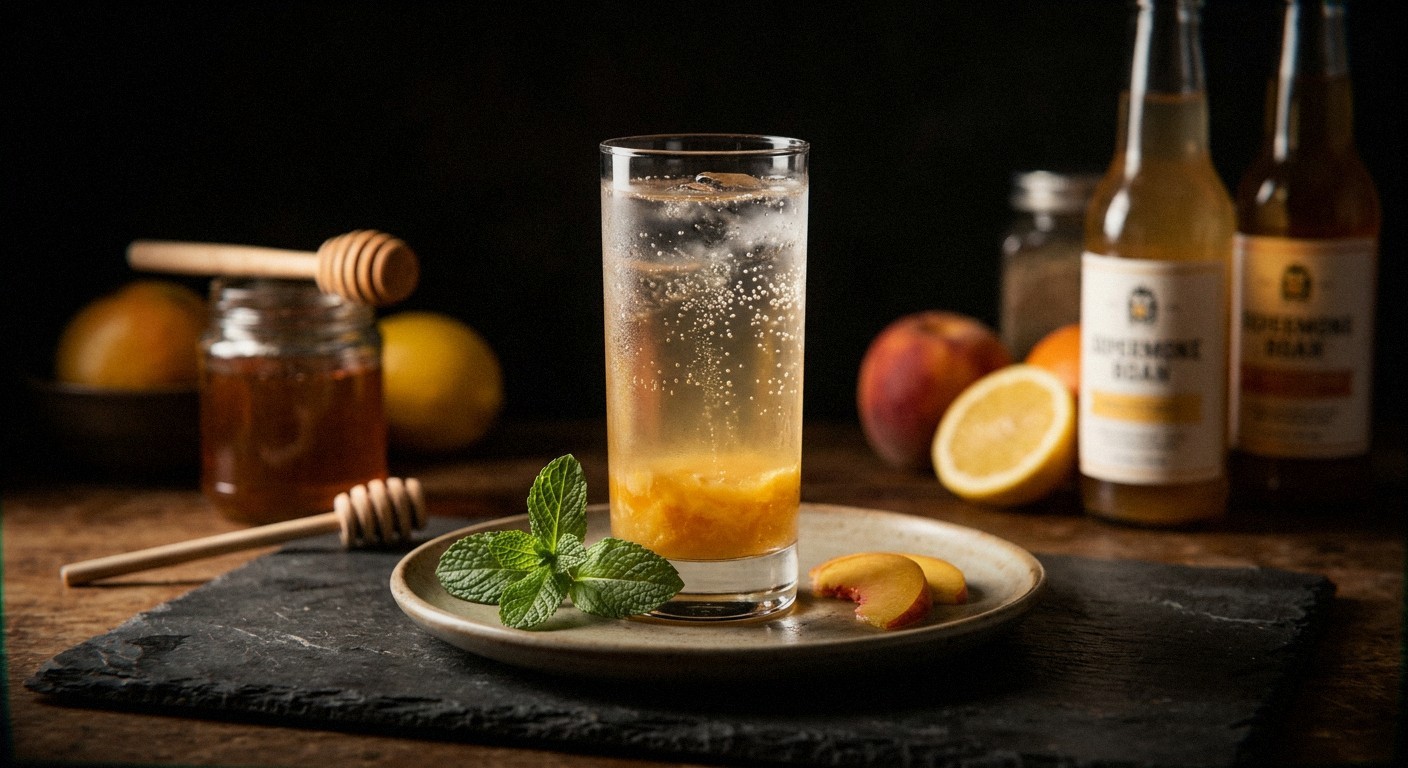
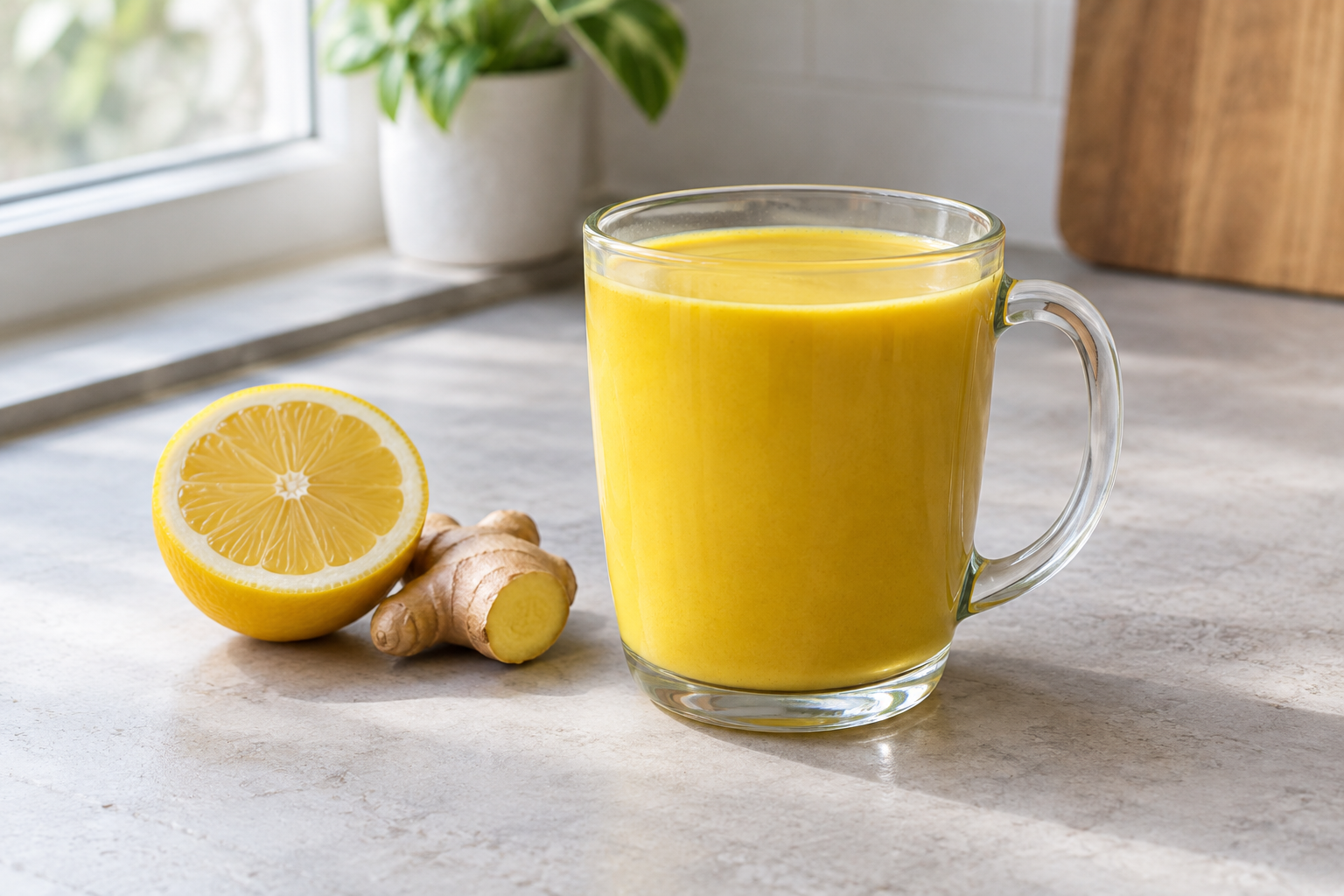
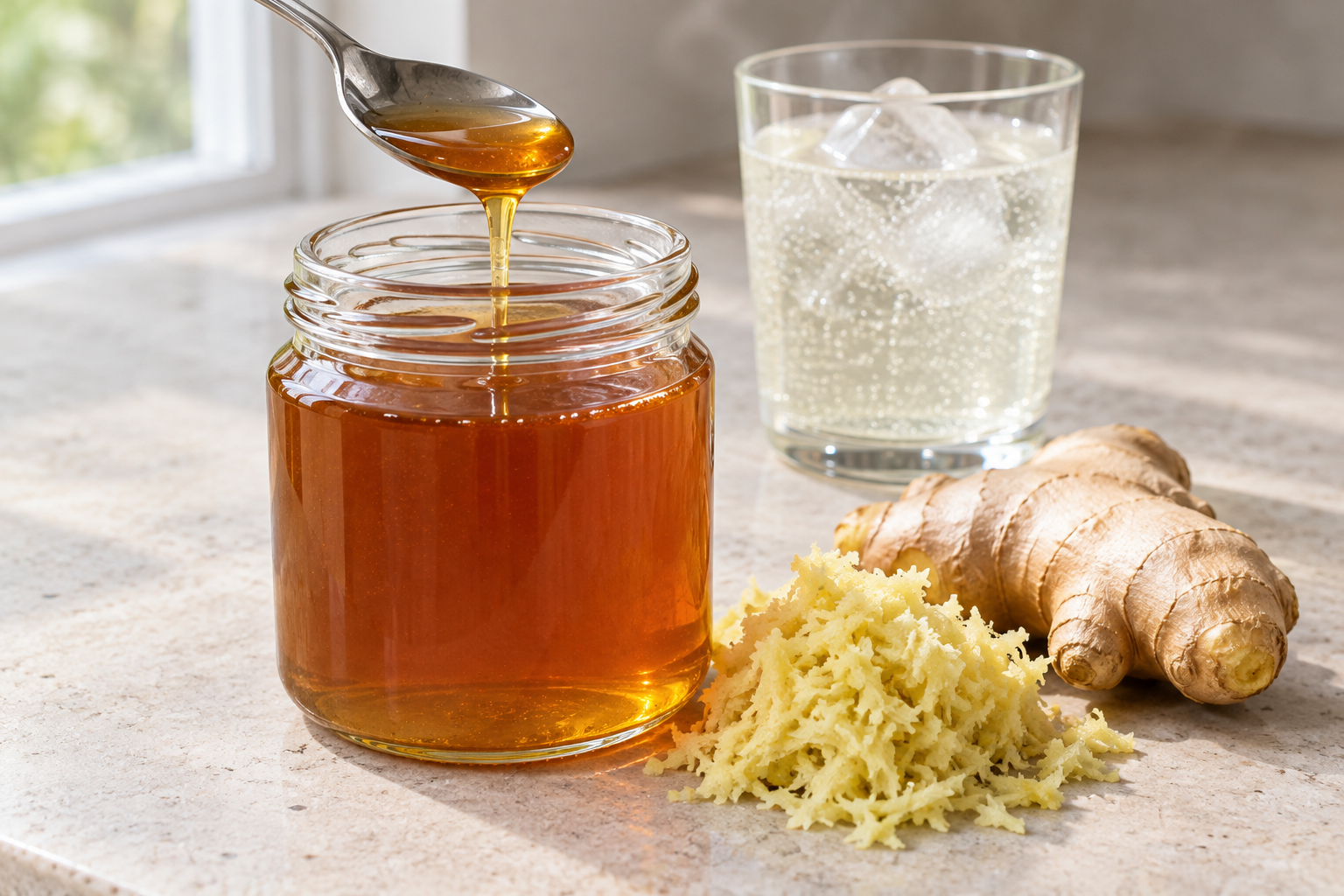
These formulas are culinary house adaptations compared with the cited methods. No kitchen, sensory, pathogen, clinical, pressure, alcohol or shelf-life testing is claimed. Images are retained illustrations and may depict the earlier recipe; ingredient lists and methods govern preparation.