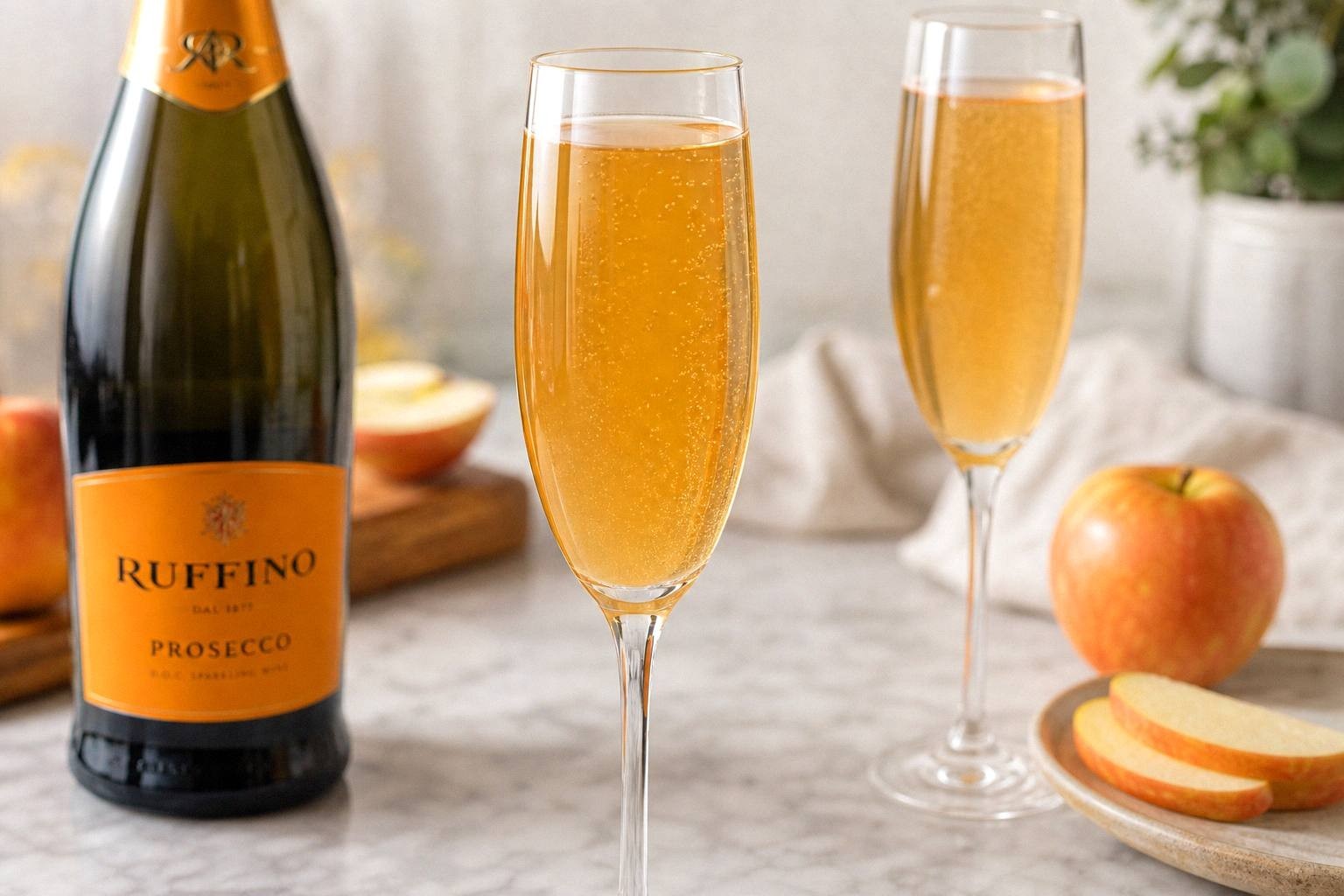
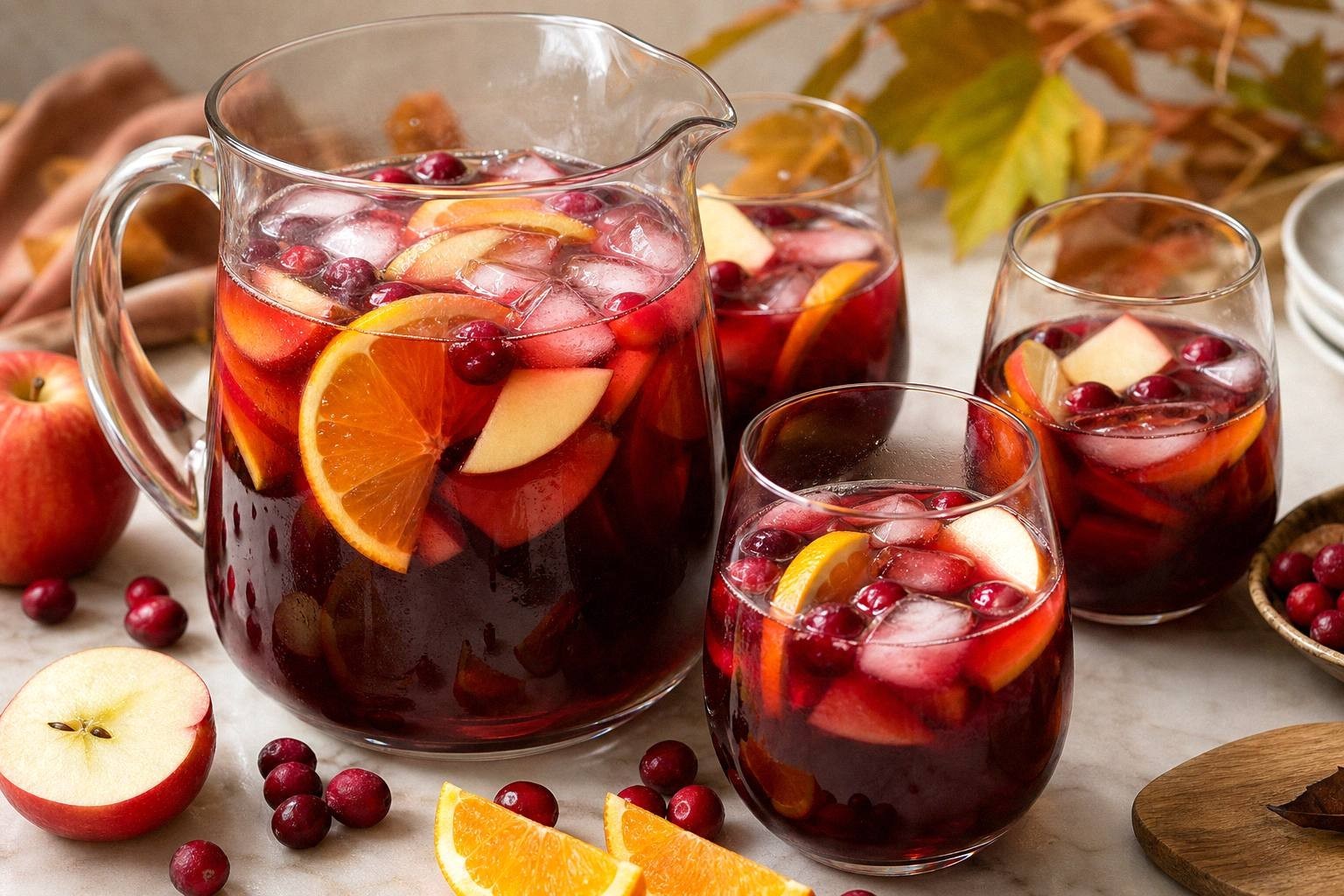
Thanksgiving sangria solves the host’s oldest problem: how to serve a crowd without playing bartender all night. This pitcher cocktail combines white wine, apple cider, and seasonal fruit into a make-ahead drink that tastes like fall in a glass.
Mix it the night before, chill it until guests arrive, and pour straight from the pitcher while the turkey rests.
Why Sangria Works for Thanksgiving
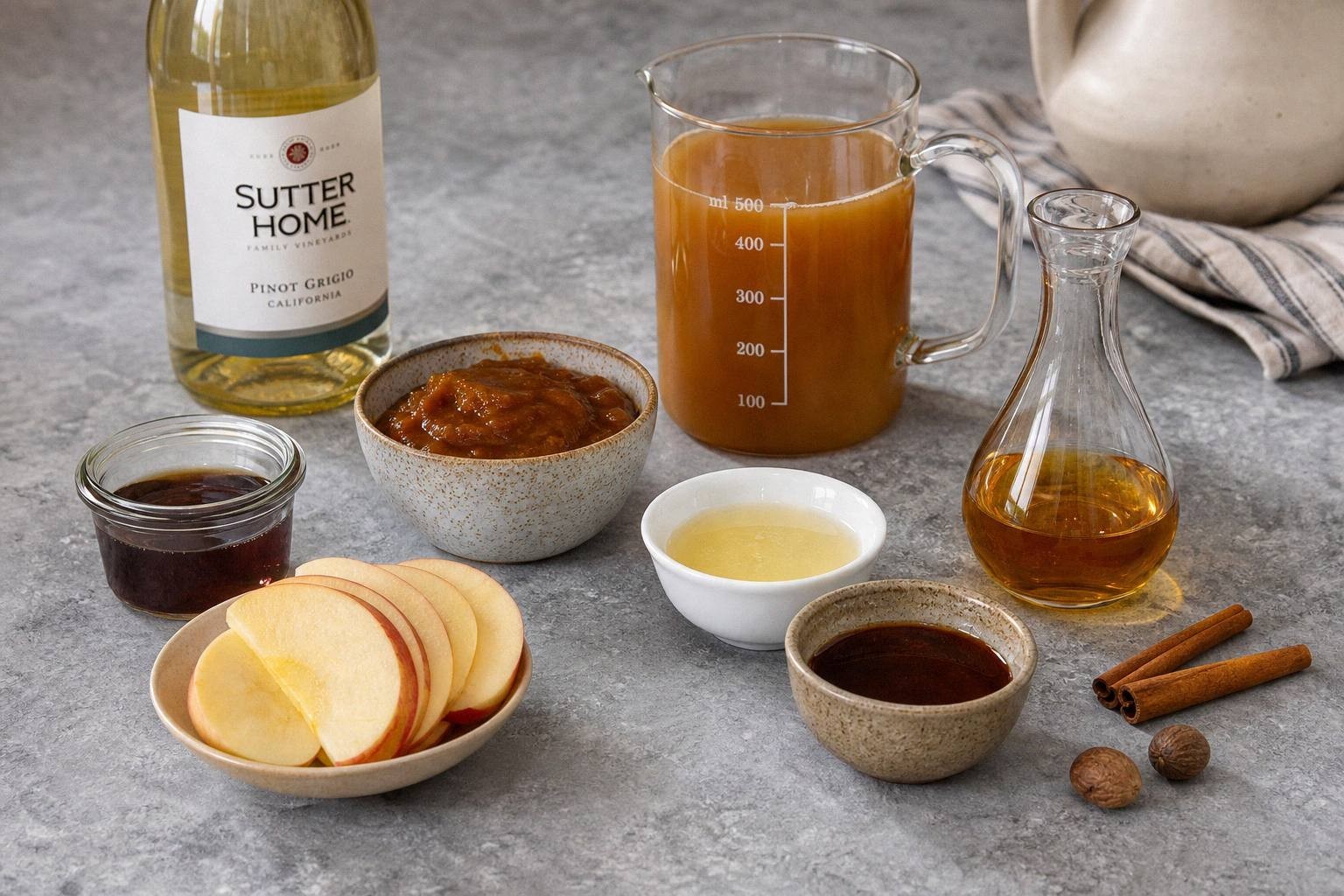
Sangria scales better than any other cocktail. One bottle of wine stretches to eight servings when you add cider, brandy, and fruit, so you’re not opening a new bottle every twenty minutes.
The fruit soaks up the alcohol and releases its own juice, building flavor while the pitcher sits in the fridge. The make-ahead window is real.
Sangria needs at least four hours to chill and let the flavors marry, but it holds for a full day without the fruit turning mushy or the wine going flat. That means you can mix it Wednesday night, cross drinks off your list, and focus on the turkey Thursday morning.
White wine keeps the drink lighter than red sangria, so it doesn’t compete with a heavy meal. The apple cider brings sweetness without added sugar, and the brandy adds warmth without turning the pitcher into a punch bowl.
Choosing Your Wine and Cider
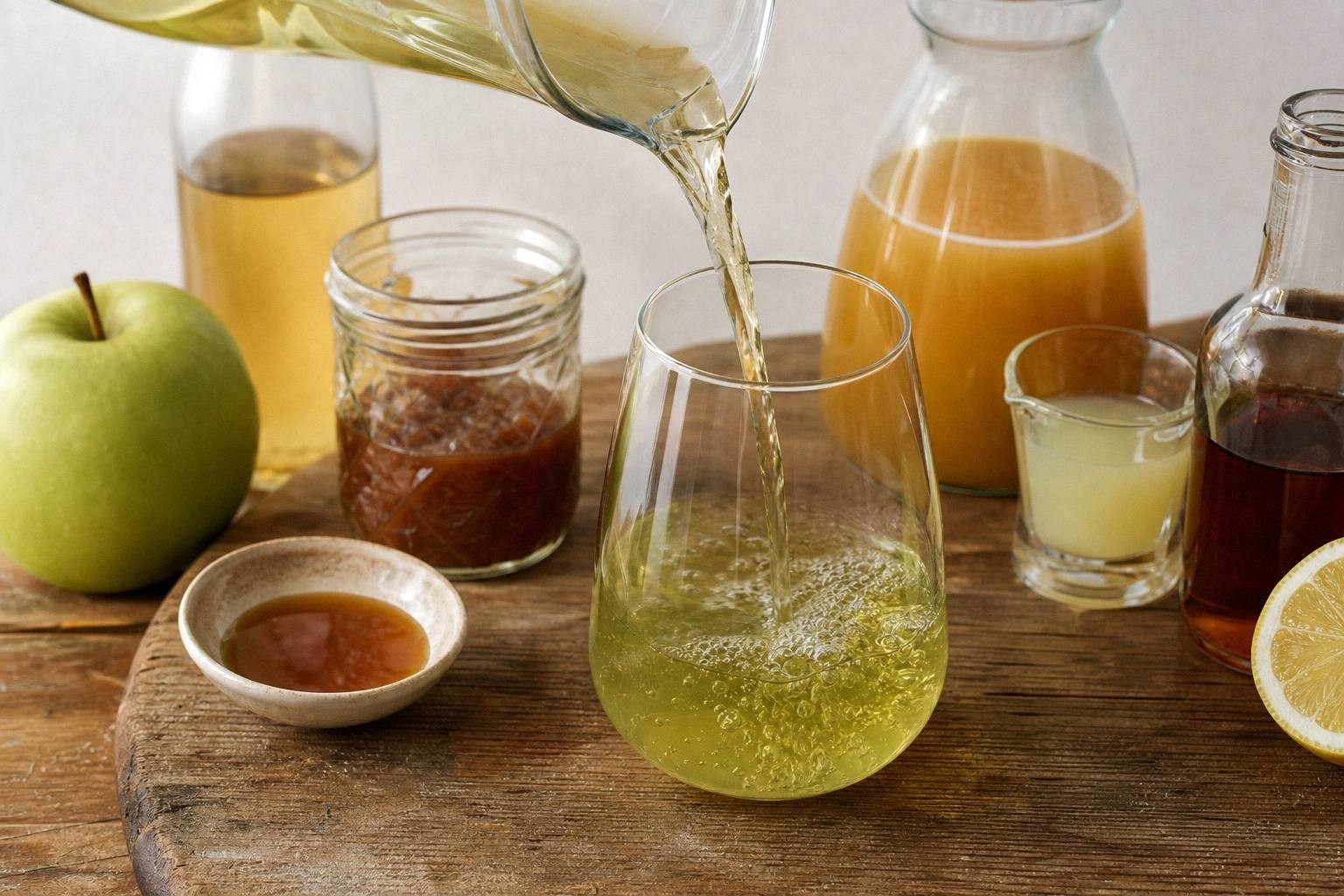
Dry white wine is the base, and you want something crisp with enough acidity to stand up to the cider and fruit. Here’s what works best:
- Best varietals: Sauvignon Blanc and Pinot Grigio both work because they’re tart enough to balance the sweetness and inexpensive enough that you won’t wince pouring the whole bottle into a pitcher.
- Skip oaked Chardonnay: The butter and vanilla notes clash with apple cider.
- Price range: Spend ten to fifteen dollars on the bottle. Anything cheaper tastes thin once you dilute it, and anything pricier is wasted in a mixed drink.
- Apple cider choice: Use unsweetened, unfiltered cider if you can find it; the cloudy stuff has more apple flavor and a slight tang that keeps the sangria from tasting like candy.
- Sweetened cider alternative: Sweetened cider or apple juice will work, but cut back on any added maple syrup or the whole pitcher skews too sweet.
Fresh-pressed cider from a farm stand or farmers market brings the most flavor, but refrigerated grocery store cider in the jug works fine.
Ingredients
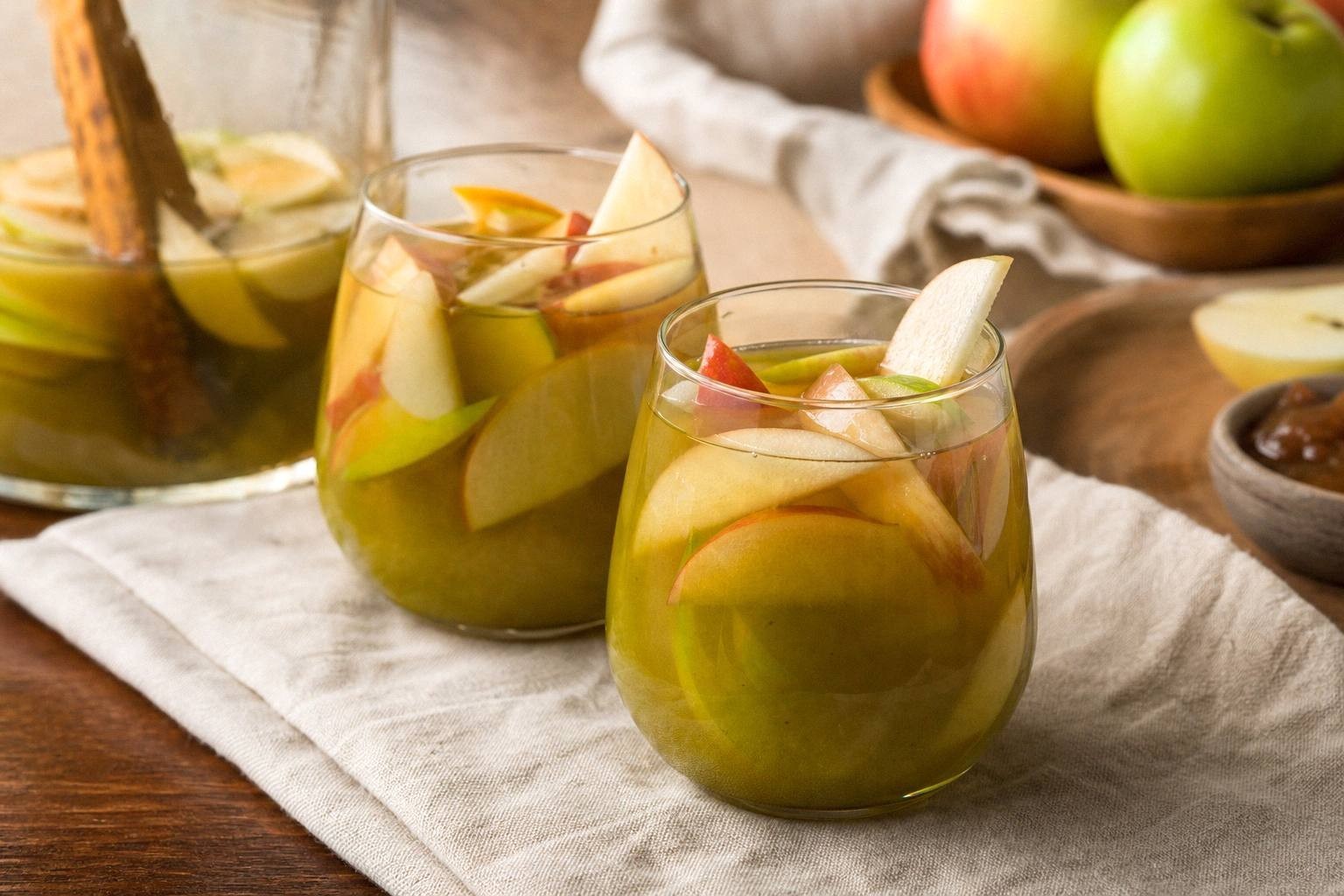
- 1 bottle dry white wine, such as Pinot Grigio or Sauvignon Blanc
- 1 cup apple cider
- 1/2 cup brandy
- 1/2 cup pumpkin butter (apple butter)
- 1/4 cup lemon juice
- 2-4 tablespoons pure maple syrup, using more or less to your taste
- 2 honeycrisp apples, sliced
- 2 blood oranges, sliced
- 1 cup pomegranate arils
- 3 cinnamon sticks
- 1-2 (12 ounce) ginger beers
- star anise, for garnish (optional)
Instructions
- In a large pitcher, combine all the ingredients except the ginger beer. Stir, then place in the fridge until chilled. Before serving, add the ginger beer. Fill each glass with ice and pour the sangria over the ice. If you like, top with more ginger beer.
Make-Ahead Timing and Batch Math
Four hours is the minimum chill time. The fruit needs that long to soften and release its juice, and the cinnamon sticks need time to infuse their spice into the wine.
At four hours, the sangria tastes balanced but still bright. At twenty-four hours, the flavors deepen and the fruit takes on more of the wine’s character, but the apples start to lose their crispness.
Don’t add the ginger beer until you’re ready to serve. Carbonation dies in the fridge, so if you pour it in the night before, you’ll end up with flat sangria.
Keep the ginger beer cold separately, then add it right before guests arrive. If you’re serving the pitcher over several hours, hold back half the ginger beer and top off the pitcher halfway through the party.
Scaling the recipe is straightforward. One 750 ml bottle of wine plus one cup of cider serves eight people with a roughly six-ounce pour.
For sixteen people, double everything: two bottles of wine, two cups of cider, one cup of brandy, and twice the fruit. For a crowd of thirty or more, mix two separate pitchers rather than one giant batch; it’s easier to keep cold and easier to pour.
The sangria holds in the fridge for up to three days, but the fruit starts to break down after the first day. If you’re making it more than twenty-four hours ahead, add the fruit the morning of the party instead of mixing it all at once.
White Wine vs Red Wine
| Wine Type | Flavor Profile | Best For | Adjustments |
|---|---|---|---|
| White Wine | Lighter, crisper sangria with clear apple cider flavor and bright acidity | Serving alongside turkey and sides; pairs well with rich dishes like mashed potatoes and gravy | Use as written in the recipe |
| Red Wine | Heavier, spicier sangria that tastes more like mulled wine | Pre-dinner drink or dessert course; too bold to sip alongside the meal | Use fruit-forward red like Shiraz, Syrah, or Zinfandel; add extra cinnamon stick or whole cloves; consider pears or cranberries instead of pomegranate |
White wine also looks more festive in a clear pitcher, with the cranberries and pomegranate arils floating like jewels. Red wine stains the fruit darker, so the visual contrast isn’t as striking, but the flavors meld together into something richer and more cohesive.
Fruit and Garnish Choices
Honeycrisp apples hold their shape better than softer varieties and add a slight sweetness without turning mushy. Granny Smith apples work if you want more tartness, but they brown faster once sliced.
Toss the apple slices in a little lemon juice before adding them to the pitcher if browning bothers you, though the wine’s acidity slows it down on its own.
Blood oranges bring a deeper color and a slightly berry-like flavor that regular oranges don’t have, but they’re not always easy to find in November. Regular navel oranges or clementines work just as well and are cheaper.
Pomegranate arils add little bursts of tart juice and a jewel-tone pop of color. Fresh cranberries work too, but they’re quite tart and don’t soften much even after a full day in the wine.
A cinnamon sugar rim dresses up the glass for serving. Mix equal parts granulated sugar and ground cinnamon on a small plate, run a lemon wedge around the rim of each glass, and dip the rim into the cinnamon sugar.
Common Problems and How to Fix Them
- Sangria tastes too sweet: You added too much maple syrup or used sweetened cider. Add another half cup of dry white wine and a tablespoon of lemon juice to balance it out.
- Sangria tastes too strong: The brandy ratio is too high for your taste. Top off the pitcher with an extra cup of apple cider or add more ginger beer when serving.
- Fruit is browning: Apples oxidize when exposed to air. Toss the slices in lemon juice before adding them, or slice the fruit right before mixing the sangria instead of prepping it hours ahead.
- Sangria is flat: You added the ginger beer too early. Carbonation dies in the fridge, so always add sparkling elements right before serving.
- Pumpkin butter won’t dissolve: It’s too cold or too thick. Whisk the pumpkin butter with a few tablespoons of the wine in a separate bowl first, then pour the mixture into the pitcher.
- Sangria is too tart: Your wine is very acidic or you used tart apples. Add another tablespoon of maple syrup or a tablespoon of simple syrup to round it out.
Serving and Pairing
Serve the sangria in a clear glass pitcher so guests can see the fruit, and set out a ladle or a large spoon so people can scoop fruit into their glasses along with the liquid. Keep the pitcher on the table during dinner or set up a drink station on the counter with glasses, ice, and a small bowl of extra cinnamon sticks for garnish.
Sangria pairs well with the whole Thanksgiving spread because it’s not too sweet and not too dry. The apple cider echoes any apple-based sides like stuffing with apples or apple cranberry sauce, and the cinnamon ties into sweet potato casserole or pumpkin pie.
The acidity cuts through rich dishes like turkey with gravy, green bean casserole, and buttery mashed potatoes, so it refreshes your palate between bites instead of weighing you down.
If you’re bringing sangria to a potluck, transport it in a pitcher with a tight lid or in a large jar with a screw top. Keep it cold in a cooler with ice packs, and bring the ginger beer separately in its own bottles.
Frequently Asked Questions
Can I make Thanksgiving sangria ahead of time?
Yes, and you should. Sangria needs at least four hours in the fridge for the flavors to come together, and it tastes even better after twelve to twenty-four hours.
Mix everything except the ginger beer the night before, then add the ginger beer right before serving to keep it fizzy.
Should I use red wine or white wine for Thanksgiving sangria?
White wine makes a lighter, crisper sangria that pairs better with turkey and sides. Red wine creates a heavier, spicier drink that works well as a pre-dinner cocktail but can overpower the meal.
Can I make this sangria non-alcoholic?
Yes. Replace the white wine with white grape juice or additional apple cider, skip the brandy, and use the same fruit and spices.
Add sparkling apple cider or ginger beer at the end for fizz. The flavor won’t be as complex, but it still tastes festive.
How long does sangria last in the fridge?
Sangria keeps for up to three days in the fridge, but the fruit starts to break down and lose its texture after the first day. The flavor stays good, but the apples and oranges get softer.
Can I use apple juice instead of apple cider?
You can, but apple cider has more flavor and a slight tang that apple juice lacks. If you use apple juice, look for unfiltered or fresh-pressed juice, and add an extra tablespoon of lemon juice to the pitcher to make up for the missing acidity.
Should I add ginger beer or club soda?
Ginger beer adds spice and a little sweetness that complements the cinnamon and apples. Club soda or sparkling water adds fizz without changing the flavor.
Use ginger beer if you want a spicier, more complex drink, or use sparkling water if you want to keep the sangria lighter and let the wine flavor shine.
Conclusion
Thanksgiving sangria takes ten minutes to mix and tastes better the longer it sits, which makes it the rare holiday recipe that rewards procrastination. Mix it Wednesday night, let it chill, and pour it straight from the pitcher while you carve the turkey.