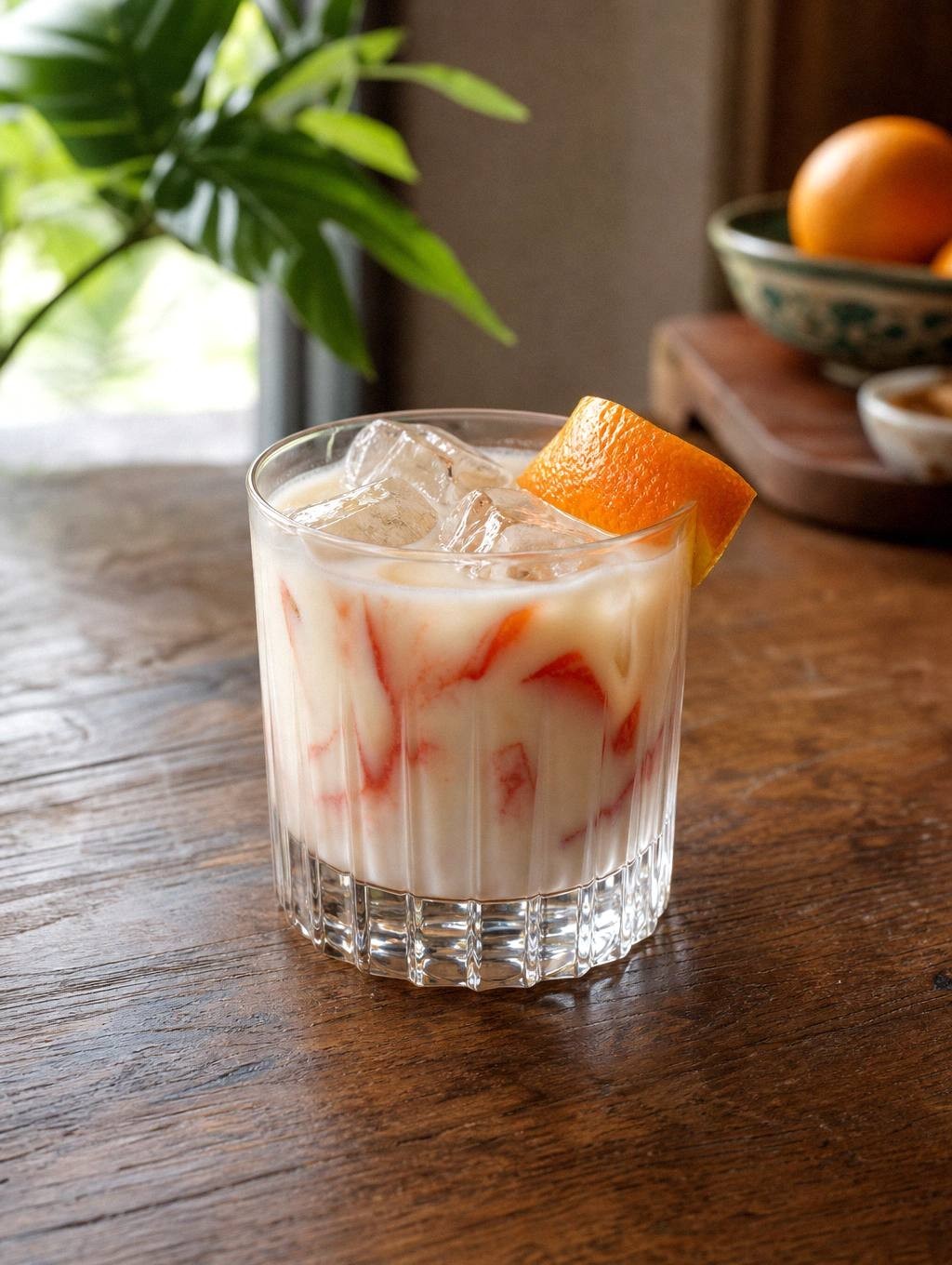
A tropical negroni is a negroni made with coconut rum in place of gin: 1 1/2 ounces coconut rum, 3/4 ounce Campari and 3/4 ounce sweet vermouth, stirred with ice and poured over a big cube. It keeps the bitter backbone of the classic and adds a soft, warm coconut note. Serve it before dinner on a warm evening, or as a cozy fall aperitif. It tastes like a negroni that spent a week in the sun without losing its edge.
Why Coconut Works With Campari
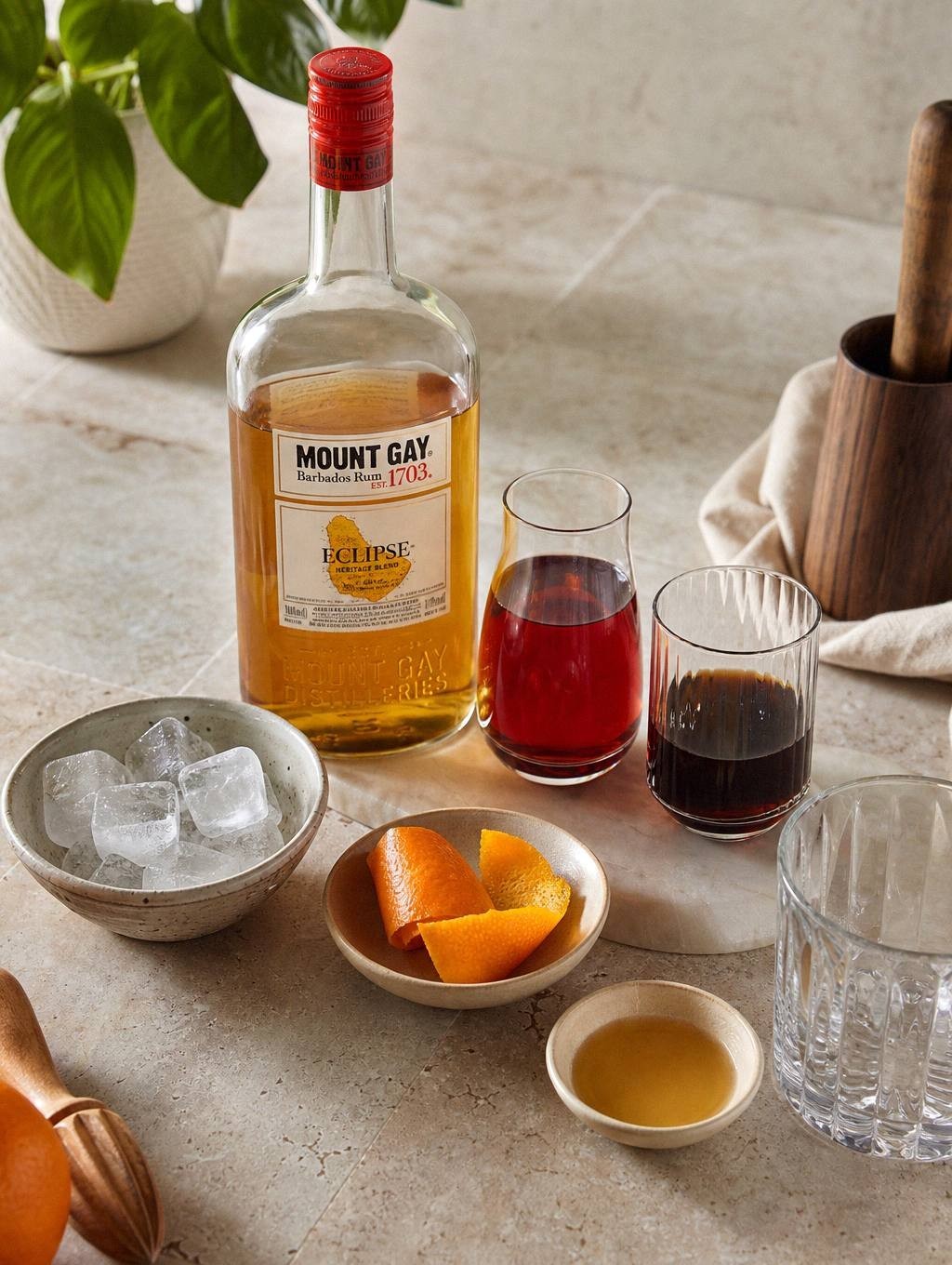
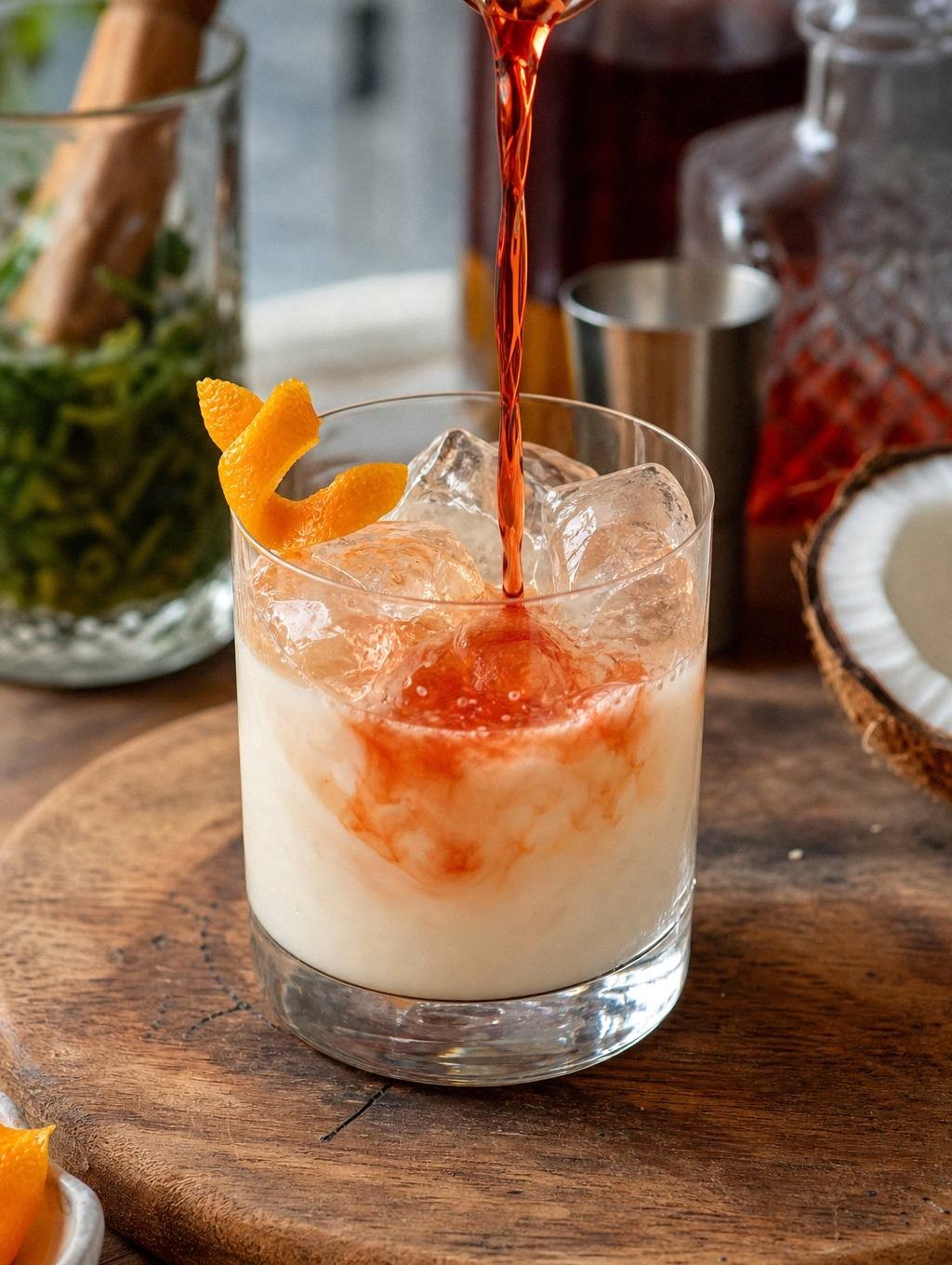
Campari’s bitterness comes from a blend of herbs and citrus peel, so it already carries grapefruit and orange oil. Tropical flavors don’t fight that, they extend it. Coconut softens Campari’s bite without erasing it, and a bright orange peel over the top ties it all together.
The classic negroni is one ounce each of gin, Campari and sweet vermouth. Here a bigger pour of coconut rum stands in for the gin, and the Campari and vermouth drop to 3/4 ounce each, so the rum can lead without the drink turning into a punch. You lose the juniper but gain a round, slightly sweet base.
Choosing Your Coconut Rum
Use a good coconut rum, not the artificially flavored kind. An aged coconut rum gives more depth against the Campari, while a lighter one makes the drink brighter and more tropical. Check the label: a rum that lists real coconut or coconut water is a better bet than one that only says “natural flavors.”
Ingredients
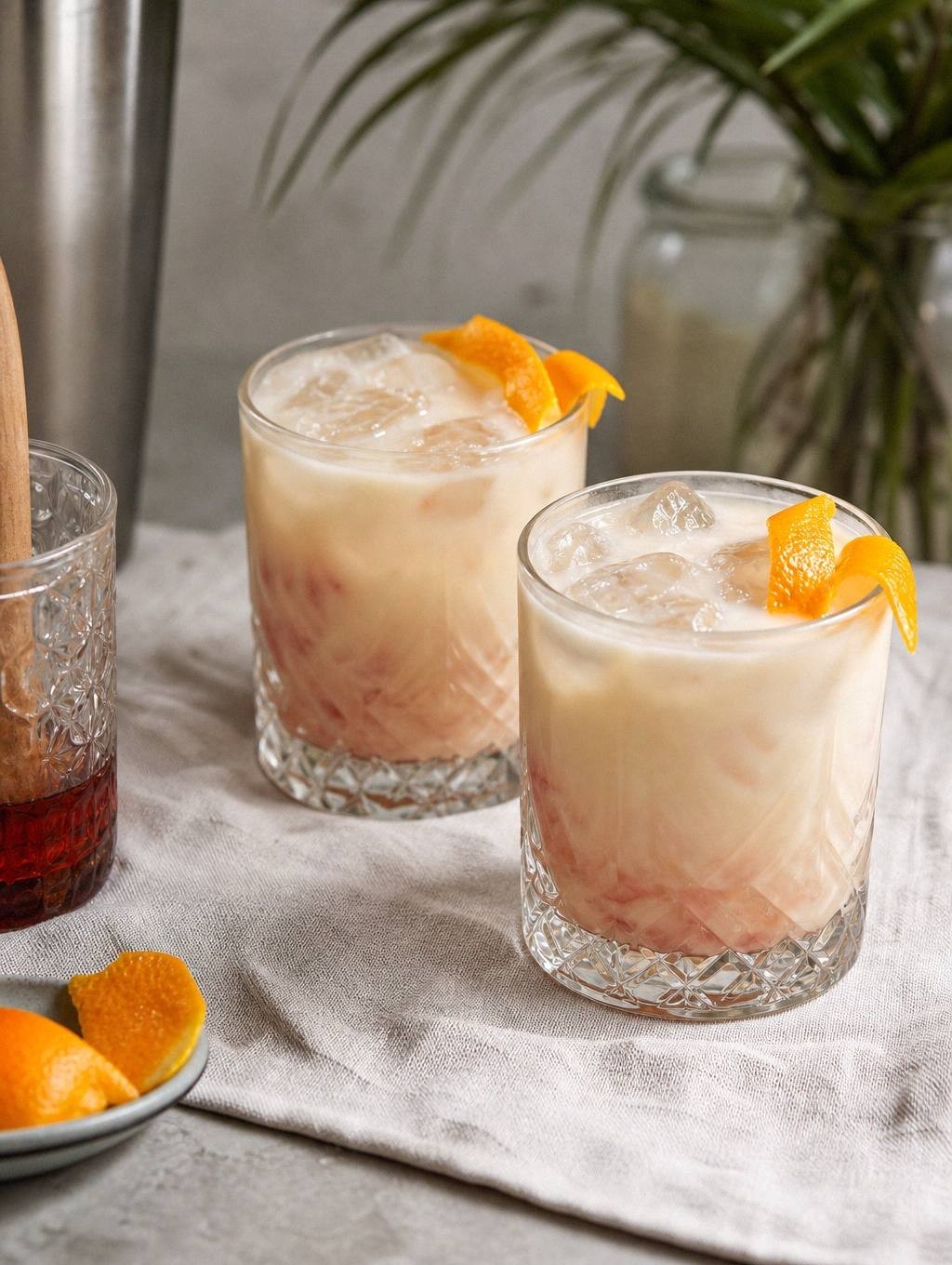
- 1 1/2 ounces coconut rum
- 3/4 ounce Campari
- 3/4 ounce sweet vermouth
- Orange peel, for garnish
- Ice
Instructions
- Add the coconut rum, Campari and sweet vermouth to a mixing glass with ice.
- Stir until well chilled.
- Strain into a rocks glass over a large ice cube.
- Twist the orange peel over the drink by holding it over the glass and bending it sharply to release the oils.
- Drop the peel into the glass or rest it on the rim.
Serves 1. Ready in 5 minutes.
For a fun upgrade, freeze coconut water in a large ice mold ahead of time and use that cube in the glass. It chills the drink while adding a little more coconut as it melts. Plan on about 4 hours of freezing.
Pour It Before Dinner
This is a short, bitter aperitif for the start of a dinner. Stir it when you serve it, then twist the orange peel over the glass so its aroma reaches the guest first.
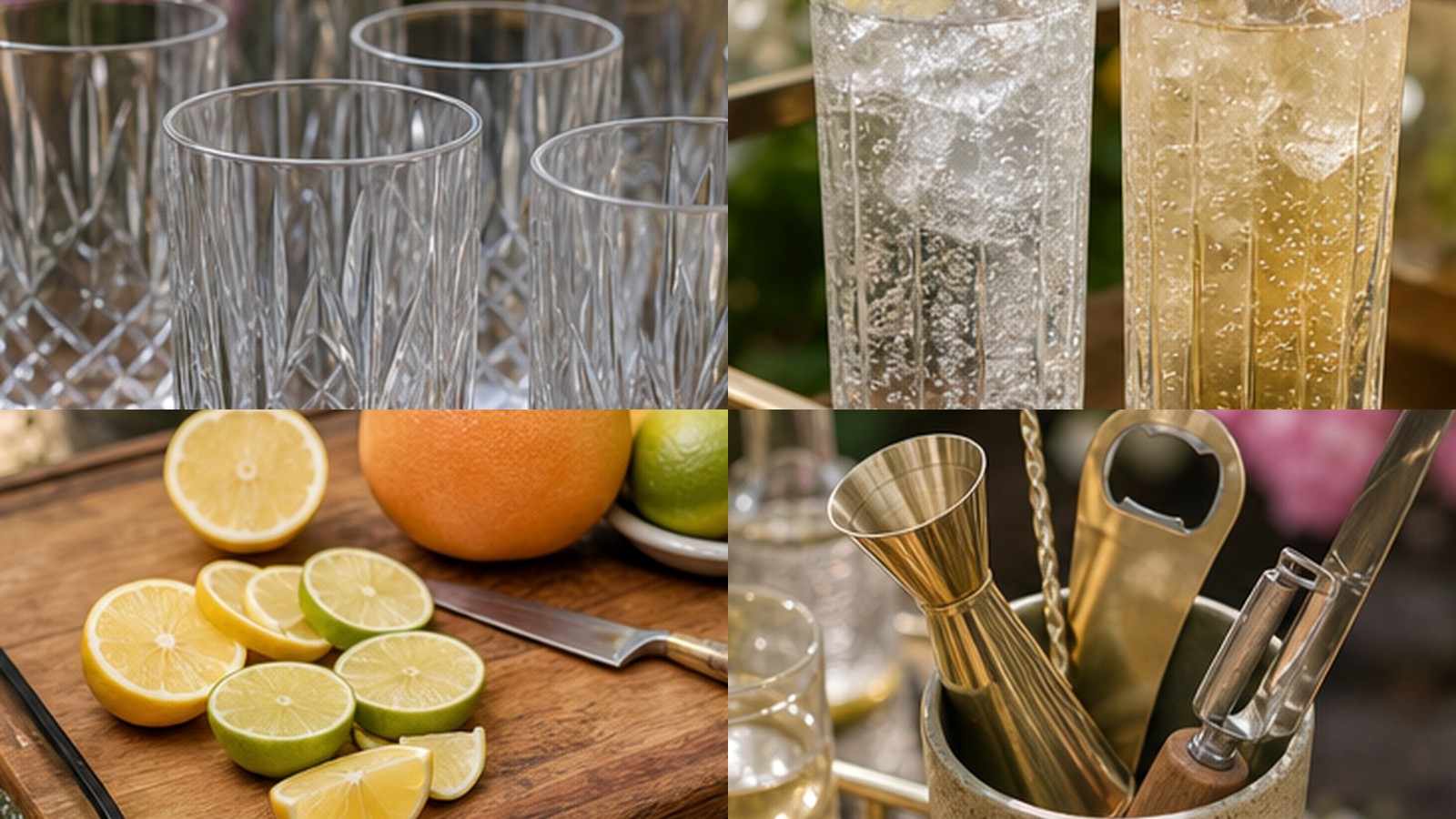
A rocks glass fits the pour and a large cube without making it a long drink. One large cube melts more slowly than a glass of small pieces, which matters if the conversation runs long.
Adjusting the Balance
If your first sip tastes too sweet, add a splash more Campari. If it’s too bitter, add a splash more vermouth. Coconut rum carries residual sugar, so this version can run sweeter than a classic negroni, and a little extra Campari brings the bitterness back into balance.
What Fails and How to Fix It
Cheap coconut rum tastes like sunscreen. Its flavor comes from artificial coconut extract, and that doesn’t blend well with Campari. Spend a few extra dollars on a rum made with real coconut.
Skipping the stir leaves the drink warm and sharp. Campari is denser than rum and vermouth, so stirring with ice is what chills, dilutes and mixes everything together.
Make-Ahead and Batching
To batch six servings, combine 9 ounces coconut rum, 4 1/2 ounces Campari and 4 1/2 ounces sweet vermouth in a bottle or pitcher and keep it in the fridge. When you’re ready to serve, pour about 3 ounces over ice in a mixing glass, stir briefly, strain over a fresh cube and garnish. Don’t add ice to the batch itself, because it waters the drink down unevenly.
Frequently Asked Questions
Can I use white rum instead of coconut rum?
Yes, but you’ll lose the tropical flavor. White rum makes a clean, neutral base that tastes closer to a classic negroni. If you want a hint of coconut, serve it over a coconut water ice cube, or sip a little coconut water alongside.
What vermouth works best?
Sweet vermouth with vanilla or caramel notes pairs well with coconut. Choose a quality bottle with enough body to stand up to the rum and Campari. Avoid dry vermouth, which makes the drink too sharp.
Do I need to use Campari specifically?
Campari’s orange and grapefruit oils are what make the tropical flavors work, so another bitter liqueur changes the drink. Aperol is too sweet and light. If you can’t find Campari, look for another Italian bitter aperitivo with citrus in the profile.
Can I make this without alcohol?
You can build an alcohol-free version with a non-alcoholic bitter aperitivo and a non-alcoholic sweet vermouth alternative, topped with a little coconut water in place of the rum. The flavor won’t match Campari exactly, but it gives you a similar bittersweet feel.
How do I know if I stirred it enough?
The outside of the mixing glass should feel very cold to the touch. If it’s only cool, stir a little longer.
What other garnishes work?
A pineapple wedge or a lime wheel reinforces the tropical flavor, but orange peel is traditional and its oils blend best with Campari.
Conclusion
A tropical negroni keeps the bitter, spirit-forward structure of the original and trades the herbal gin for soft coconut rum. Start with the measures above, adjust the Campari if it tastes too sweet, and stir it long enough to chill and dilute. The result is strong, balanced and tropical without tasting like a tiki punch. If you like it, try our coconut milk chai next for a cozy non-alcoholic coconut sip.