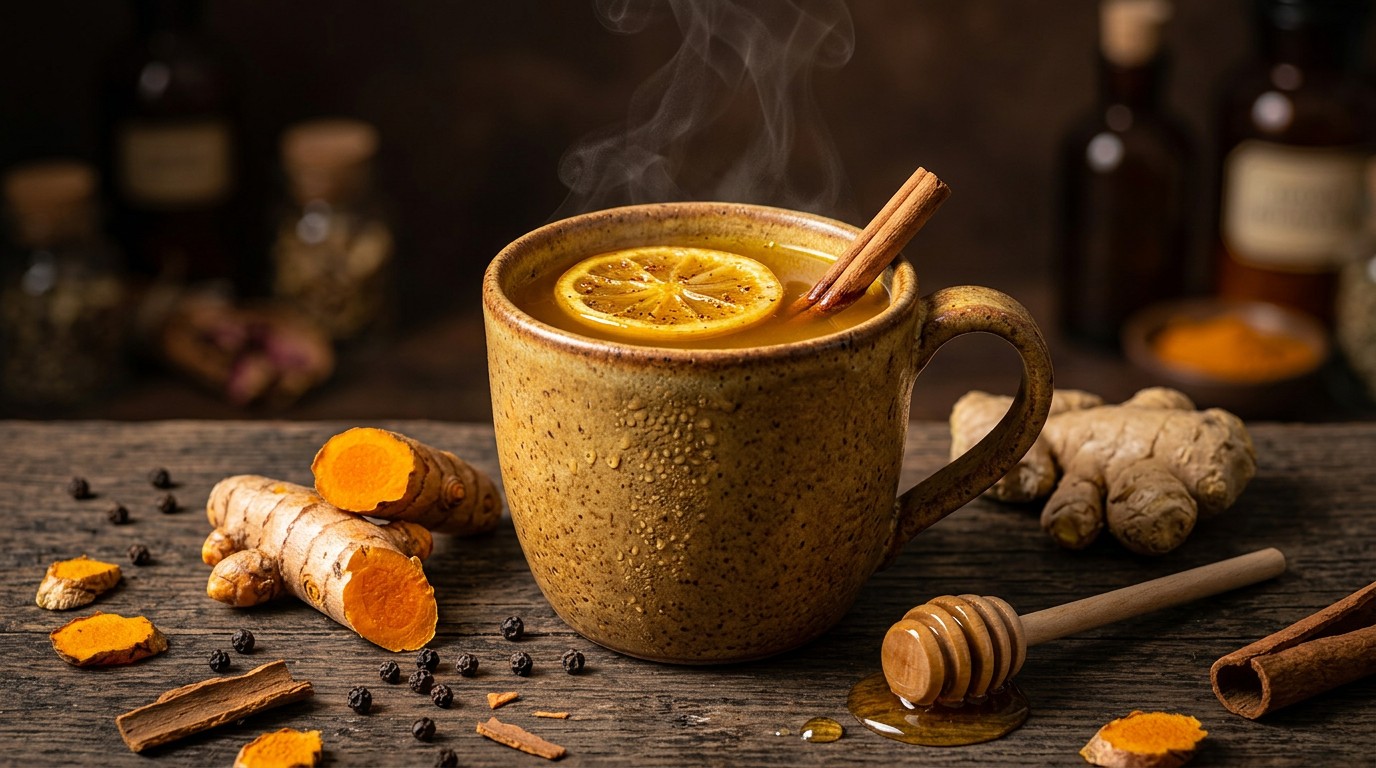
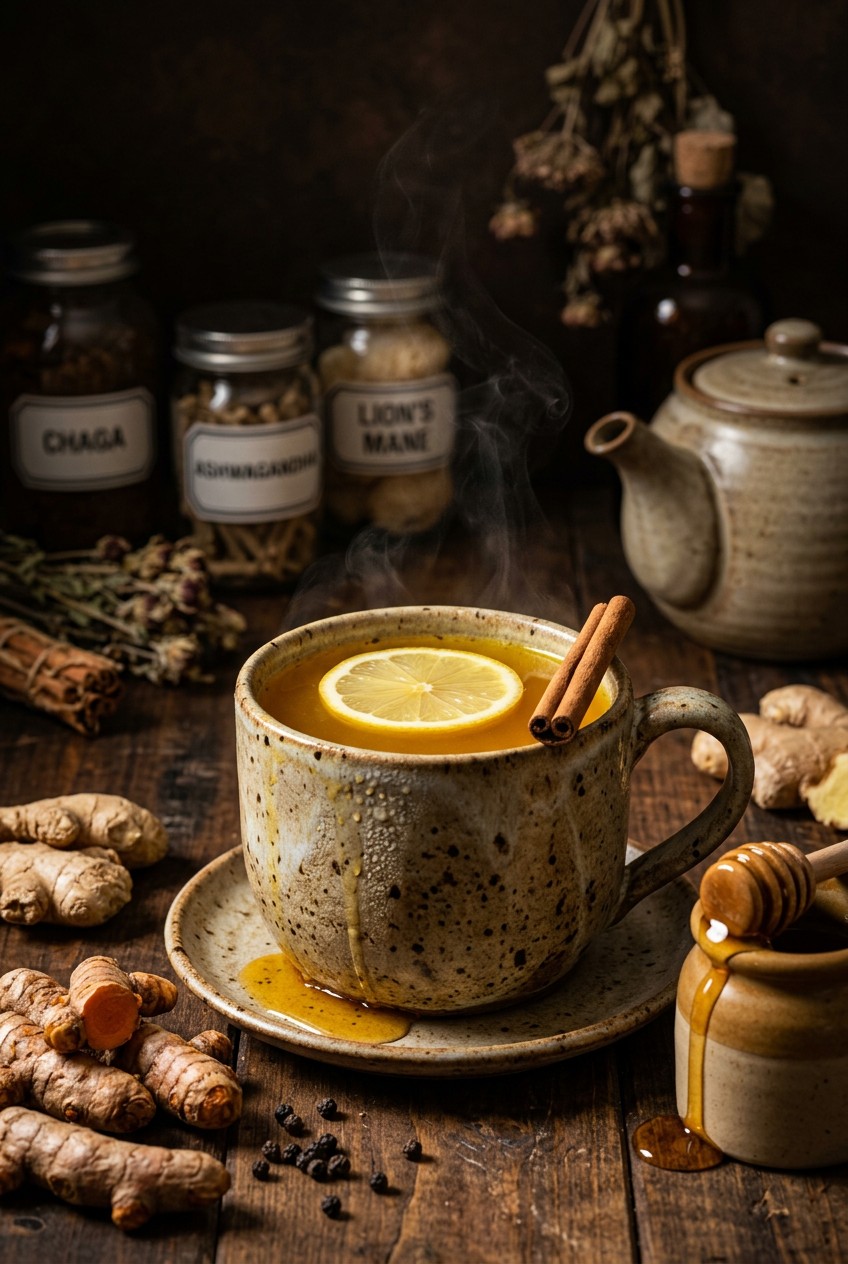
A good turmeric drink starts with a small pot of water, a little ground turmeric, fresh ginger and cinnamon. Simmer them for 10 minutes, strain, and stir in honey. That’s it: a warm, earthy, faintly sweet cup that takes about 20 minutes start to finish. It’s made for a cool fall morning or a quiet evening, and it’s just as good over ice in the afternoon.
Why You Will Love This
This turmeric tea tastes like liquid sunshine with a gentle warming kick. The earthy sweetness of turmeric meets the bright heat of fresh ginger, rounded out with cinnamon and a spoonful of honey . It’s the kind of drink that feels like a hug in a mug without tasting like a supplement.
The Story Behind It
Turmeric has been a cornerstone of Indian and Ayurvedic kitchens for thousands of years, stirred into food and drink every day. I started making a cup like this after a long hiking season, and I drank it most days through that autumn, mostly because I liked it. It became the thing I made while the kettle was warming up for everything else. Turmeric is what makes the drink yellow, and it pairs naturally with ginger and cinnamon, which is why you’ll find the three together in so many traditional cups.
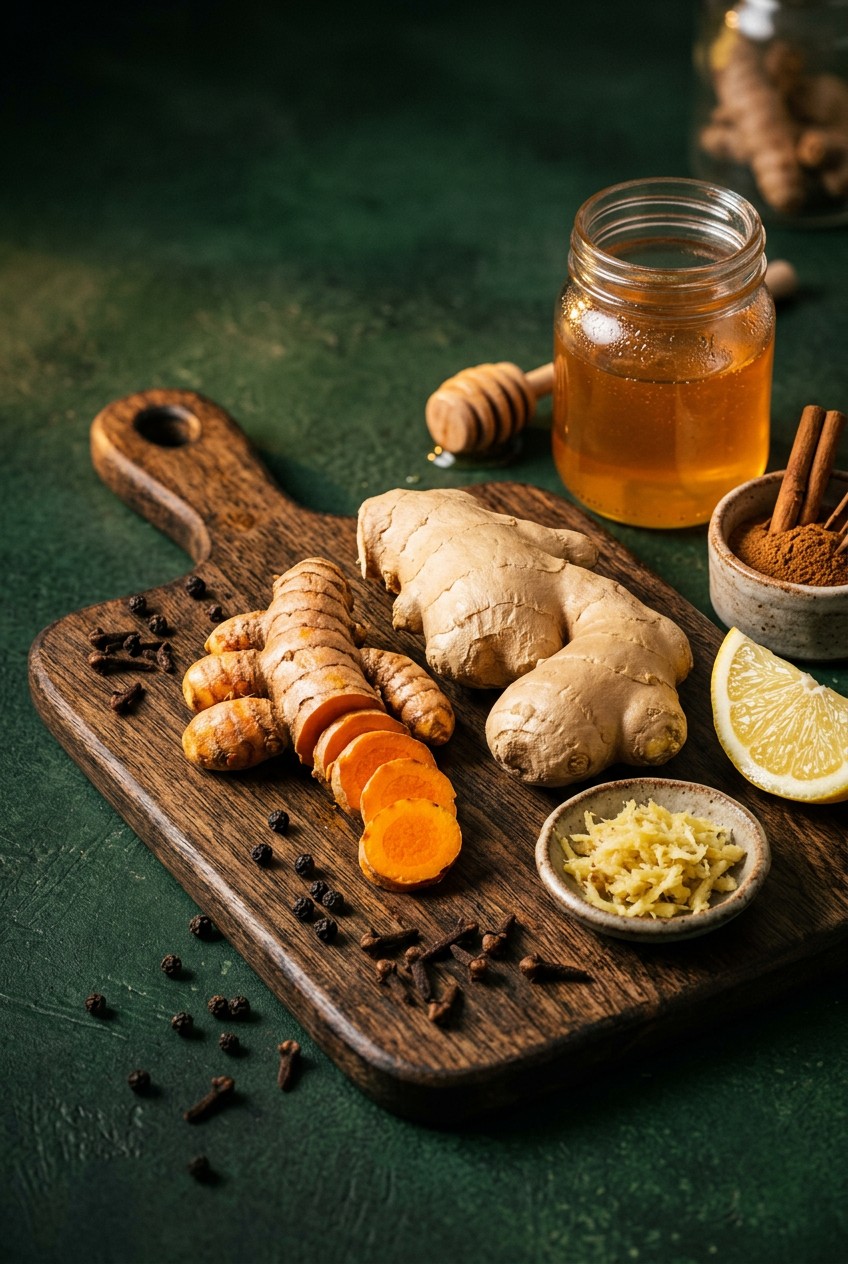
What You Will Need
- 2 cups water
- 1/2 teaspoon ground turmeric
- 1/2 teaspoon chopped fresh ginger
- 1/2 teaspoon ground cinnamon
- 1 tablespoon honey
- 1 lemon wedge
How to Make It
Bring the water to a boil in a small saucepan and add the turmeric, ginger and cinnamon.
Reduce the heat to medium-low and simmer for 10 minutes.
Strain the tea into a large glass or two mugs.
Stir in the honey and serve with a lemon wedge.
Makes 2 servings. Evaporation lowers the volume a little as it simmers, so divide whatever you have after straining.
Notes on the Ingredients
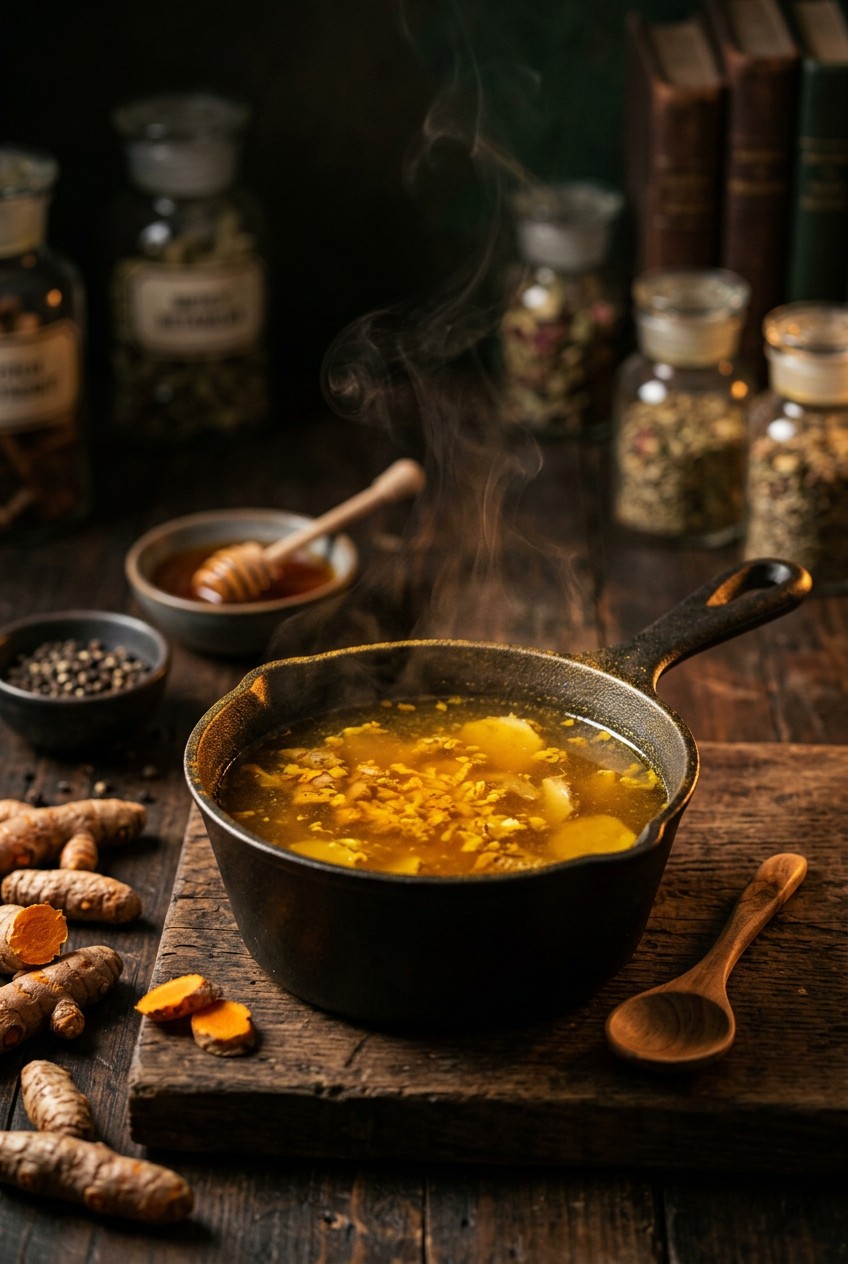
Turmeric: Ground turmeric dissolves into the water and turns it bright yellow. It tastes earthy and a little bitter, so a half teaspoon is plenty. More than that can turn the drink chalky.
Ginger: Fresh ginger gives a bright, peppery heat. Chop it finely so it releases its flavor in the short simmer, and strain it out before you drink.
Black pepper: Turmeric and black pepper have traveled together in the same pot for centuries. If you like a bit of bite at the back of the throat, add a small pinch of freshly cracked pepper to your finished cup.
Honey or maple syrup: Honey is the classic. Maple syrup works well too if you prefer it, and it suits the fall flavors.
Make It Your Own
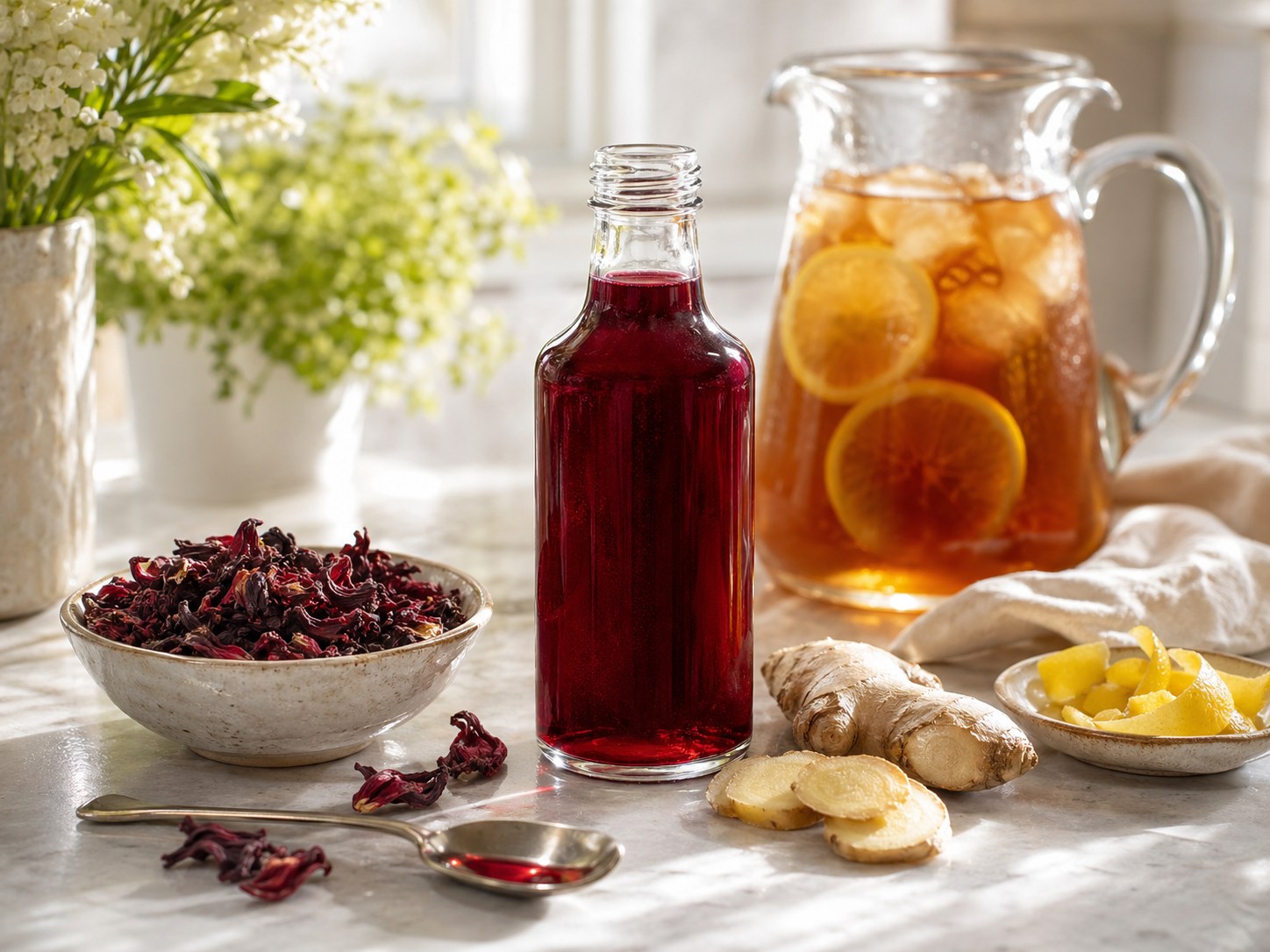
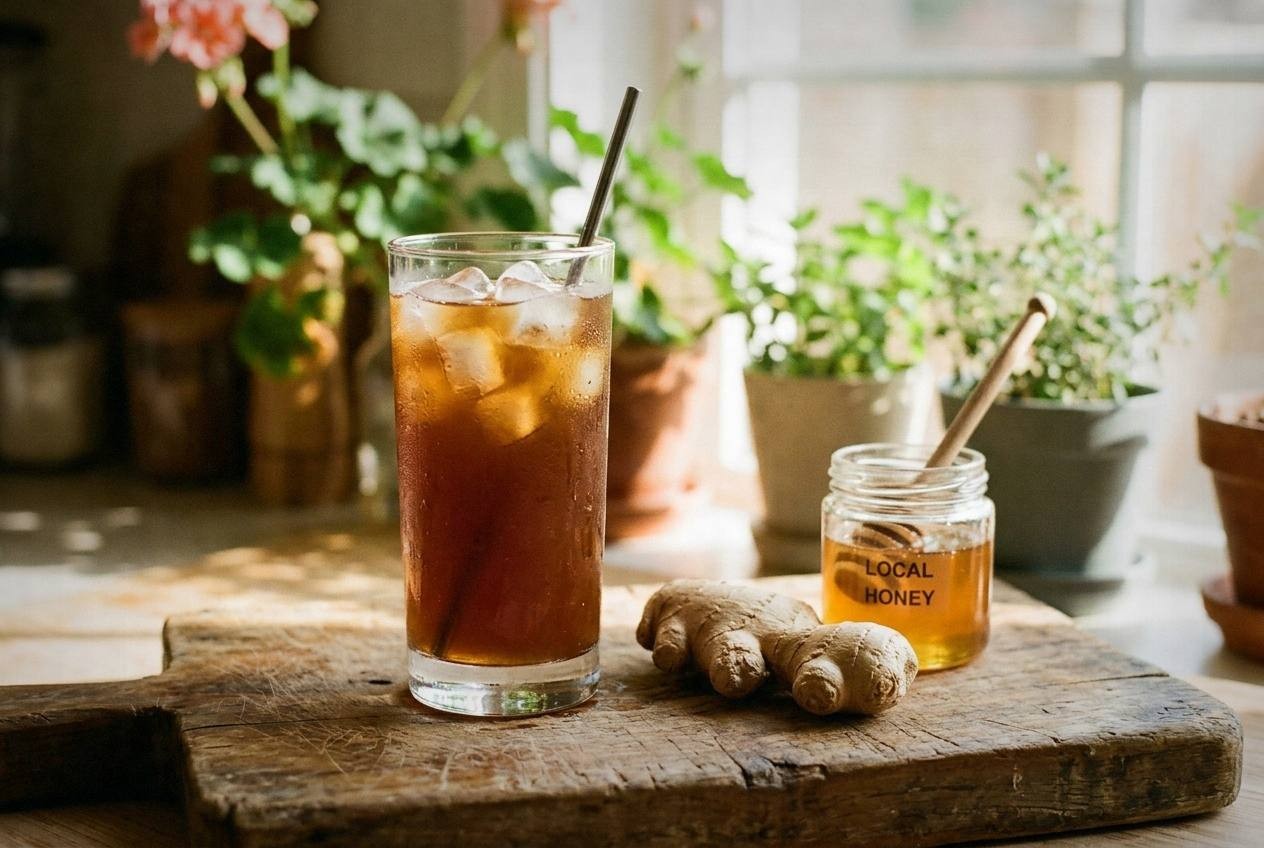
For an iced turmeric drink, let the tea cool completely after straining, then pour it over ice and add an extra squeeze of lemon. In summer, a few leaves of fresh mint and a splash of sparkling water turn it into a spritz. For a creamy cup, stir in a splash of warm milk or coconut milk, which rounds out the flavor and turns it toward a turmeric latte. You can also try a cinnamon stick in the pot or a pinch of cayenne for a little heat.
Common Questions
What does a turmeric drink taste like?
Warm, earthy, a little peppery from the ginger and sweet from the honey. Plain turmeric on its own can taste slightly dusty, and the ginger, cinnamon and lemon are what make it taste bright and comforting.
How much turmeric should you use?
This recipe uses 1/2 teaspoon of ground turmeric for 2 cups of water. That’s enough to color the tea and give it a warm flavor. Going much past that makes the drink chalky, and you’ll stop wanting it.
Can you drink it cold instead of warm?
Yes. Let the tea cool after straining, then pour it over ice. For a richer cold version, stir in a little coconut milk. In summer, a chilled turmeric tea with sparkling water and fresh mint makes a nice afternoon drink.
What is the best time of day to drink it?
Whenever you will actually enjoy it. It’s lovely as a morning cup, a cozy evening one, or an iced drink on a warm afternoon. If turmeric on an empty stomach doesn’t sit well with you, have it with or after food.
Can I use fresh turmeric root?
You can. Grate or chop it finely and simmer it the same way. It tastes brighter and slightly more peppery than the ground spice, so start with a small amount.