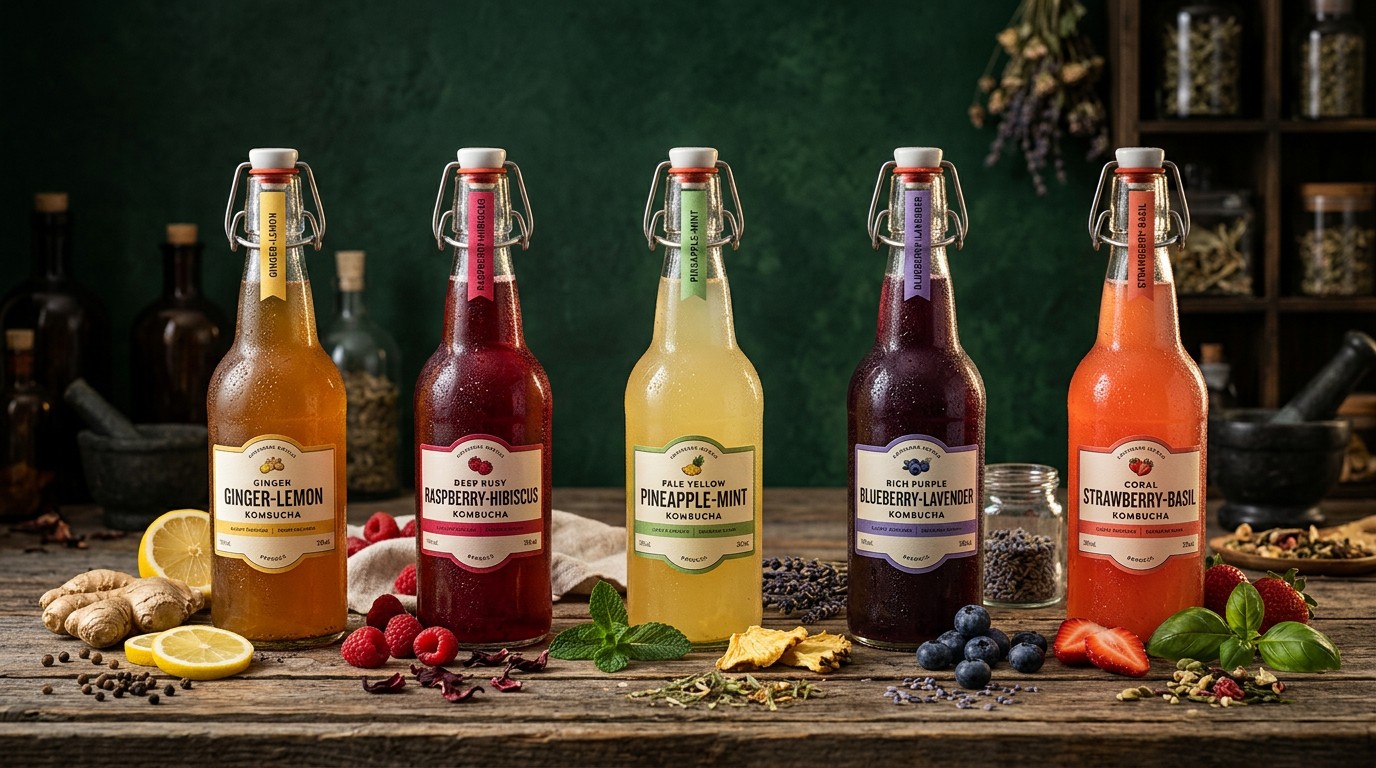

Fizzy water kefir with live probiotics, organic cane sugar, and spring fruit. Get the recipe for digestive reset drinks.
Why You Will Love This
Water kefir hits like cold sparkling lemonade but delivers 1-10 billion CFUs of live Lactobacillus bacteria per 8-ounce serving. The first sip is bright and barely sweet, with a clean mineral finish from the fermentation. By day two, you will notice easier digestion and less bloating. Spring is when your gut craves a reset after winter’s heavier foods, and this fizzy probiotic drink does exactly that without dairy or added caffeine.
The Story Behind It
Water kefir grains are not actually grains but translucent clusters of bacteria and yeast living in symbiotic culture. They originated in Mexico, where they grew on the pads of Opuntia cactus and fermented naturally in sugary cactus water. By the 1800s, European herbalists were culturing them in sugar water to create a digestive tonic they called “tibicos.” The grains multiply endlessly when fed properly, so one starter culture can produce fizzy probiotic drinks for years. This recipe uses the traditional Mexican method with a dried fig for minerals and a lemon slice for acidity control.
What You Will Need
- 4 cups (946 ml) filtered or spring water, chlorine-free
- 1/4 cup (50 g) organic cane sugar
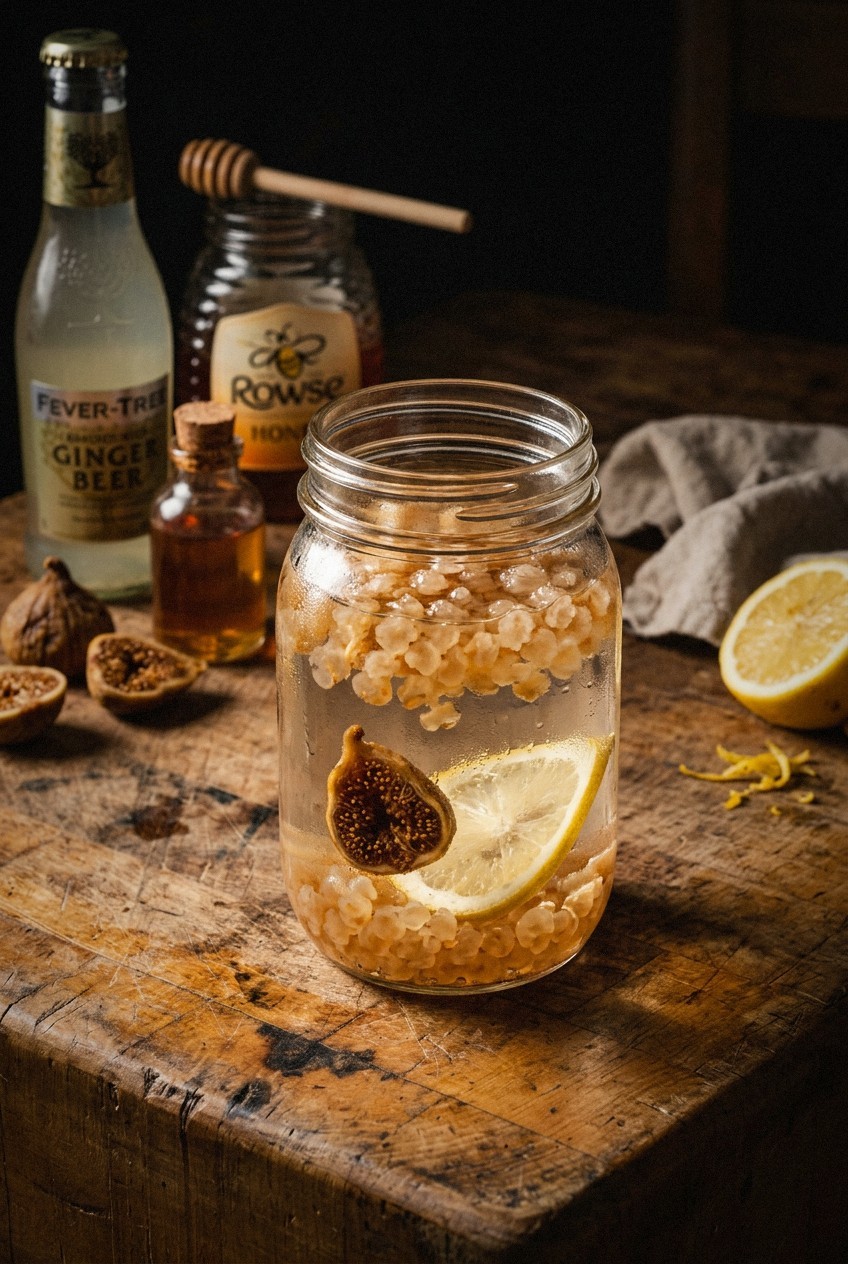
- 1/4 cup (60 ml) hydrated water kefir grains
- 1 unsulphured dried fig, halved
- 1 thin slice organic lemon
- Optional second fermentation: 1 cup sliced strawberries or 4-5 fresh mint leaves
How to Make It
Dissolve sugar completely in 1 cup warm filtered water. Add remaining 3 cups cold water to cool the mixture to room temperature (68-78°F / 20-26°C).
Pour sugar water into a clean glass jar (1-quart / 1-liter size). Add water kefir grains, dried fig, and lemon slice.
Cover jar with a breathable cloth or coffee filter secured with a rubber band. Fermentation needs oxygen but must be protected from contaminants.
Ferment at room temperature for 24-48 hours. Taste after 24 hours. The liquid should be slightly sweet with a mild tang and gentle fizz. Warmer rooms ferment faster.
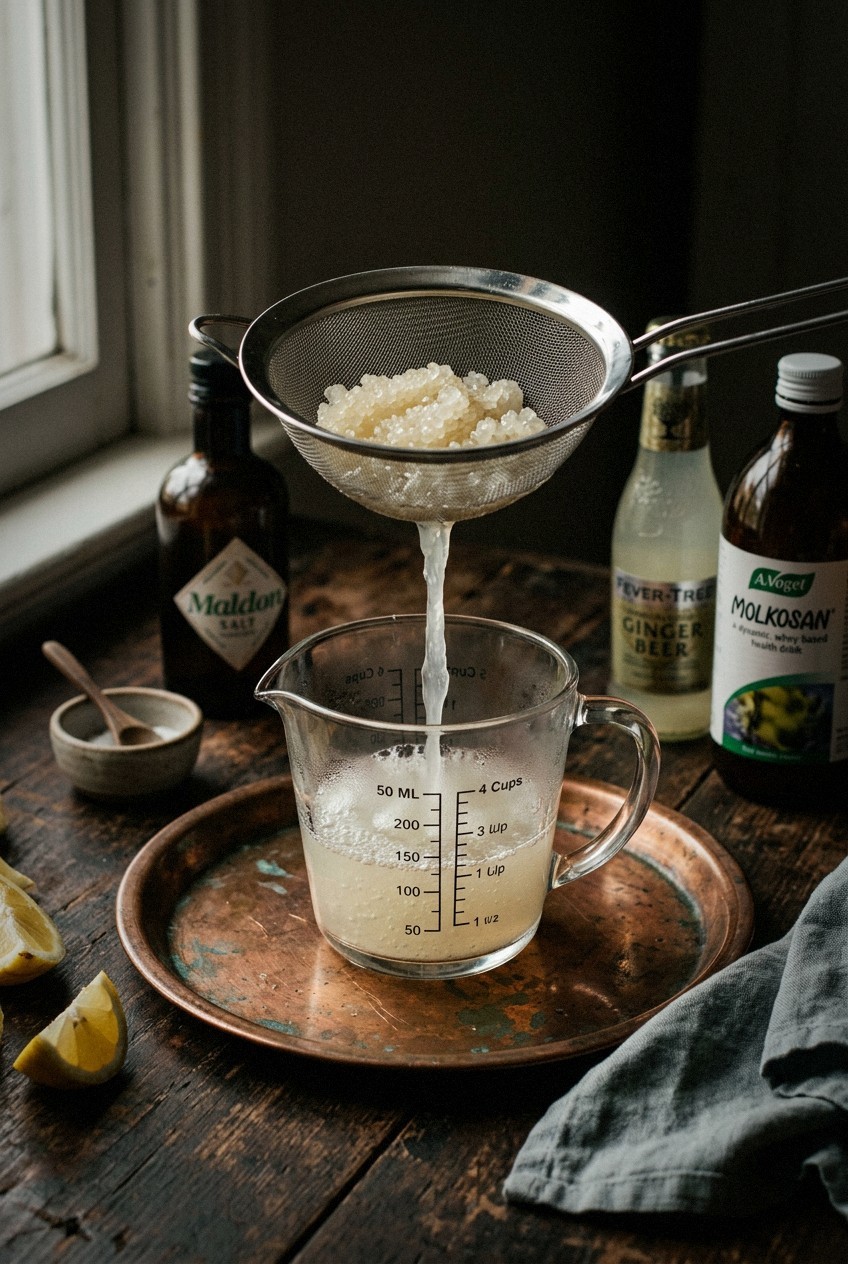
Strain out grains, fig, and lemon. Reserve grains for your next batch. The finished water kefir can be drunk immediately or moved to second fermentation.
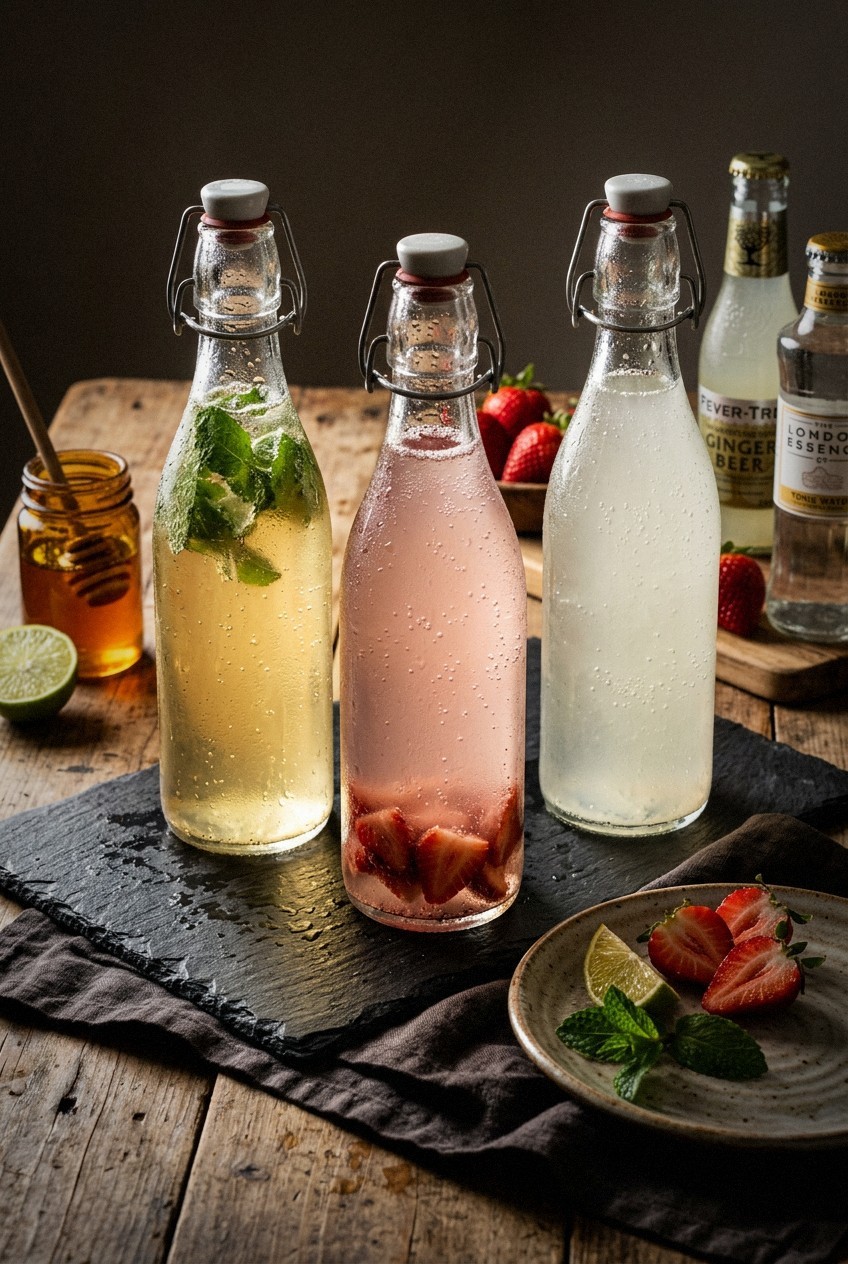
For second fermentation: Add fruit or herbs to a clean swing-top bottle. Pour in strained water kefir, seal tightly, and ferment 12-24 hours at room temperature for more carbonation. Burp daily to release pressure.
Refrigerate finished water kefir. Serve chilled over ice. Consume within 1 week for peak probiotic activity.
Herbalist Notes
The fig is not optional. Dried figs supply trace minerals like iron, calcium, and magnesium that water kefir grains need to stay healthy and multiply. Without minerals, grains shrink and lose potency over multiple batches. One fig per quart keeps them thriving.
Chlorine kills fermentation. City tap water often contains chlorine or chloramine, both of which damage beneficial bacteria. Use filtered water, spring water, or let tap water sit uncovered for 24 hours to off-gas chlorine before starting a batch.
The lemon slice controls pH. Water kefir ferments best at pH 3.5-4.5. The citric acid in lemon peel helps maintain this range and prevents opportunistic molds. Replace the lemon slice with each new batch.
Make It Your Own
Second fermentation with spring fruit amplifies both flavor and carbonation. Strawberries add a berry-forward sweetness and turn the liquid pale pink. Fresh mint creates a cooling, almost mojito-like finish. Ginger slices add heat and extra digestive support. Always use a 4:1 ratio of water kefir to fruit by volume for balanced fermentation. If you prefer less carbonation, skip the second ferment and drink the water kefir straight after straining. It still contains the same probiotic count but with a gentler fizz.
Common Questions
What are the benefits of water kefir for gut health?
Water kefir delivers 1-10 billion CFUs of Lactobacillus, Leuconostoc, and Acetobacter bacteria per serving. These strains produce lactic acid and acetic acid, which lower gut pH and inhibit pathogenic bacteria like E. coli and Salmonella. A 2021 study in Nutrients found that daily consumption of water kefir for 4 weeks increased beneficial Bifidobacteria counts by 47% and reduced bloating scores by 34% in participants with IBS. The organic acids also improve mineral absorption, particularly calcium and magnesium, by up to 30% compared to non-fermented drinks.
How do you make water kefir at home?
Combine 1/4 cup water kefir grains with 4 cups chlorine-free water, 1/4 cup organic cane sugar, 1 dried fig, and 1 lemon slice in a glass jar. Cover with a breathable cloth and ferment at room temperature (68-78°F) for 24-48 hours. Strain out the grains and fruit. The finished liquid is ready to drink or can undergo a second fermentation in a sealed bottle with added fruit for 12-24 hours to increase carbonation. Always use glass containers, never metal, as metal reacts with the acids and can damage the grains. Feed the grains fresh sugar water immediately after straining to keep them active.
Is water kefir better than kombucha for digestion?
Water kefir ferments in 24-48 hours compared to kombucha’s 7-14 days, resulting in a milder acidity (pH 3.5-4.5 vs. 2.5-3.5). This makes water kefir gentler on sensitive stomachs and tooth enamel. Water kefir contains 10-15 bacterial strains while kombucha typically has 5-8, giving water kefir a broader probiotic profile. Kombucha produces more acetic acid, which has stronger antimicrobial properties but can cause acid reflux in some people. Water kefir produces more lactic acid, which directly feeds beneficial gut bacteria. Both are effective probiotic drinks, but water kefir is the better choice for those with GERD, acid sensitivity, or who want faster fermentation cycles.
What is the best recipe for water kefir with fruit?
Use a 4:1 ratio of finished water kefir to fresh fruit by volume. For a 1-quart batch, add 1 cup sliced fruit to a swing-top bottle, pour in 3 cups strained water kefir, seal, and ferment 12-24 hours at room temperature. Strawberries, blueberries, and peaches work well for spring and summer flavors. Ginger and lemon create a digestive-focused version. Burp the bottle daily to release CO2 pressure and prevent explosions. Fruit fermentation produces more carbonation than plain water kefir because fruit sugars feed residual bacteria in the liquid. After 24 hours, strain out the fruit and refrigerate. The fruit itself becomes probiotic-rich and can be eaten or composted.
How long does water kefir last and how should I store it?
Finished water kefir lasts 1 week refrigerated in a sealed glass container. Probiotic counts remain highest in the first 3-4 days, then gradually decline. The drink will continue slow fermentation in the fridge, becoming more tart and less sweet over time. If you see kahm yeast (a white film on top), skim it off. It is harmless but affects flavor. For the grains themselves, store them in fresh sugar water in the fridge if taking a break from brewing. Change the sugar water weekly. Grains can survive refrigerated storage for 2-3 weeks. For longer breaks, freeze grains in sugar water for up to 6 months, though this may reduce their vigor and require 2-3 batches to fully reactivate.