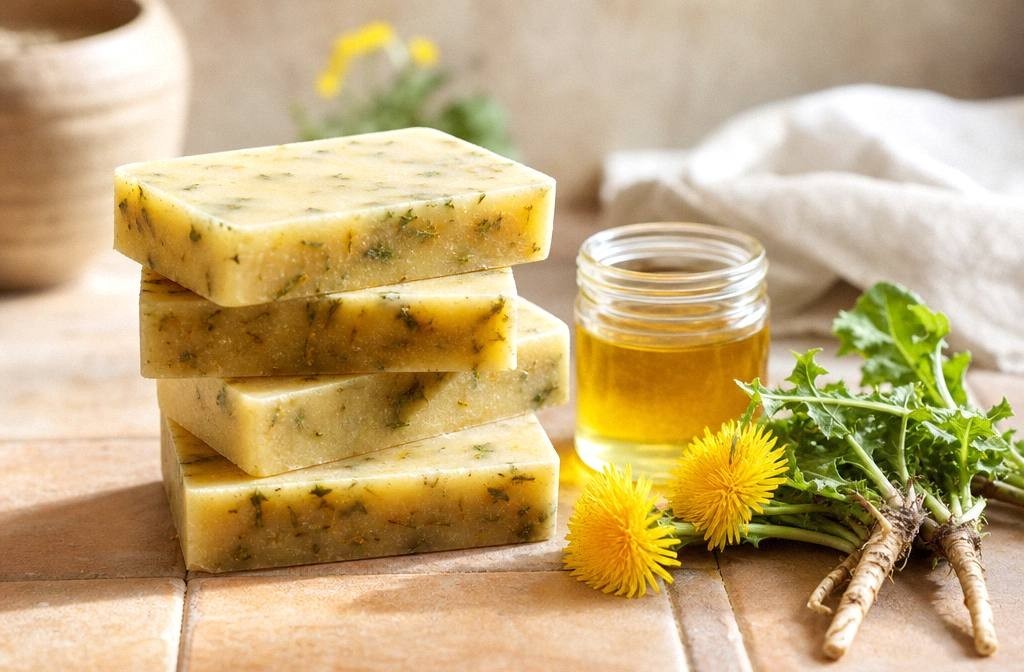
Every spring my yard fills up with dandelions, and for years I treated them like a problem to solve. Then I started making soap with them, and the whole thing flipped. Now I want more of them, not fewer.
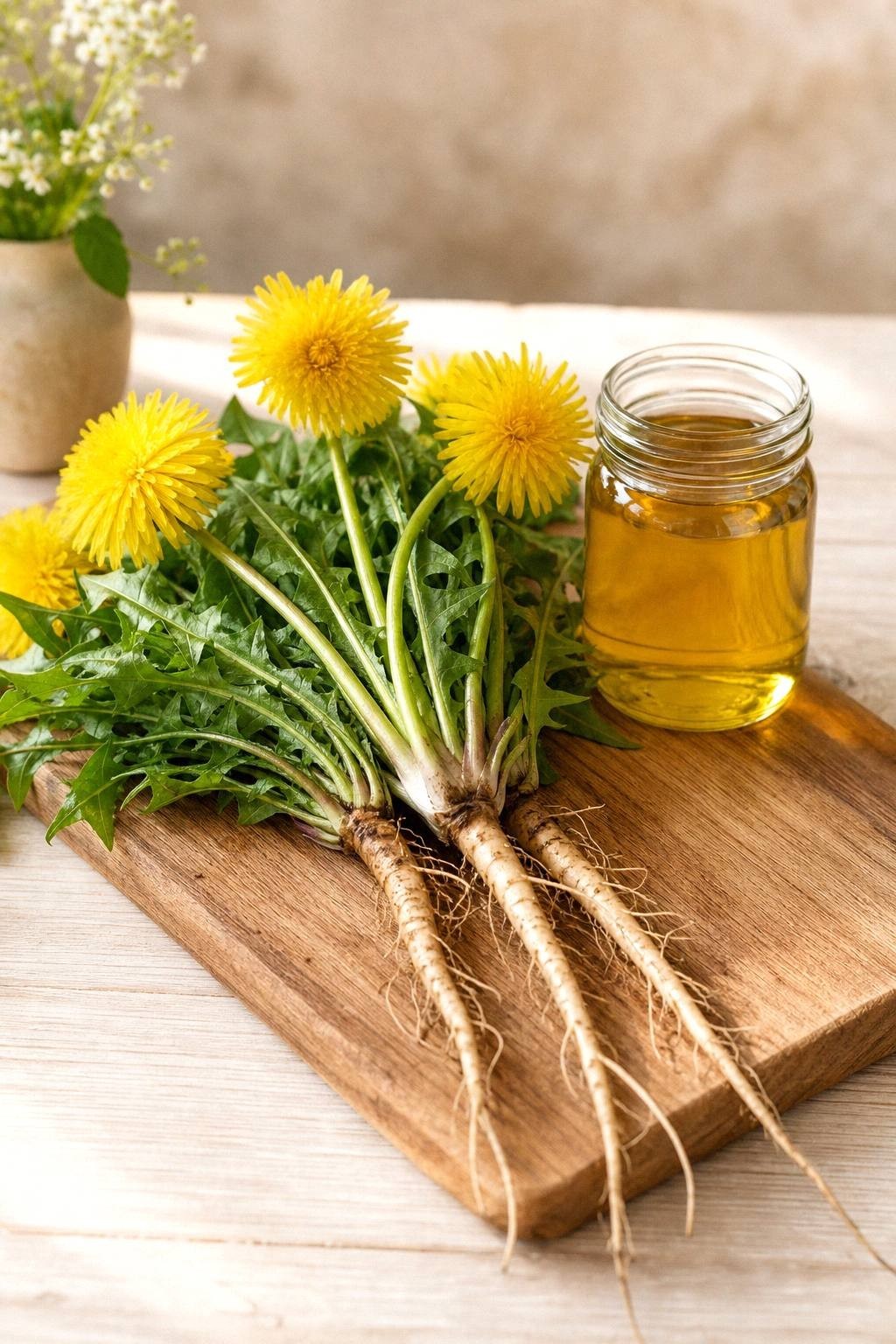
This is a soap made from the entire plant. The bright flowers go into an infused oil. The flowers, leaves, and a bit of scrubbed root steep into a tea that becomes the soap’s liquid. Dried leaf, ground to a powder, gets stirred in at the end for a little color and the faintest scrub. Nothing wasted, and a soap that actually smells green and honest instead of like a candle aisle.
I will walk through the real cold process version first, because that is the soap on the pin everyone keeps sharing. If lye makes you nervous, skip to the melt and pour shortcut near the bottom. It uses the same dandelion oil and skips the chemistry.
At a Glance
| Detail | Info |
|---|---|
| Active prep | About 45 minutes |
| Infused oil | 2 to 3 weeks ahead (or a fast warm infusion in an afternoon) |
| Cure time | 4 to 6 weeks |
| Yield | About ten 4-ounce bars |
| Method | Cold process (lye), with a no-lye option |
| Plant parts used | Flower, leaf, and root |
| Difficulty | Intermediate for cold process, beginner for melt and pour |
| Best for | Dry spring skin, gardeners, gift bars |
Why the Whole Dandelion, Not Just the Flower
Most pretty dandelion soaps online use the flowers and stop there. The flowers are the easy, cheerful part. But the leaves and root carry their own load of plant compounds, and folding them in is what makes this a whole-plant bar rather than a flower garnish.
Dandelion is more than a lawn weed. A 2025 review in the journal Molecules catalogs the bioactive compounds across Taraxacum species , including polyphenols, flavonoids, and phenolic acids spread through the flowers, leaves, and roots, and links them to antioxidant and anti-inflammatory activity in lab and animal studies. That research is about extracts in controlled settings, not about soap, so I am not going to promise your bar will heal anything. What it does tell me is that the plant is rich, the different parts pull different compounds, and using all three is not just romantic. There is something in each.
Here is the honest part. Cold process soap is a wash-off product. It sits on your skin for under a minute. Some of the gentlest, most skin-loving qualities come less from the dandelion and more from the unsaponified oils left in a well-made bar. So the dandelion does real work, and so does the fat you choose and the care you take. Both matter.
Before You Touch the Lye
Real talk about sodium hydroxide. Lye is caustic. It will burn skin and eyes, and the fumes when you first mix it into liquid are sharp, so you want a window open. Wear gloves and eye protection, keep kids and pets out of the room, and never walk away from a lye solution sitting on the counter.
None of that should scare you off. People have made soap this way for generations. It just means you respect the step.
Two rules I do not break. First, weigh everything on a digital scale in ounces or grams, never measure soap oils by volume. Second, run the recipe through a lye calculator like SoapCalc or Bramble Berry’s calculator every single time, using your exact oils. The lye amount below is balanced for the specific blend I list. Swap tallow for olive oil or change the coconut amount and the number changes too. The calculator takes two minutes and it is the difference between a gentle bar and a lye-heavy one that can irritate skin.
Make the Dandelion Infused Oil
Pick dandelion blossoms on a dry sunny morning, after the dew lifts, from somewhere you know is unsprayed. Lawns treated with weed killer are out. Roadsides are out.
Let the flowers wilt on a towel for a day so the extra moisture leaves. Water in your oil shortens its life and can turn a batch rancid. Once they feel slightly dry, loosely fill a clean jar about three-quarters full, roughly 3/4 cup of blossoms, and cover them with sunflower or olive oil. Cap it and set it in a warm bright window for 2 to 3 weeks, giving it a swirl when you walk by. Strain through cheesecloth and press the flowers.
In a hurry? Warm the oil and flowers in a double boiler over barely simmering water for 2 to 3 hours instead. Keep it warm, not bubbling, then strain. The slow window method has a deeper gold to it, but both work.
Make the Whole-Plant Tea
This is where the leaves and root join in. Gather a generous handful of flowers, a few chopped leaves, and one small taproot scrubbed clean of dirt. Chop the root small so it gives up more of itself.
Cover it all with hot water in a heatproof jar, the way you noted on the calendula salve if you have made that. Let it steep anywhere from an hour to overnight, then strain. You want about 12 ounces of finished tea for this batch.
Cool it completely and freeze it into cubes. Frozen liquid keeps the lye from overheating when the two meet, and it holds the tea’s color better. Warm lye plus warm tea can scorch and turn brown fast.
Make the Soap (Cold Process)
Set up first. Gloves on, eye protection on, window cracked, scale ready, and a lined loaf mold or silicone mold waiting.
- Weigh your frozen dandelion tea cubes into a heatproof pitcher. Weigh the lye separately.
- Add the lye to the tea a little at a time, stirring gently, never the other way around. It will heat up and steam. Keep stirring until the liquid is clear, then set it somewhere safe to cool.
- Melt the tallow and coconut oil together until just liquid. Stir in the dandelion infused oil off the heat.
- Bring both the lye solution and the oils to roughly 100 to 110F. Close temperatures give you an even bar.
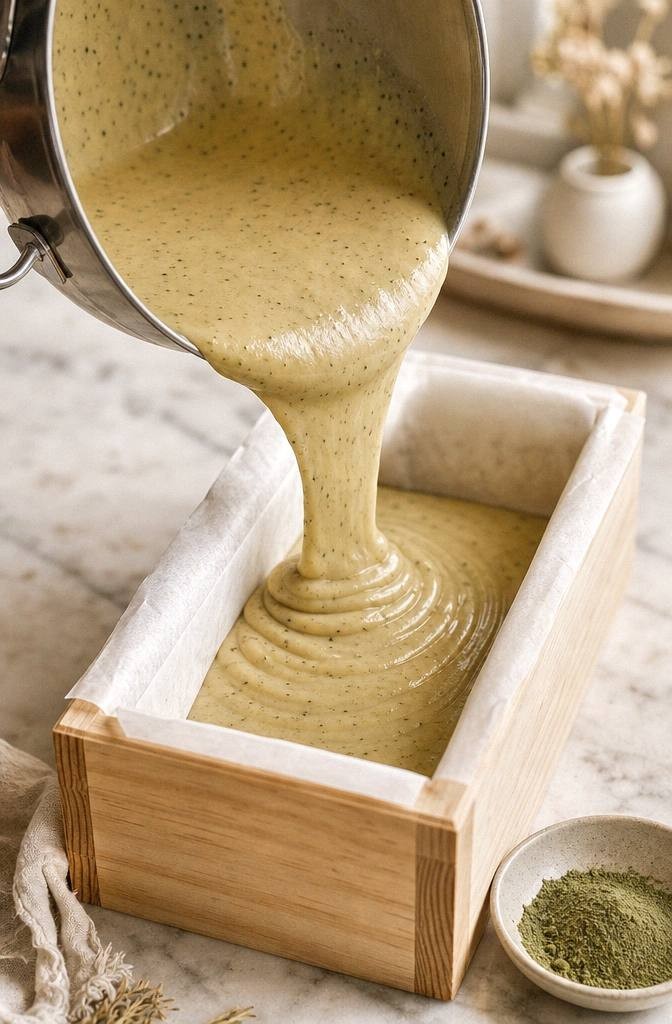
- Pour the lye solution into the oils. Blend with a stick blender in short bursts until you hit light trace, the point where a drizzle leaves a faint trail on the surface.
- Stir in the powdered dandelion leaf, the optional root powder, and essential oils if using. The leaf gives soft green flecks and the lightest exfoliation.
- Pour into the mold, tap it to settle, and cover.
Cutting and Curing
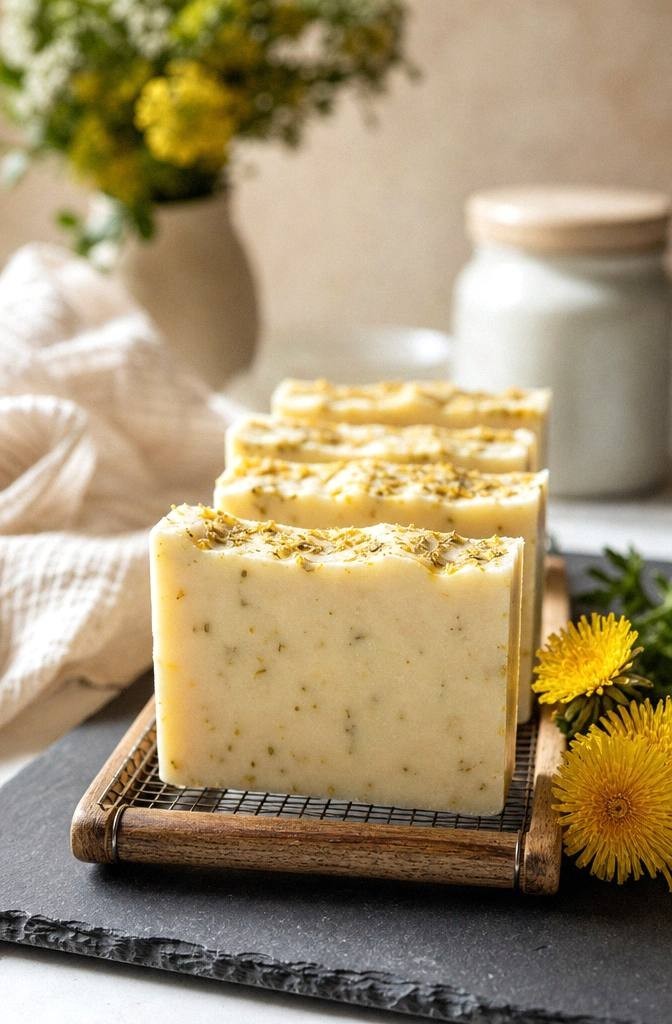
Leave the soap in the mold 24 to 48 hours. When it feels firm and pulls away from the sides, unmold and slice it into bars.
Then comes the part nobody likes. You wait. Set the bars on a rack with air moving around them, somewhere cool and dark, and leave them at least 4 weeks. Six is better. Curing is not just drying. The bar keeps finishing its reaction and water keeps evaporating, and that slow finish is what makes a mild, long-lasting bar instead of a soft one that dissolves in a week.
I write the cut date on a scrap of paper and tuck it next to the rack, because I will absolutely forget otherwise.
The No-Lye Shortcut: Melt and Pour
Not ready to handle lye? You can still make a real dandelion bar today.
Buy a quality melt and pour base, goat milk or shea are both lovely here. Cut about 1 pound into cubes and melt them gently in a double boiler or in short microwave bursts. Off the heat, stir in 1 to 2 teaspoons of your dandelion infused oil and 1/2 teaspoon of powdered dandelion leaf. Add a few drops of skin-safe essential oil if you like. Spritz the surface with rubbing alcohol to pop any bubbles, pour into molds, and let it set an hour or two.
You skip the tea step here, since there is no lye water to replace, and you skip the cure. It is not the same deep whole-plant bar, but it carries the dandelion oil and the green flecks, and it is a genuinely good first project. My niece made one in an afternoon and was very pleased with herself.
How to Use and Store It
Use it like any bar soap, on hands or in the shower. Keep it on a draining dish between uses so it dries out, because a bar sitting in a puddle turns to mush no matter how well you made it. A well-cured cold process bar will happily last a year or more stored somewhere dry.
Patch test before you go all in, especially if you react to ragweed, chamomile , marigold, or other plants in the daisy family. Dandelion sits in that same family and sensitivities cross over. And this is soap, not medicine. Do not use a homemade bar on broken skin, active rashes, or anything a doctor should be looking at.
The same water-free logic from a good salve applies to storage too. The FDA notes that moisture, heat, and time all affect how long a cosmetic stays good, so keep your bars dry and they keep their life.
A Few Variations
Calendula and dandelion: Infuse calendula flowers alongside the dandelion in your oil for an even gentler, golden bar that pairs well with the rose lavender lip balm if you are building a little gift set.
Oatmeal dandelion: Stir in a tablespoon of finely ground oats at trace for more scrub and a soft, milky feel.
Honey dandelion: Add a teaspoon of honey at trace. It boosts lather and adds a faint sweetness, though it can speed up trace, so have your mold ready.
Extra-hard summer bar: Bump the coconut or add a little cocoa butter, recalculate the lye, and you get a firmer bar that holds up in a warm bathroom.
Worth the Spring Wait
There is a quiet pleasure in turning the thing you used to yank out of the grass into a stack of soap curing on a shelf. The flowers tint the oil gold. The leaves fleck the bar green. The root goes into the tea you would never have thought to brew.
Make a batch this spring while the dandelions are everywhere. By the time the bars finish curing, you will have spent almost nothing and learned the one skill, infuse an oil and set it into soap, that opens the door to nearly every other herbal beauty project worth making at home.